
Is Joshua Tree National Park Good for Families with Young Kids
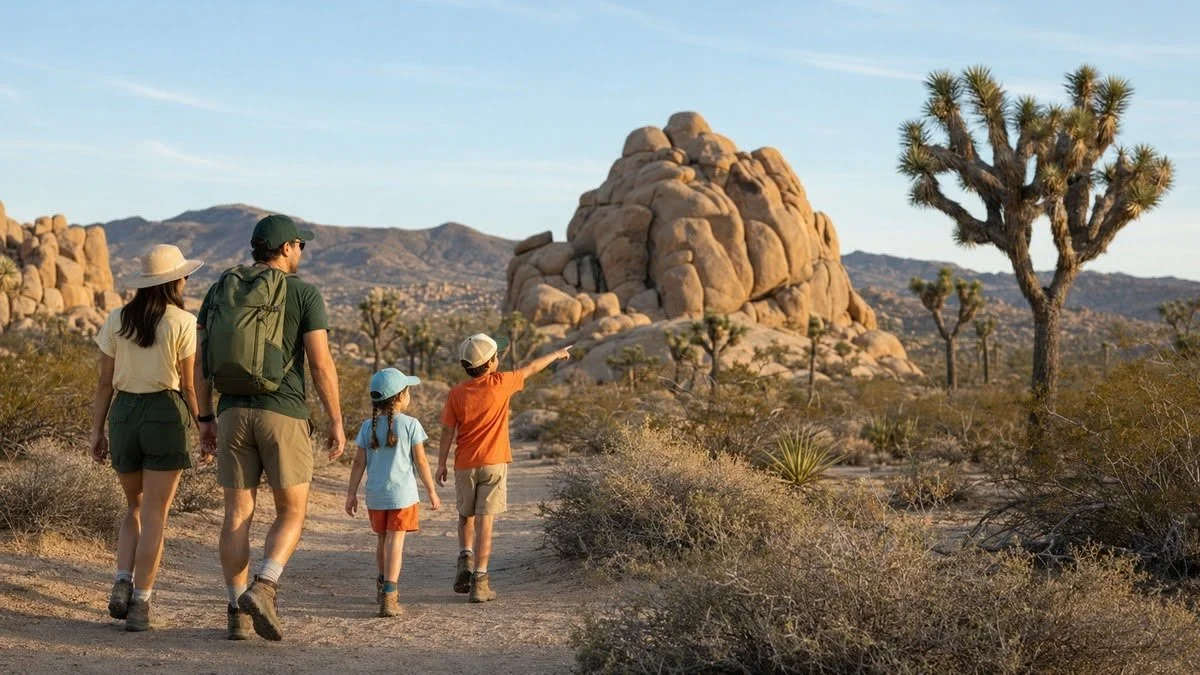
The short answer is yes. Joshua Tree National Park is genuinely one of the better national parks for families with young kids, and that surprises a lot of people. Most parents picture blazing heat and a barren landscape. What they find instead is a park full of boulders to climb, short easy trails, wildlife to spot, and skies that'll make everyone stop talking for a minute.
That said, it's not a park where you can show up unprepared. The desert heat, lack of shade, and limited water access make planning non-negotiable. Get those pieces right, and Joshua Tree with kids becomes one of those trips your family talks about for years.
What Makes Joshua Tree Family Friendly
Joshua Tree sits at a higher elevation than most people expect, which keeps temperatures more manageable in spring and fall. The terrain is wide open, which means kids can't easily wander out of sight. And the giant rock formations scattered across the park are basically a natural playground.
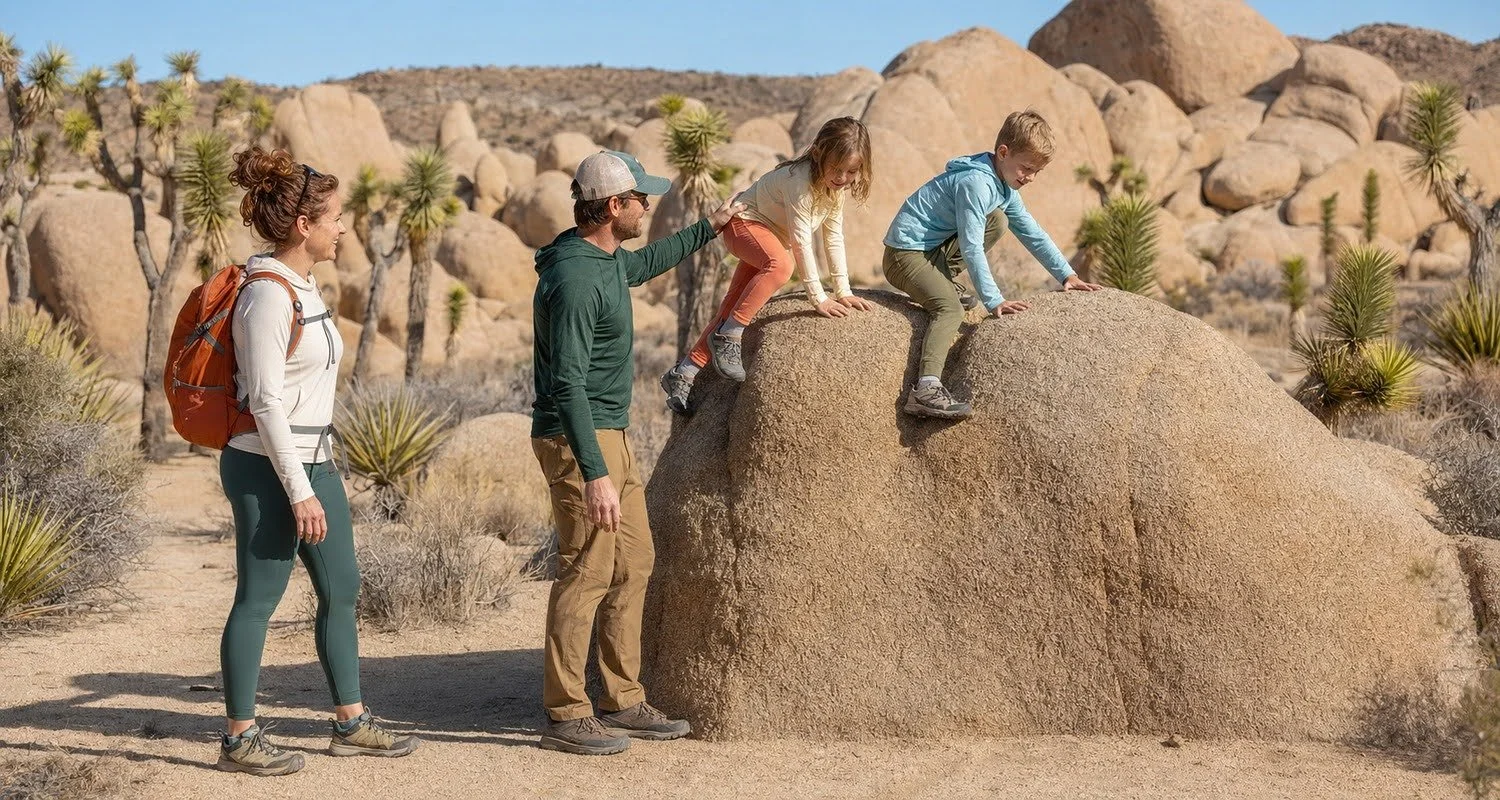
Young kids are naturally drawn to the boulders. They want to touch them, climb on the lower ones, and peer around every corner. That instinct works perfectly here. The park is built for curiosity, and curious kids tend to thrive in it.
The park also offers a Junior Ranger program, easy interpretive trails, and two staffed visitor centers. There's a solid structure for families who want some guided engagement alongside the free-roaming fun. Start getting kids excited early, and that structure lands even better.
Best Easy Hikes for Kids at Joshua Tree
Choosing the right trail makes all the difference with young kids. Here are the top picks for easy family hikes at Joshua Tree National Park.
Hidden Valley Trail
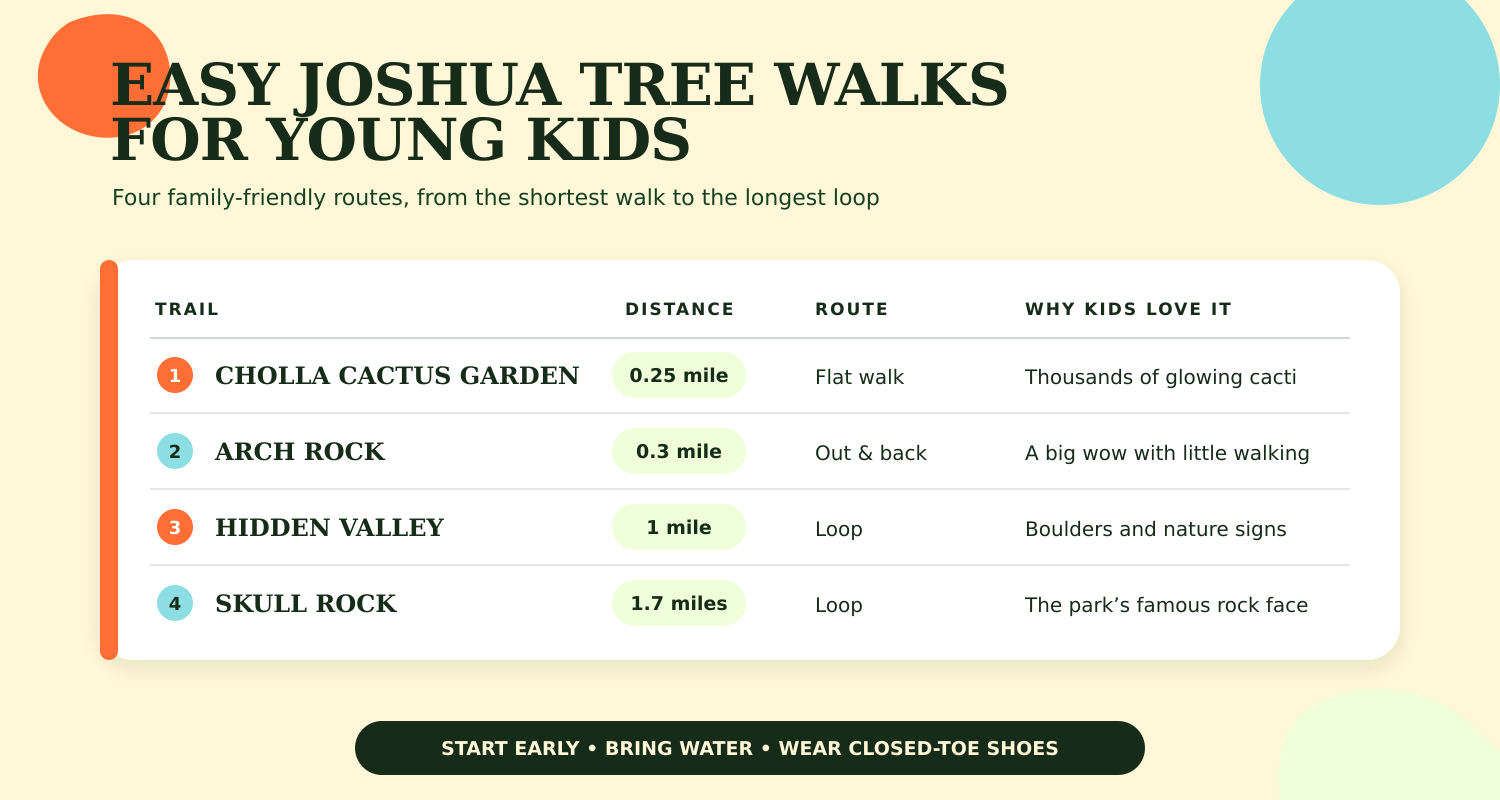
Hidden Valley Trail is the most popular family-friendly trail in the park. It's an easy one-mile loop great for young kids, winding through massive boulders with interpretive signs about local plants and animals. Kids love the story behind it too. The valley was once a hideout for cattle rustlers. There's also a cow-shaped rock formation on the canyon wall that kids love trying to spot.
Skull Rock Nature Trail
Skull Rock Nature Trail is another excellent choice. It's a 1.7-mile loop that passes the iconic skull-shaped rock formation near Jumbo Rocks Campground. The skull shape is immediately recognizable, and kids tend to get very excited the moment they see it. The trail itself is mostly flat and well-marked.
Arch Rock Trail
Arch Rock Trail is a short 0.3-mile out-and-back walk to a natural arch formation. It's one of the easiest trails in the park and perfect for younger toddlers or kids who need a lighter day. The arch is impressive enough to genuinely wow the whole family.
Cholla Cactus Garden
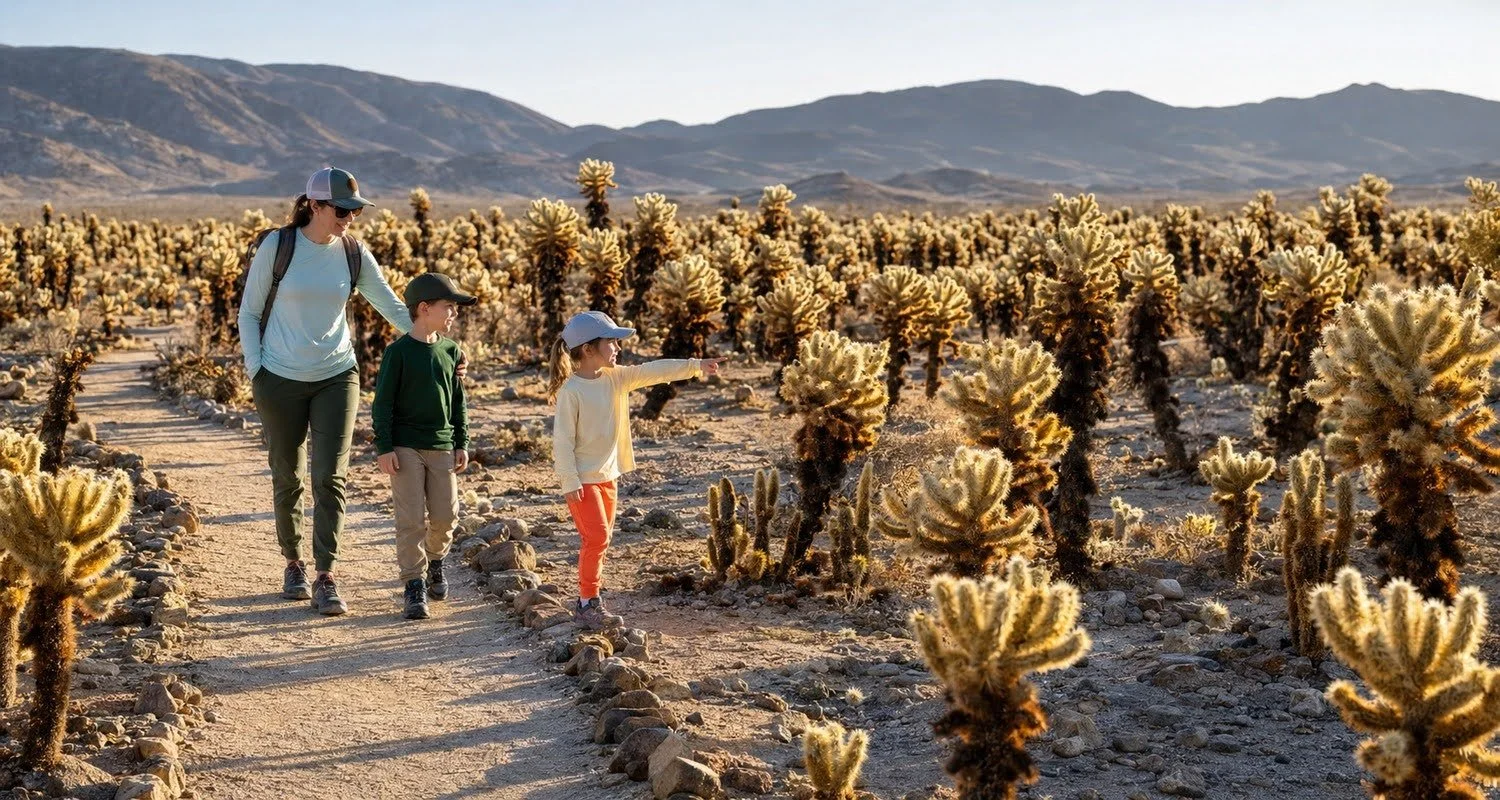
Cholla Cactus Garden isn't a traditional hiking trail, but it's a flat quarter-mile walk through thousands of cacti that kids find fascinating. The teddy bear cholla look soft and fuzzy but are full of sharp spines. That's a great real-world lesson about not judging things by appearance. Keep everyone on the path and wear closed-toe shoes.
Rock Scrambling for Kids
Rock scrambling is one of the things that makes Joshua Tree stand out as a family-friendly national park. The park's granite boulders are rounded and grippy, which makes them safer for kids than jagged rocky terrain elsewhere. Young kids can scramble on the lower boulders near Hidden Valley and Skull Rock without any technical gear.
It's worth setting some clear ground rules before you start. Stick to boulders that kids can get down from as easily as they got up. Make sure everyone's wearing shoes with grip rather than sandals or flip-flops. And watch for heat coming off the rocks themselves. Granite in direct sun gets very hot.
Rock-scrambling kids tend to be the happiest in the park. There's something about conquering a boulder that clicks differently than finishing a trail. The same pull shows up at Arches with young kids, where the formations do the same job.
Desert Wildlife Viewing with Young Kids
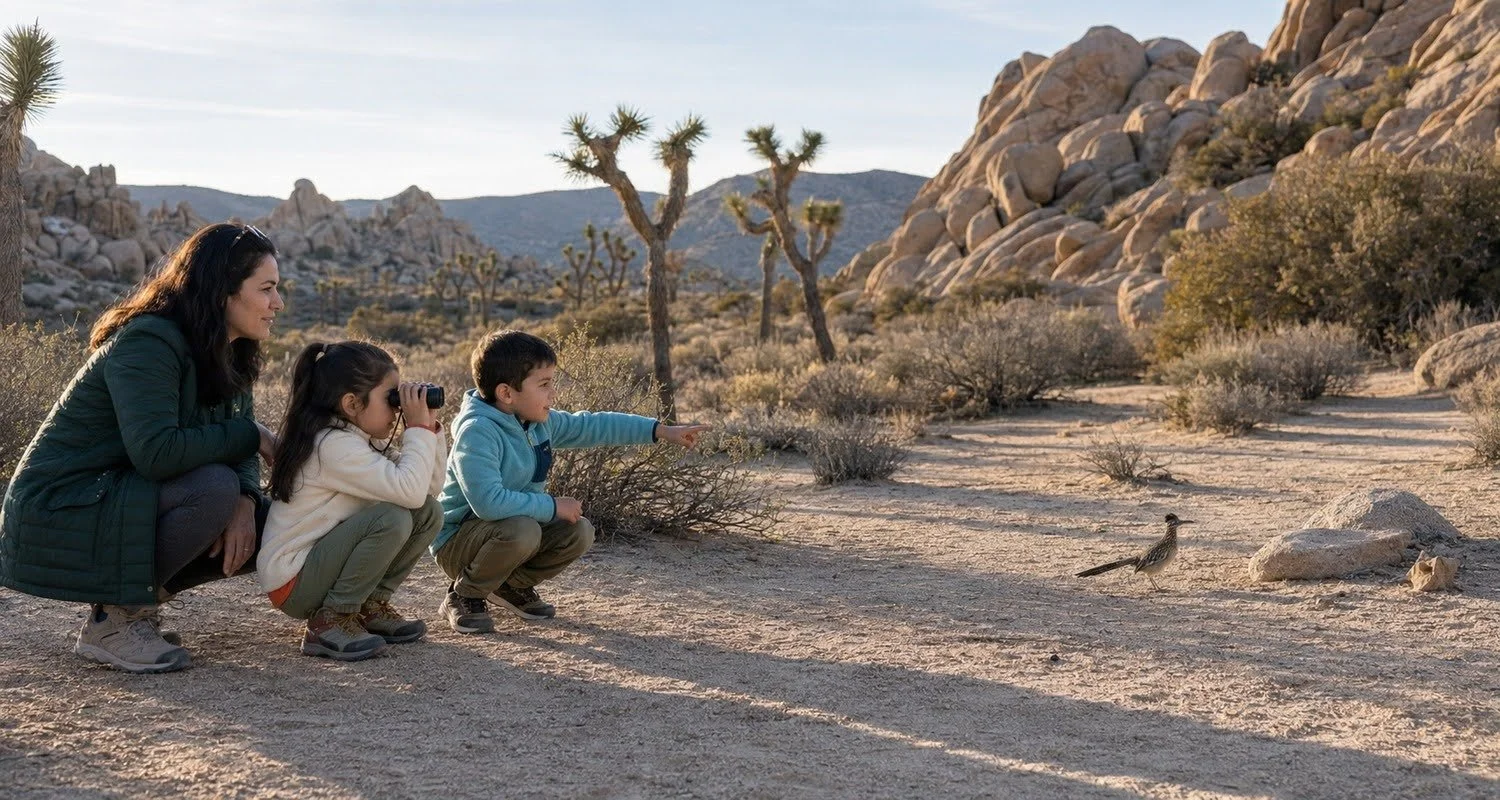
Joshua Tree isn't the most wildlife-dense park in the country, but the desert wildlife you do spot here tends to be memorable. Roadrunners, jackrabbits, lizards, and coyotes are all regularly seen. Desert tortoise sightings happen too, though they're less predictable.
A few tips for wildlife viewing with kids:
Move slowly and quietly, especially near rocky outcroppings where lizards like to sun themselves.
Early morning is the best time. Most desert animals are active before 10 a.m.
Bring binoculars if you have them. Kids engage far more when they can actually zoom in.
Never approach, feed, or touch any wildlife. Teach kids the rule before you arrive.
The Cholla Cactus Garden area and the drive between the north and south entrances are both reliably good for bird and lizard sightings. It works as a solid primer for the wildlife kids can spot at parks across the country.
Stargazing at Joshua Tree
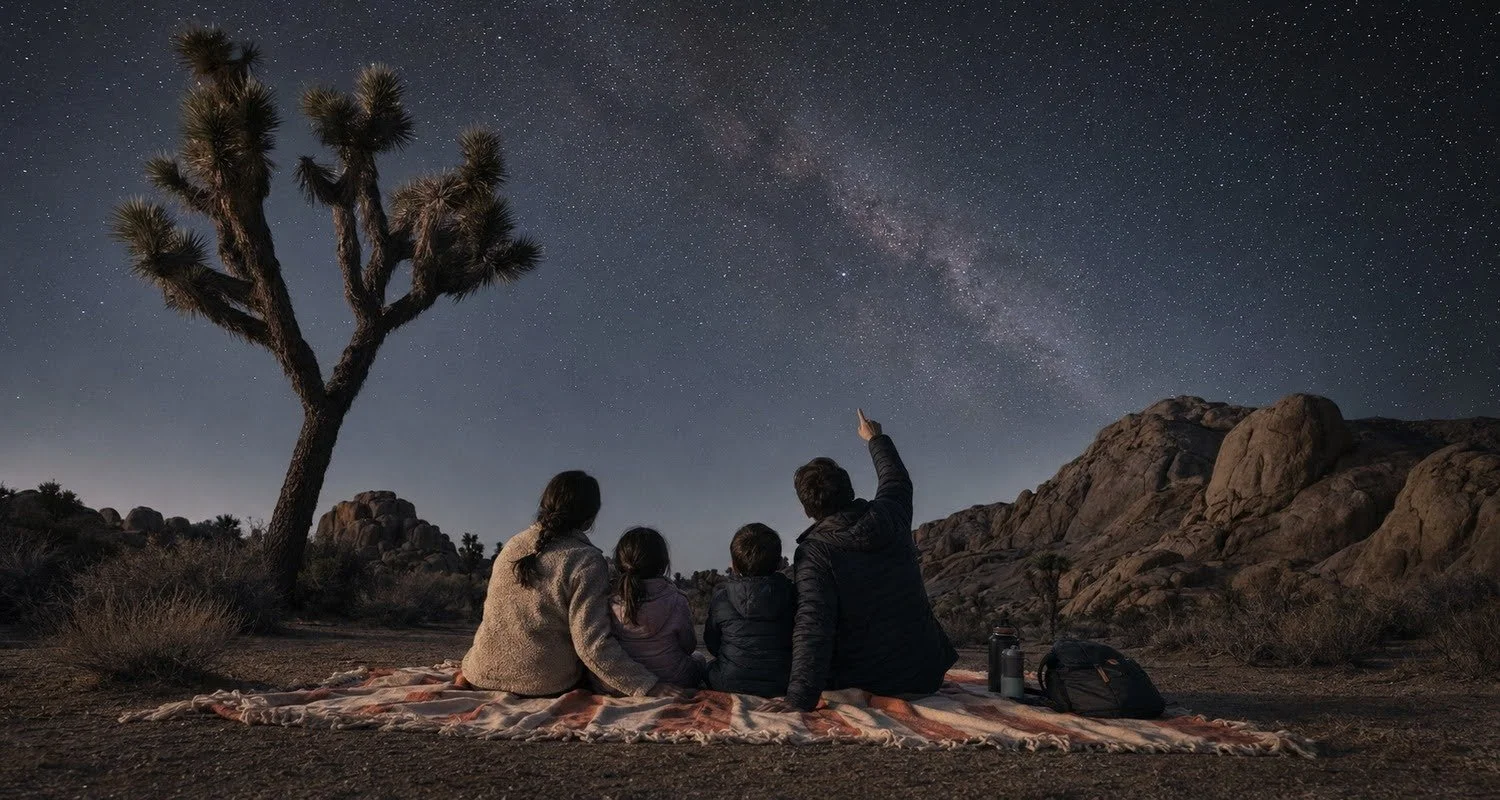
Joshua Tree is a certified International Dark Sky Park, and stargazing here is genuinely exceptional. If you're camping overnight or staying nearby, get the kids outside after dark. The Milky Way is visible on clear nights without any equipment at all.
Even young kids understand that what they're seeing is special. You don't need to explain much. Just look up together. That tends to be one of the moments families remember most from the whole trip.
Spring and fall offer the best stargazing conditions. Summer nights can still be warm, and the skies are often clear, but be mindful of the heat for early bedtimes with little ones.
The Junior Ranger Program at Joshua Tree
The Junior Ranger program is one of the best tools a parent has at any national park, and Joshua Tree is no exception. It helps to know how Junior Ranger badges work before you arrive. Pick up the free activity booklet at either the Oasis Visitor Center near the north entrance or the Cottonwood Visitor Center at the south entrance.
Kids complete activities tied to what they're actually seeing in the park, from desert plants and rock formations to wildlife and the night sky. When they're done, a park ranger reviews the booklet and swears them in as an official Junior Ranger. The badge is free, the pride is real, and ranger-led programs keep that momentum going for the rest of the day.
If you want to extend that engagement before or after your visit, the Joshua Tree adventure guide from Wonder Park Family covers the park with 90-plus screen-free activities built around exactly what kids see here. It’s currently sold out, but you can check the national park adventure collection for bundle options, or grab a Zion adventure guide if you’re planning more Southwest parks. You can browse all available titles and screen-free national park activities on their site.
Planning the rest of a Southwest run? Our guide to Zion with kids pairs well with Joshua Tree, and we answer the Grand Canyon safety questions parents ask most before they book.
Practical Tips for Visiting Joshua Tree with Young Kids
A few things that make a real difference on the day:
Arrive early. Parking at Hidden Valley fills up fast on weekends. Aim for the trailhead by 8 a.m.
Bring more water than you think you need. There's no water available on trails, and the dry air is dehydrating even when it doesn't feel hot.
Pack sun protection. Sunscreen, hats, and lightweight long sleeves go a long way in the open desert.
Plan around the heat. In summer, finish all hiking by 10 or 11 a.m. and save Skull Rock or Arch Rock for a late afternoon return when shadows fall.
Pack the drive. The stretch between the north and south entrances runs long, so screen-free road trip activities keep the backseat calm.
Entrance fees apply. A standard vehicle pass covers seven days. TheAmerica the Beautiful pass is worth it for families visiting multiple parks in a year.
Joshua Tree with kids rewards families who plan ahead and stay flexible. The desert has a pace of its own, and it's worth leaning into it. It's also one of the cheaper parks to visit, which helps if you're mapping out parks on a budget across the year.
Final Thoughts
So yes, Joshua Tree National Park is good for families with young kids. Plan around the heat, carry more water than you'd expect, and the park does the rest. Kids who show up curious tend to leave with a badge and a story.
Wonder Park Family's screen-free adventure guides are built to keep that curiosity going between parks.
FAQs About Joshua Tree National Park with Young Kids
Is Joshua Tree National Park good for families with young kids?
Yes. The park has short, easy trails, rock scrambling on rounded boulders, a Junior Ranger program, and incredible stargazing. With proper planning around heat and hydration, it's a genuinely great family destination for kids of all ages, including toddlers.
What is the easiest hike at Joshua Tree for young kids?
Arch Rock Trail is the shortest and easiest at just 0.3 miles round trip. Hidden Valley Trail is a one-mile loop and the most popular family-friendly option. Both are flat enough for young kids and offer plenty to see along the way.
Is rock scrambling safe for young kids at Joshua Tree?
Yes, on the lower boulders. The granite is rounded and grippy. Stick to boulders kids can safely get down from, wear closed-toe shoes with grip, and avoid scrambling in the midday heat when the rocks get very hot to the touch.
When is the best time to visit Joshua Tree with kids?
Spring (March to May) and fall (September to November) are ideal. Temperatures are mild, wildflowers can be blooming in spring, and stargazing conditions are excellent. Summer visits are possible but require strict early-morning hiking to beat the heat.
Does Joshua Tree have a Junior Ranger program?
Yes. Pick up the free booklet at the Oasis Visitor Center near the north entrance or the Cottonwood Visitor Center at the south entrance. Kids complete activities throughout their visit and earn an official badge from a park ranger upon completion.
What wildlife can kids see at Joshua Tree?
Common sightings include roadrunners, jackrabbits, lizards, coyotes, and various bird species. Desert tortoises are occasionally spotted. Wildlife is most active in the early morning, so plan your first trail of the day before 9 or 10 a.m. for the best chances.
Is the Cholla Cactus Garden safe for kids?
Yes, as long as everyone stays on the designated path and wears closed-toe shoes. The teddy bear cholla spines detach easily on contact, so keeping kids from touching the plants is essential. It's a short, flat walk and one of the most striking stops in the park.
Can you stargaze at Joshua Tree with young kids?
Absolutely. Joshua Tree is a certified International Dark Sky Park and one of the best stargazing spots in Southern California. On clear nights, the Milky Way is visible with the naked eye, which tends to impress kids of any age in a way that's hard to replicate elsewhere.
How much does it cost to enter Joshua Tree National Park?
A standard vehicle pass is $35 and valid for seven days. The America the Beautiful annual pass at $80 covers entrance to all federal lands and is worth considering for families planning multiple national park visits in a year.
What should I pack for a day at Joshua Tree with young kids?
Bring far more water than you expect to need, sunscreen, hats, snacks, closed-toe shoes, and layers for cooler mornings. A small backpack for each kid with their own water bottle and an activity book helps keep energy and curiosity high throughout the day.