
What Wildlife Can Kids Spot at Everglades National Park?
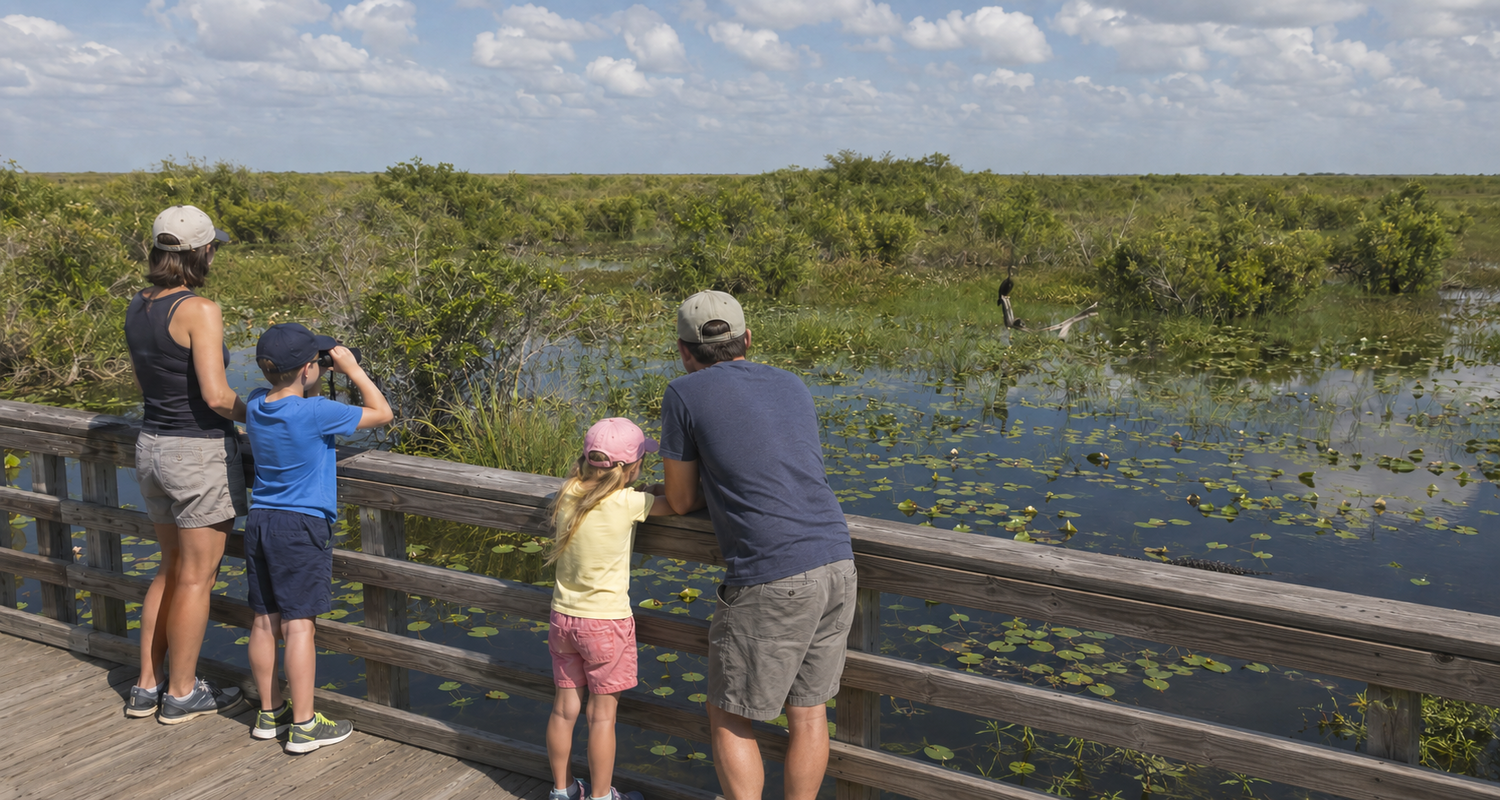
Kids can spot alligators, anhingas, roseate spoonbills, herons, egrets and turtles at Everglades National Park. Otters, crocodiles and manatees take luck.
This is the only place on Earth where wild alligators and crocodiles live side by side.
The park rewards patience over mileage. Stand still at the right railing and the animals come to you.
What Are the Best Everglades Animals for Kids to Look For?
Start with the reliable ones and treat the rest as bonuses.
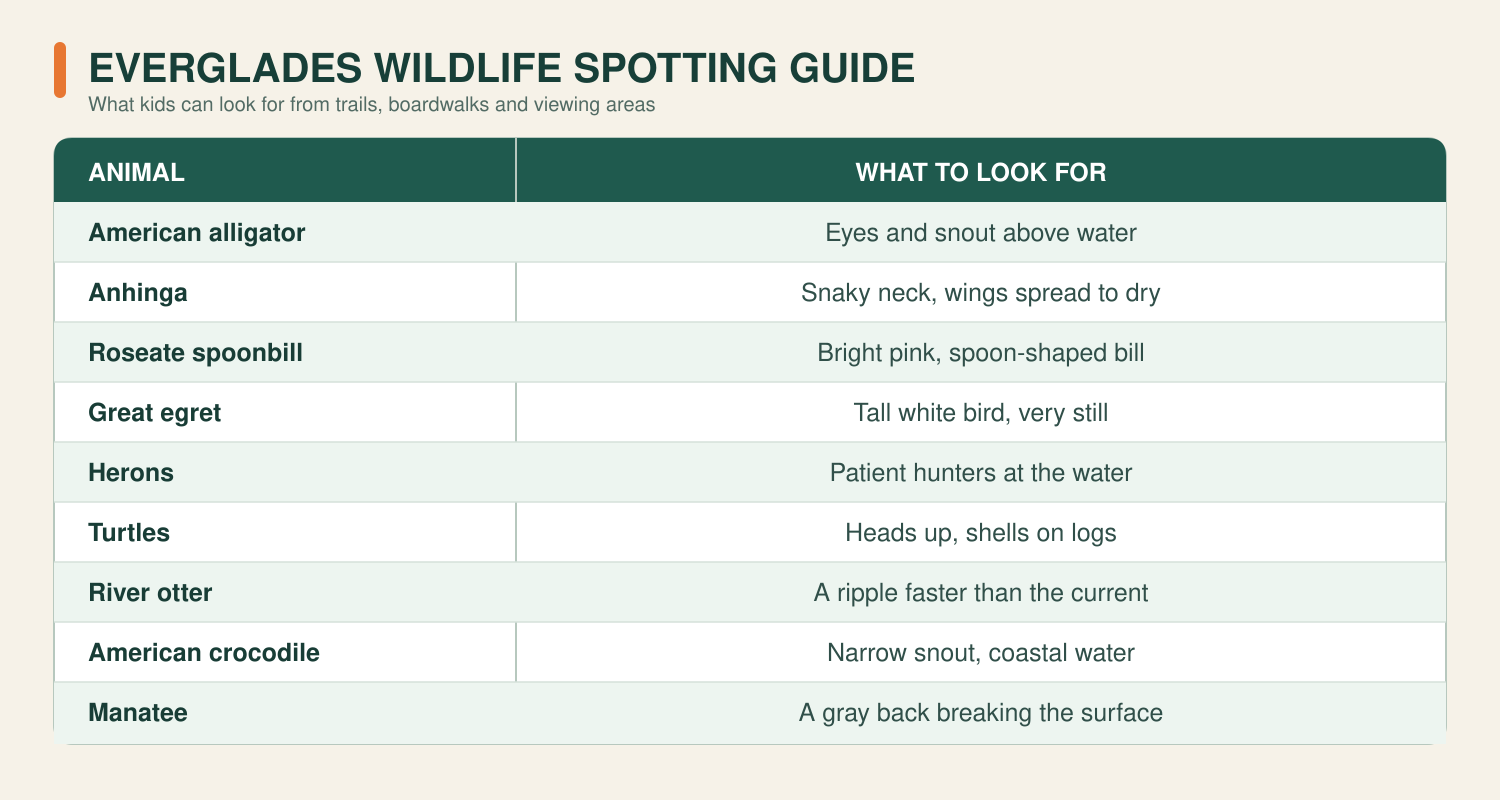
No sighting is guaranteed. That's the part kids end up loving.
Can Kids Spot Both Alligators and Crocodiles?
Alligators, almost certainly. Crocodiles, only in the right place.
The snout gives it away. Alligators have a broad, rounded one. Crocodiles are narrower and more pointed.
Habitat separates them too. Alligators prefer freshwater marshes, while crocodiles stick to salty coastal water.
Roughly 2,000 crocodiles live in the park's mangroves and Florida Bay. Flamingo is realistically the only place to see one.
Turn it into a question. What shape is that snout, and is this water fresh or salty?
Birds That Turn Watching Into a Color Hunt
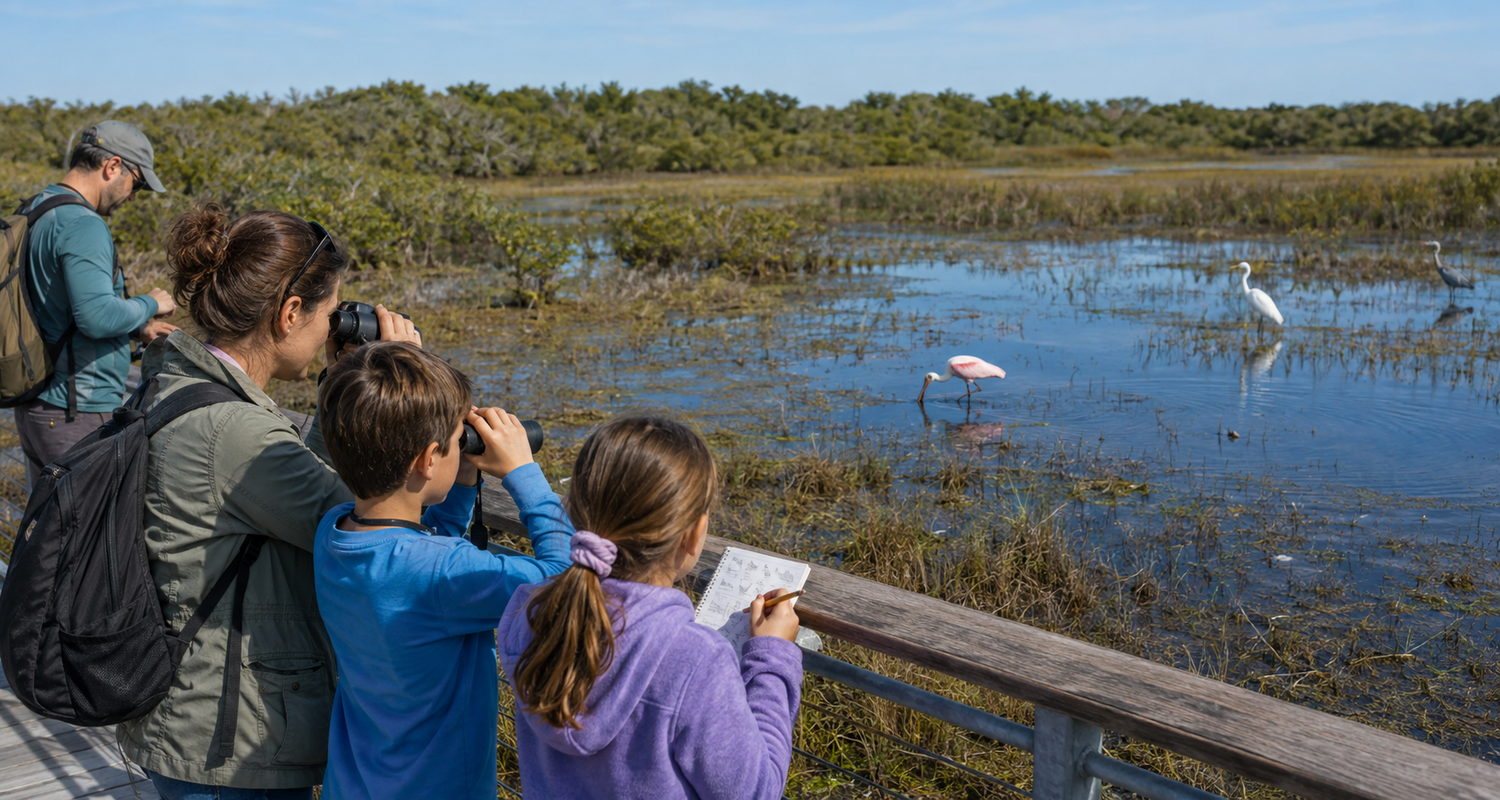
The park holds over 350 bird species. Four do most of the work with kids.
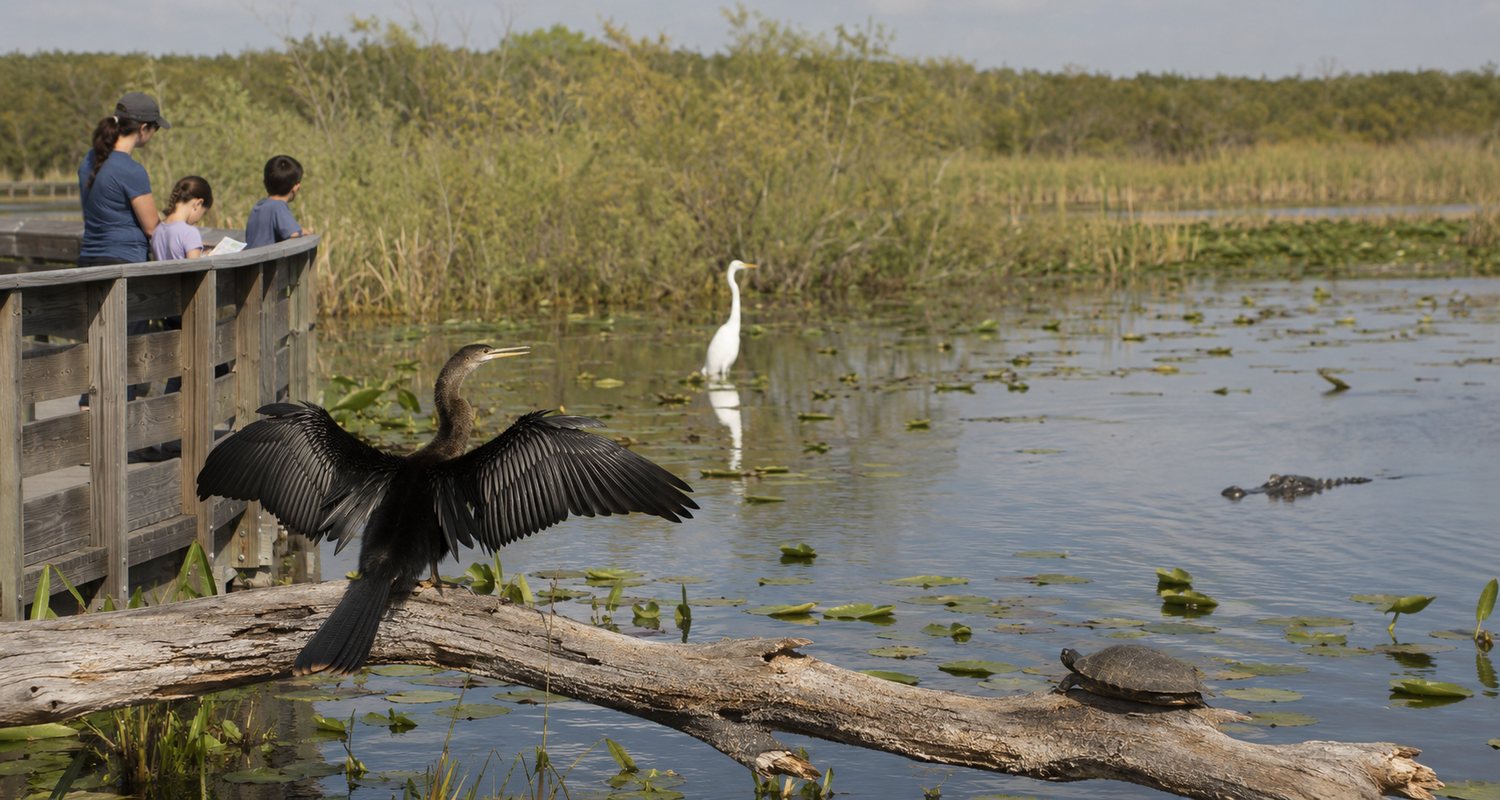
The anhinga swims with only its neck showing, which earns it the nickname snake bird. Its feathers aren't waterproof, so it perches with wings spread to dry.
Roseate spoonbills are unmistakable. They're bright pink with a flat, spoon-tipped bill they sweep side to side through the mud.
Kids often call them flamingos. The pink comes from their diet, exactly as it does for flamingos, so the mix-up makes sense.
There's more on how to identify a spoonbill if anyone wants to settle it.
Great egrets stand tall, white and almost motionless. Herons do the same in gray and blue.
Give kids four targets. A pink bird, a white bird, a long-necked bird, and one drying its wings.
Turtles, Otters and the Occasional Surprise
Turtles are easy wins. Watch for heads breaking the surface or shells on a fallen log.
River otters take luck. Look for a ripple moving faster than the water around it.
Raccoons and marsh rabbits turn up near trails and campgrounds. Florida panthers live here too, but almost nobody sees one.
Where Should Families Look for Wildlife?
Anhinga Trail
Do this one first. It's a 0.8 mile paved path and boardwalk at Royal Palm, crossing Taylor Slough.
Alligators, turtles, anhingas and wading birds gather here. Stop at a viewing spot and wait rather than walking through.
Shark Valley
A 15-mile paved loop through open marsh on the park's northern side. Walk part of it, rent bikes, or ride the tram.
Alligators bask along the canal banks in plain view. The gate opens at half past eight.
Flamingo
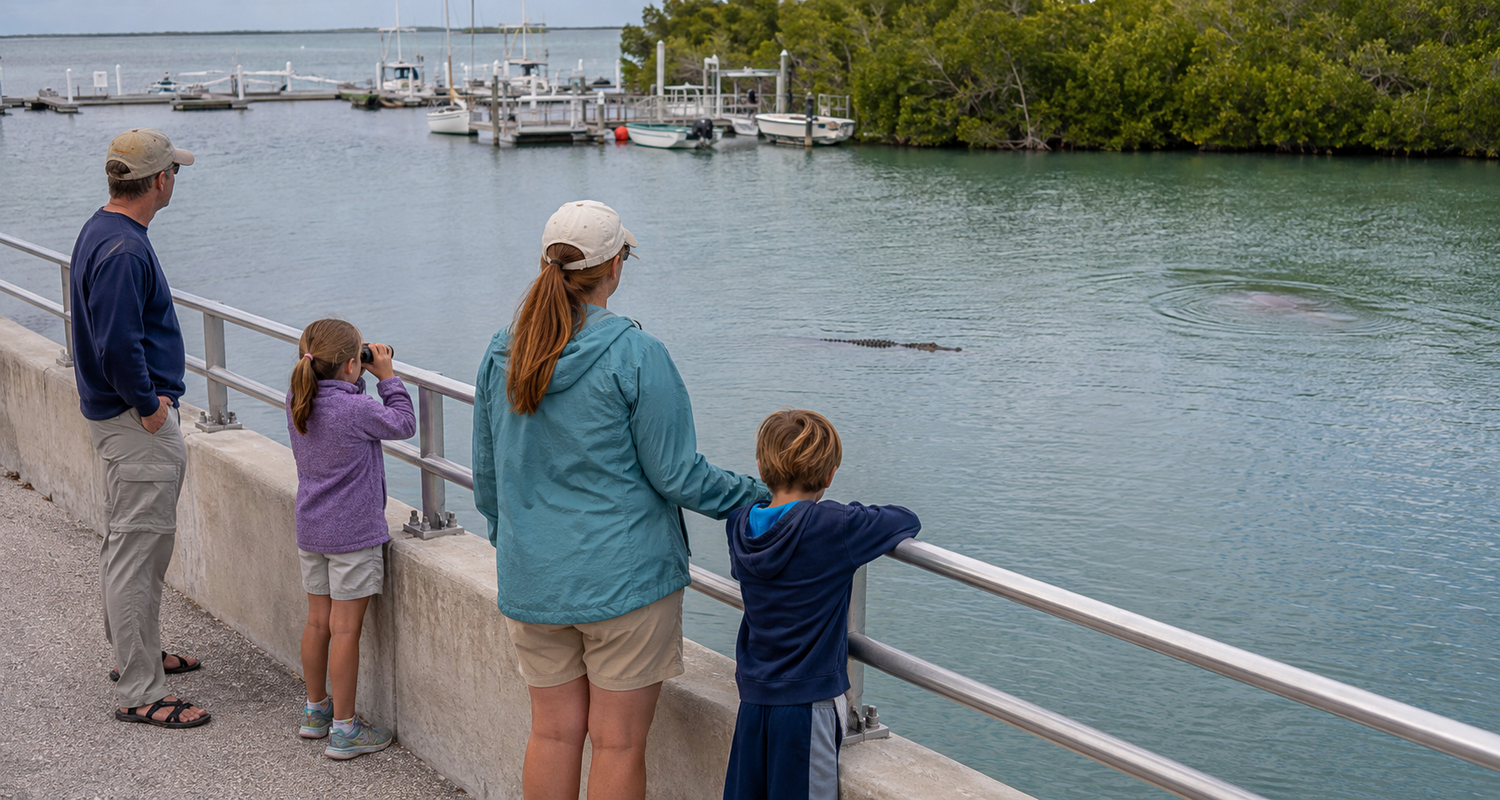
The place for rare sightings. Crocodiles appear around the marina, and manatees surface behind the visitor center, mostly in cooler months.
Give Kids a Wildlife Spotting Challenge
A checklist changes how children look at a boardwalk.
Spot something with scales
Find a pink bird
Find a bird with a long neck
Watch a bird catch something
Spot a turtle
Find an animal swimming
Hear an animal before you see it
Binoculars help more than anything else you can pack. Our Everglades activity book builds this looking into the whole trip.
Watching Wildlife Safely and Respectfully
The Park Service asks visitors to give animals plenty of space. Twenty-five yards is standard guidance across the parks.
Learn the signs that you're too close. Agitated movement, staring or repeated calls all mean back away.
Always leave an animal a route to retreat, and never chase one for a photo. Feeding wildlife is illegal.
Stay on the boardwalks and keep young children close near water. Read the official wildlife viewing ethics before you go.
One myth worth killing. Airboats aren't permitted inside the park.
When to Go Makes the Biggest Difference
Season matters more here than almost anywhere. The dry season runs December through April.
As water levels drop, animals crowd around whatever is left. Sightings get far easier and the mosquitoes ease off.
From May to November wildlife spreads out and the mosquitoes are punishing. Aim for winter if you can choose.
Why Adventure-Guide Resources Help
Knowing where to stand is most of wildlife watching. Wonder Park Family builds that into every guide.
Families who enjoyed the wild ponies in our Assateague adventure guide take to the Everglades quickly.
Turning a Walk Into a Search
The Everglades turns a boardwalk into a hunt for scales, feathers and ripples. Slow down and it delivers.
Our post on wildlife across the parks covers what to expect elsewhere. The Smoky Mountains family guide handles black bears.
Wonder Park Family's screen-free adventure books keep kids looking the whole way.
Frequently Asked Questions
What animals are easiest for kids to spot in Everglades National Park?
Alligators, turtles, anhingas, herons and egrets. All are common along the Anhinga Trail and Shark Valley, especially in the dry season.
Will kids see alligators in the Everglades?
Very likely. They're the most commonly seen large animal here. Look along canal banks and boardwalks.
Where is the best place to see wildlife with kids in the Everglades?
The Anhinga Trail at Royal Palm. It's 0.8 miles of paved path and boardwalk, and it delivers alligators, turtles and birds quickly.
What birds can kids spot in Everglades National Park?
Anhingas, roseate spoonbills, great egrets and several heron species. The park has recorded over 350 bird species in total.
Can you see both alligators and crocodiles in the Everglades?
Yes, and nowhere else on Earth. Alligators appear throughout the freshwater areas, while crocodiles stay in coastal water near Flamingo.
Can families see manatees in Everglades National Park?
Sometimes. Manatees gather in warmer water around Flamingo, most often during cooler months. Sightings are never guaranteed.
Is the Anhinga Trail good for wildlife watching with kids?
It's the best option in the park. Short, flat, mostly boardwalk, and reliably busy with alligators, turtles and wading birds.
Is Shark Valley good for families who want to see wildlife?
Yes. The 15-mile paved loop crosses open marsh where alligators bask along the canals. Walk part of it, bike, or take the tram.
How can kids safely watch wildlife in the Everglades?
Give animals plenty of space, stay on boardwalks, use binoculars, and never feed anything. Back away if an animal seems agitated.
Is Everglades National Park good for young kids?
Yes, with the right timing. Short boardwalk trails and constant wildlife suit small children, though summer heat and mosquitoes are tough.