
What Are Hoodoos and Why Are Kids Obsessed With Bryce Canyon?
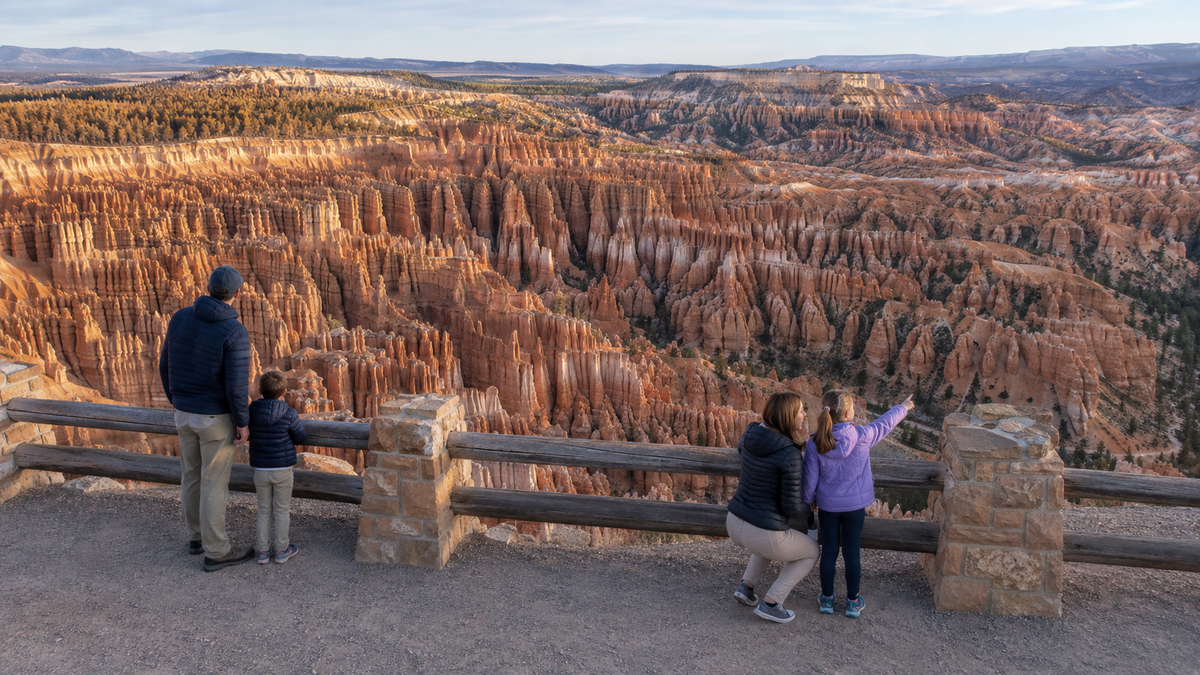
Hoodoos are tall, knobbly rock spires that look like something a child invented. Bryce Canyon has more of them than anywhere else on Earth.
Stand at the rim and thousands fill the bowl below in orange, pink and white. Kids rarely need convincing to look.
This is the rare landscape where the geology and the imagination point the same direction.
What Is a Hoodoo?
A hoodoo is a rock spire with an uneven, lumpy shape. Some are the height of a person. Others reach ten stories.
The lumpiness is the point. Harder layers resist erosion while softer ones wear faster, leaving bulges and knobs.
That's what separates a hoodoo from a smooth, tapered pinnacle. A hoodoo looks stacked and sculpted rather than simply pointy.
Bryce Canyon holds the largest collection of them in the world.
How Do Bryce Canyon's Hoodoos Form?
The rock came first. The Claron Formation settled on the bed of an ancient lake, then hardened and cracked.
Water seeps into those cracks. When it freezes it expands, widening the crack a little more each time.
Bryce sits above 8,000 feet and gets over 170 days of freeze and thaw a year. That's the highest count almost anywhere in the country.
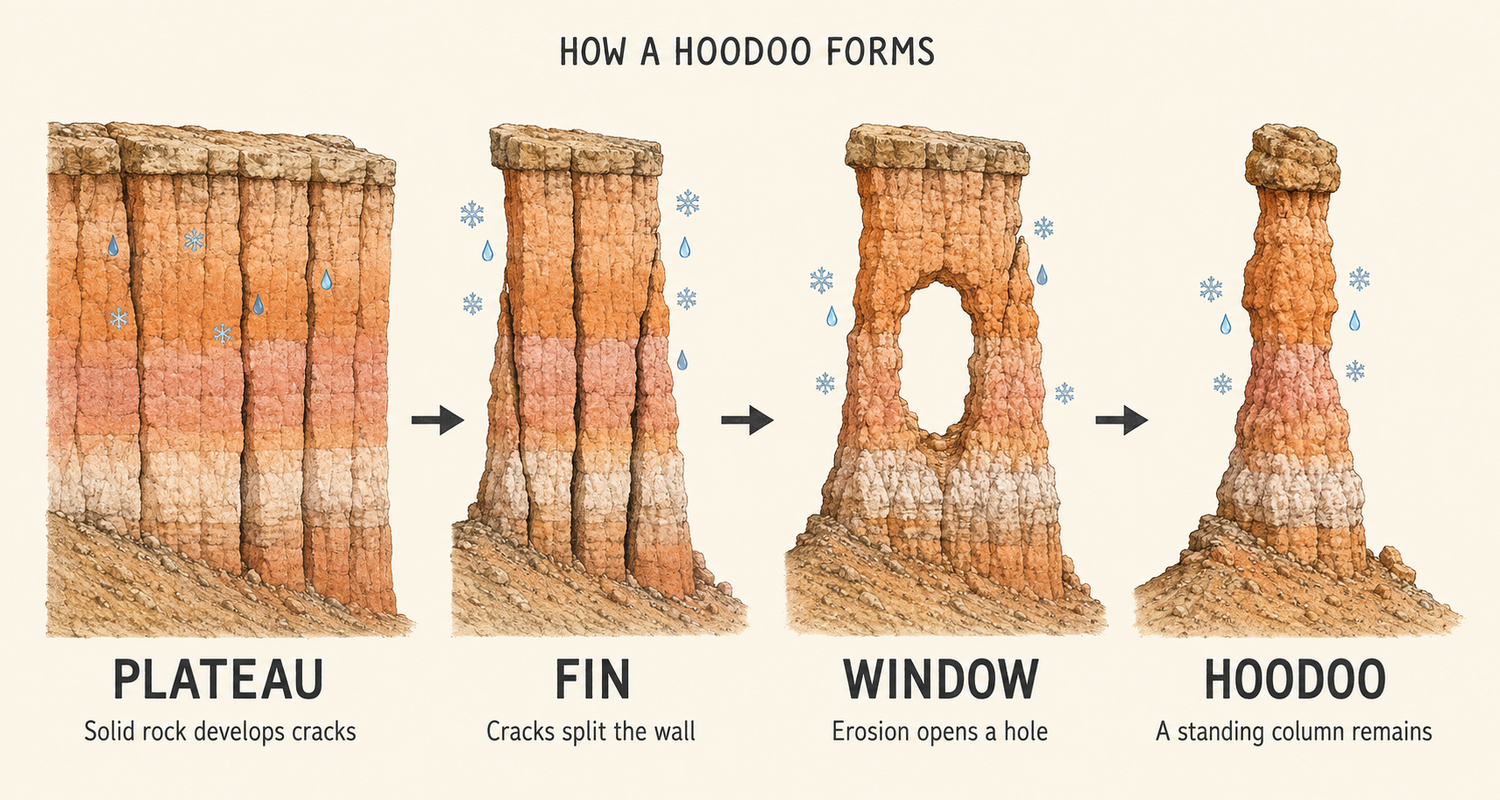
The Park Service breaks the result into four stages kids can spot for themselves.
Plateau, a solid wall of rock
Fin, where cracks split the wall into thin slabs
Window, where a hole opens through a fin
Hoodoo, where windows widen and leave a standing column
Look into the amphitheater and all four stages are happening at once, often in the same view. There's more on how hoodoos take shape if your kids want the detail.
Why Does Bryce Canyon Have So Many?
Bryce Canyon isn't actually a canyon. No river carved it.
It's a set of natural amphitheaters eroded backwards into the edge of the Paunsaugunt Plateau. The rim is retreating, not deepening.
The Claron limestone is soft enough to carve and firm enough to hold a shape. Add all those freezing nights and you get hoodoos by the thousand.
They aren't permanent either. The formations wear back roughly two to four feet every century.
Why Are Kids So Fascinated by the Hoodoos?
Four things, and they stack.
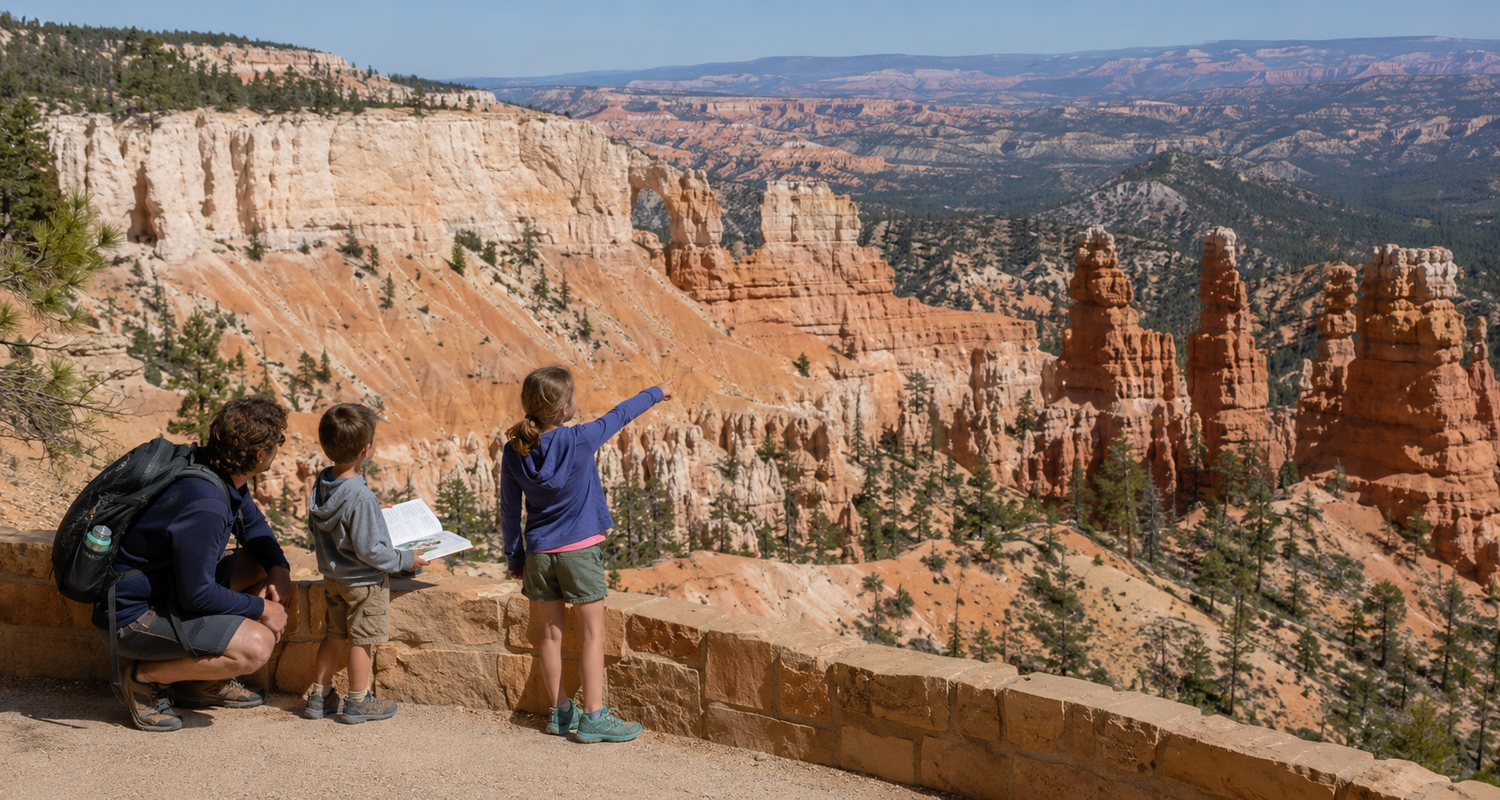
Imagination comes first. The shapes read as castles, monsters, chess pieces and faces, so children start naming them without being asked.
Then scale. Thousands of spires together doesn't feel like a viewpoint. It feels like a city nobody lives in.
Color helps enormously. Iron oxide paints the rock orange and red. Low-iron bands run white, and manganese leaves streaks of lavender.
Discovery seals it. There's no right answer to what a hoodoo resembles, so a child's guess counts as much as an adult's.
Try a Hoodoo Shape Hunt
Turn the view into a search and the whole stop changes.
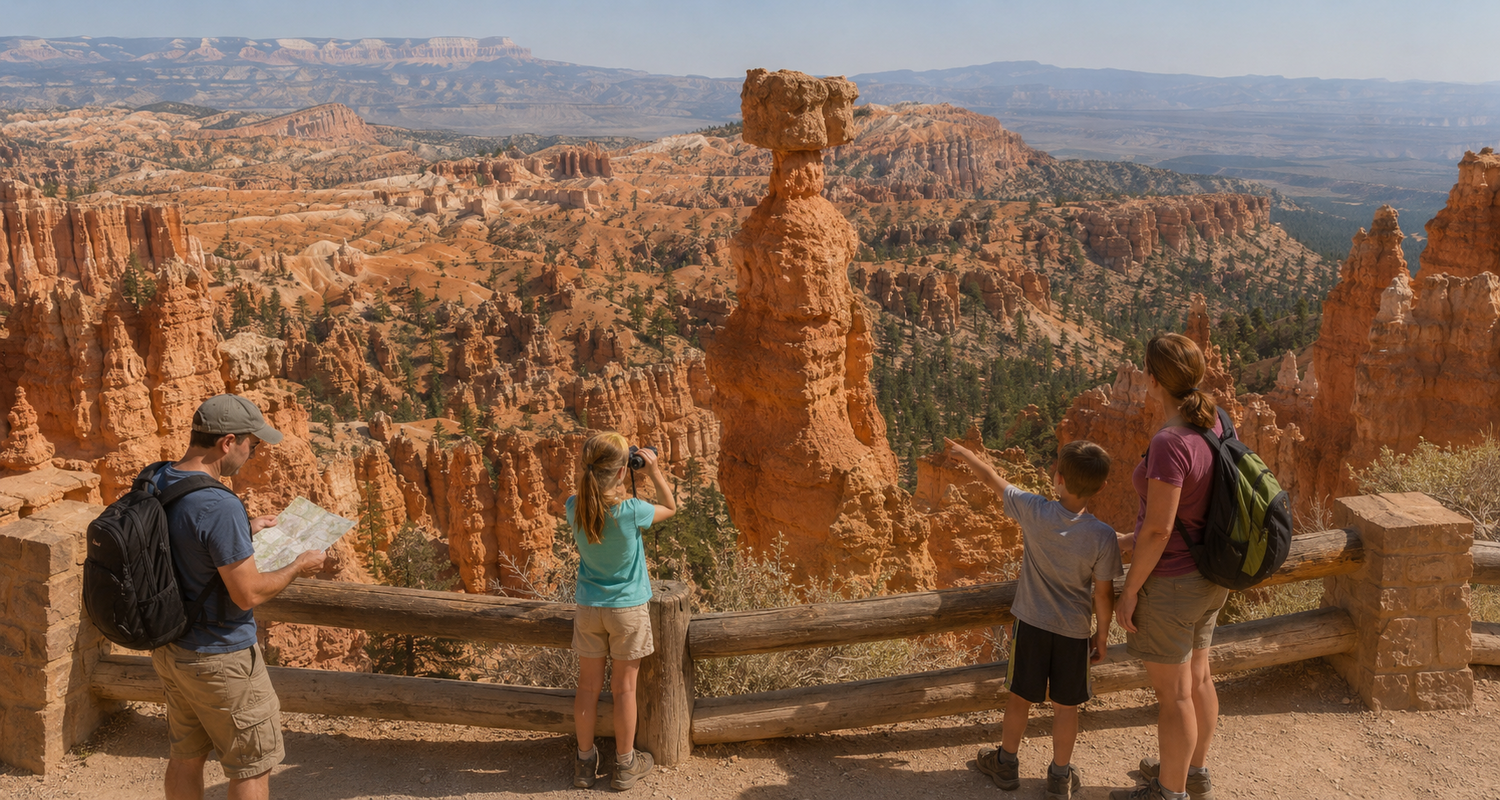
Ask kids to find a hoodoo shaped like an animal, a castle, a person or a monster. Then one nobody has named.
Then go looking for Thor's Hammer, the park's most famous formation. It's a heavy block balanced on a narrow neck, visible from the Navajo Loop.
Others already carry names, including Queen Victoria and The Alligator. Kids enjoy arguing about whether the names actually fit.
One rule matters. Stay on the trails, since why the rock keeps shifting is an active hazard, not a historical one.
The Hoodoos Have a Cultural Story Too
The Southern Paiute knew this place long before it was a park. Their name for it is Anka-ku-was-a-wits, meaning red painted faces.
In Paiute tradition the hoodoos are the Legend People, turned to stone by Coyote. A Paiute elder shared an account with a park ranger in 1936.
Paiute custom is to tell these stories only in winter. Out of respect, the Park Service doesn't reproduce the full story on its signs. Neither will we.
Families can read the park's excerpt at the Legend People wayside north of Sunset Point. Explaining why the whole story isn't printed teaches children something worth knowing.
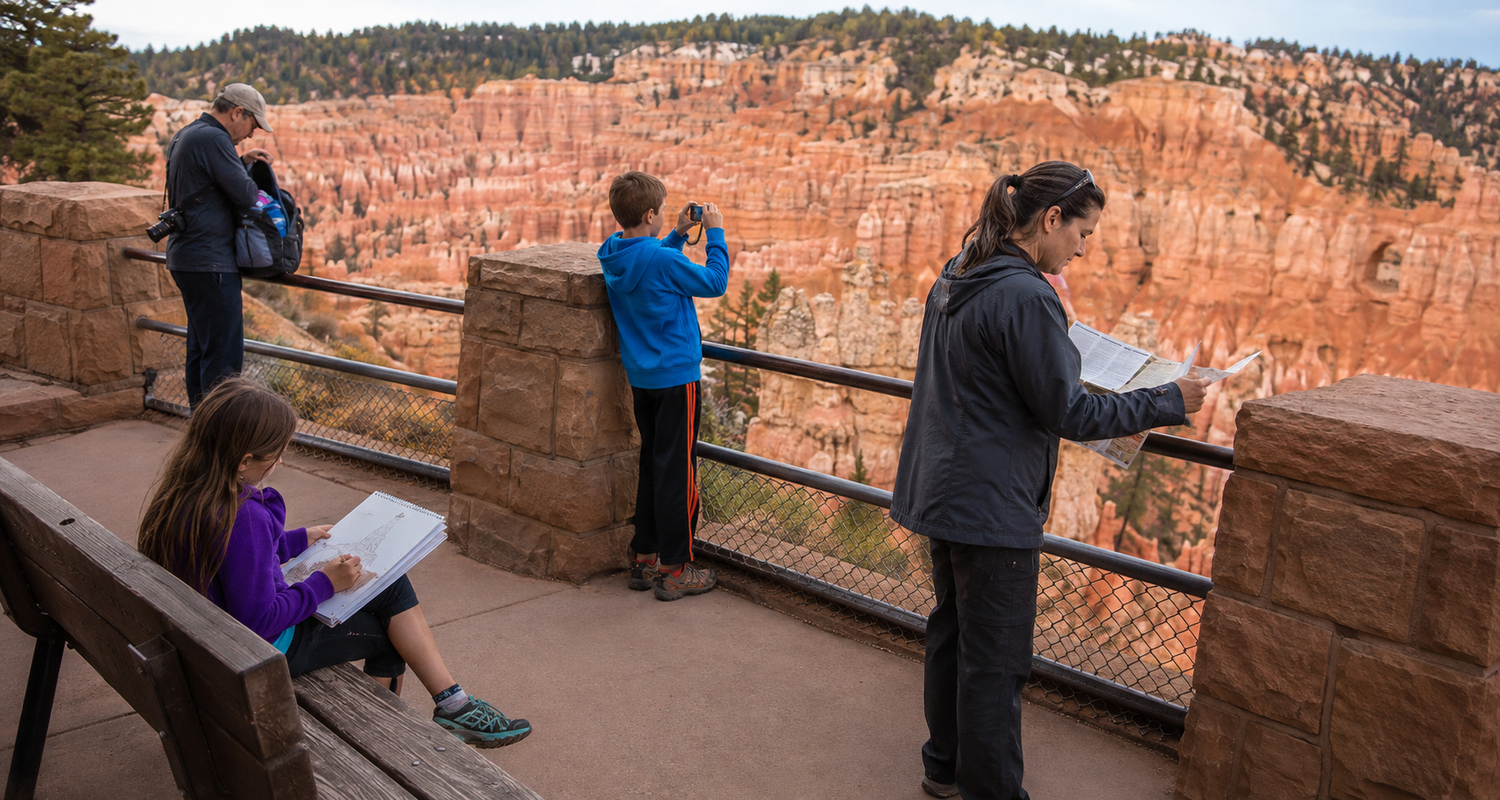
Turn Hoodoo Watching Into a Geology Adventure
Give kids a short list and the landscape becomes a puzzle.
Find one fin, one window and one finished hoodoo
Compare an orange band with a white one
Look for cracks running down a wall
Name three hoodoos yourself
Sketch or photograph a favorite
Pick up a Junior Ranger booklet at the visitor center
Ask what they'd expect to see here in a hundred years. Nobody knows exactly, which is the fun part.
Scientists are still working out precisely how hoodoos form. A curious eight-year-old is closer to the research than they realize.
Why Adventure-Guide Resources Help
Knowing what to point at is most of the work. Terrain, weather and a child's patience decide how a day goes.
Wonder Park Family builds that into every guide. Our Bryce Canyon adventure guide covers the park, and the Zion adventure guide handles the drive ninety minutes west.
Seeing Bryce Canyon Through Their Eyes
Bryce Canyon works on children because its geology already looks invented. Give them a shape to find and sightseeing turns into exploring.
Our post on what to expect at Bryce covers the trails, shuttle and timings. Wonder Park Family's screen-free adventure books, including the full eight-book collection, keep kids curious the whole way.
Frequently Asked Questions
What is a hoodoo in simple terms for kids?
A hoodoo is a tall, lumpy rock spire. Harder layers wear away slower than soft ones, which gives each spire its bumpy, stacked shape.
How are the hoodoos at Bryce Canyon formed?
Water seeps into cracks, freezes and expands, widening them. Over time a rock wall becomes a fin, then grows windows, then leaves standing columns behind.
Why does Bryce Canyon have so many hoodoos?
Soft limestone plus over 170 freeze-thaw days a year. Few places on Earth combine the right rock with that much freezing.
Why are Bryce Canyon's hoodoos different colors?
Iron oxide turns rock orange and red. Bands with little iron stay white or cream, and manganese adds streaks of purple and lavender.
What is the most famous hoodoo in Bryce Canyon?
Thor's Hammer, a heavy block balanced on a slim neck. It's visible from the Navajo Loop and is the emblem of the state geological survey.
What is Thor's Hammer at Bryce Canyon?
A hoodoo named for the Norse god of thunder. Softer rock eroded beneath a harder cap, leaving a hammer shape on a narrow pedestal.
What are some fun Bryce Canyon facts for kids?
It isn't really a canyon and no river made it. The hoodoos wear back two to four feet every century.
What can kids look for in the hoodoos?
Fins, windows and finished spires, plus shapes resembling animals, castles and faces. Named formations like Queen Victoria give them a target.
Is Bryce Canyon National Park good for young kids?
Yes. The paved rim trail is flat and stroller-friendly, and the biggest views need no hiking at all.
What can families do at Bryce Canyon besides looking at hoodoos?
Junior Ranger activities, ranger programs, the rim trail, and stargazing. The night sky here is among the darkest in the country.