
What Wildlife Can Families With Kids See at Grand Teton National Park?
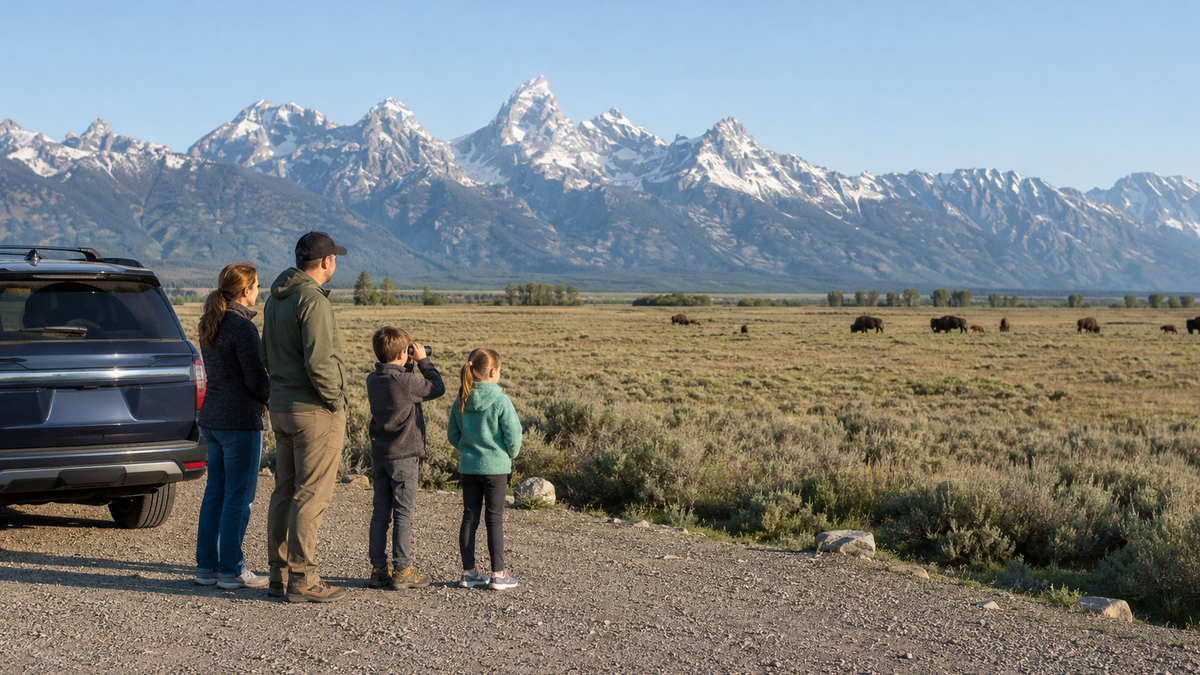
Families at Grand Teton can look for bison, moose, elk, pronghorn, mule deer, beavers, bald eagles and coyotes. Bears are possible, never promised.
Wildlife is wild, so nothing is guaranteed. What you can control is where you look and when.
The good news for parents is that most of it happens from pullouts and short walks. Kids don't have to earn these sightings.
What Animals Can Kids See in Grand Teton National Park?
Match the animal to the habitat and your odds improve immediately.
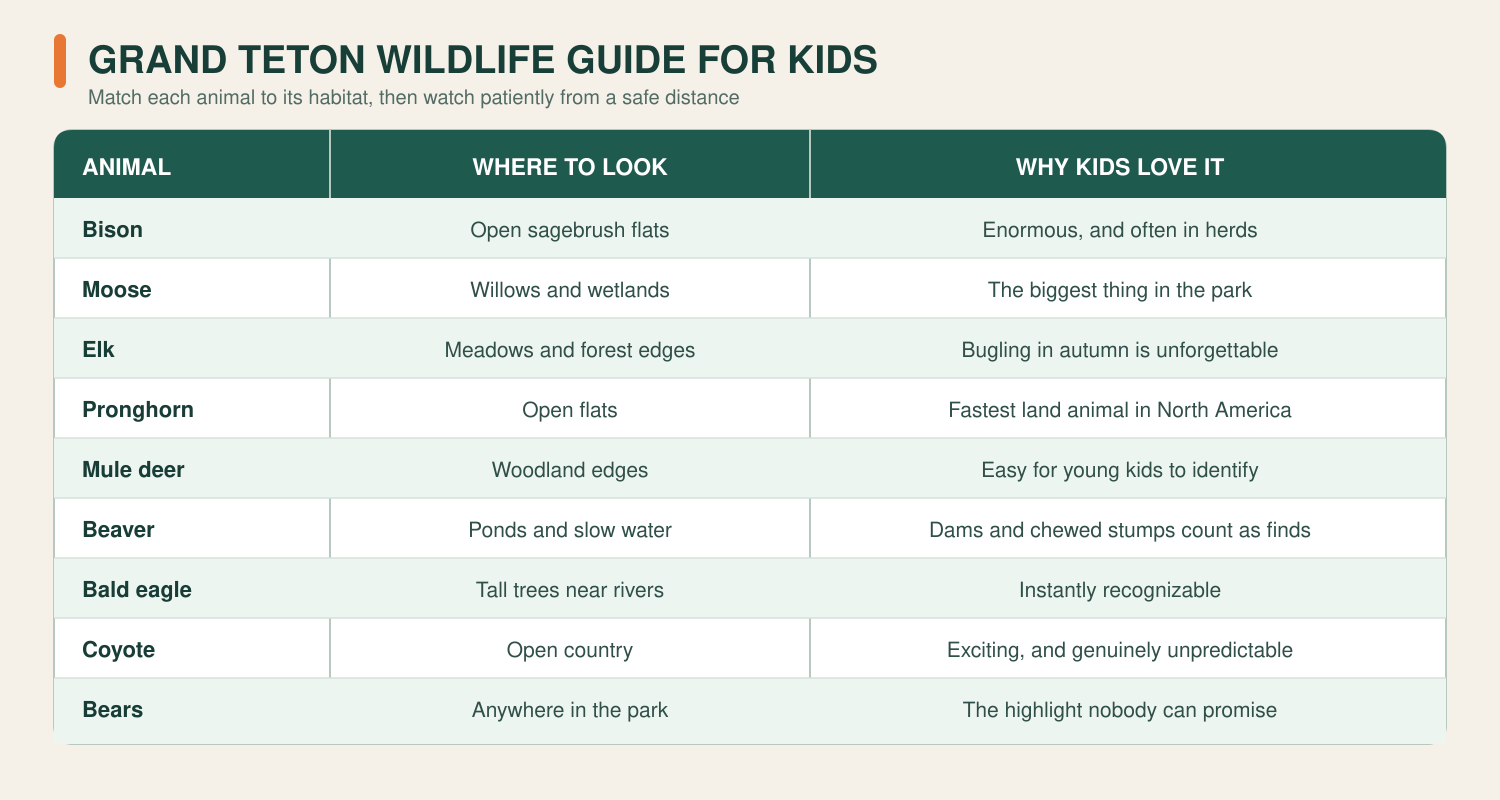
River otters, muskrats, foxes and pelicans round out the list. Signs count too, since tracks and chewed wood prove an animal passed through.
Where Should Families Look for Wildlife?
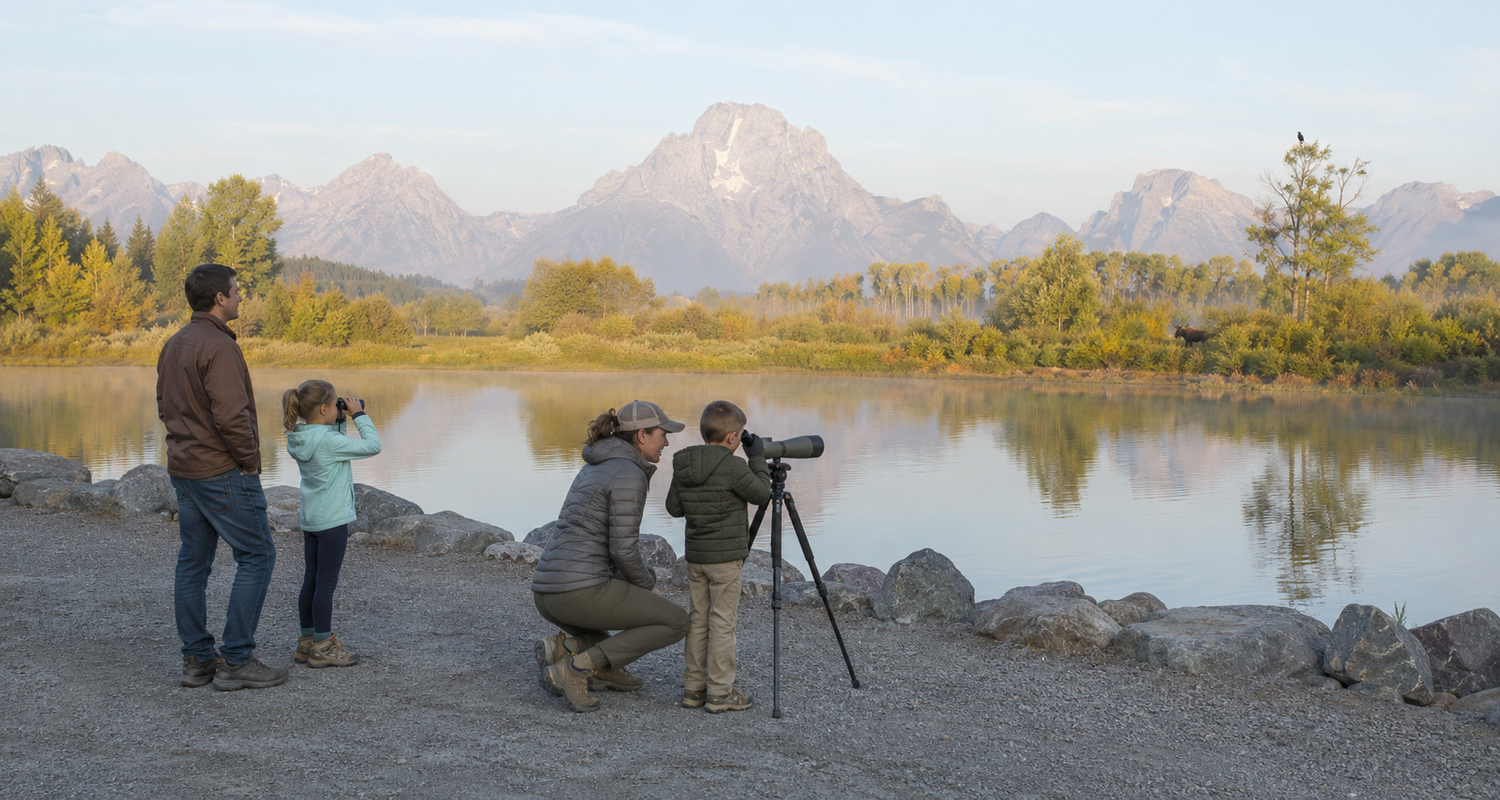
Oxbow Bend
Slow water, willows and cottonwoods, which is moose habitat. Beavers work the quieter channels and eagles perch in the tall trees.
You can watch all of it from the pullout. That makes it the easiest wildlife stop in the park with small children.
Antelope Flats and Mormon Row
Wide open sagebrush, which suits bison and pronghorn. The openness is the point, since kids can scan a huge area unobstructed.
Moose-Wilson Road
Wetland and woodland habitat, good for moose and black bears. Worth knowing the limits before you commit.
No trailers are allowed and vehicles over about 23 feet can't use it. Parking at the Rockefeller Preserve is only 50 spaces and usually fills between ten and three.
The road also closes some years in August and September when bear activity picks up. Check current alerts and closures before driving out.
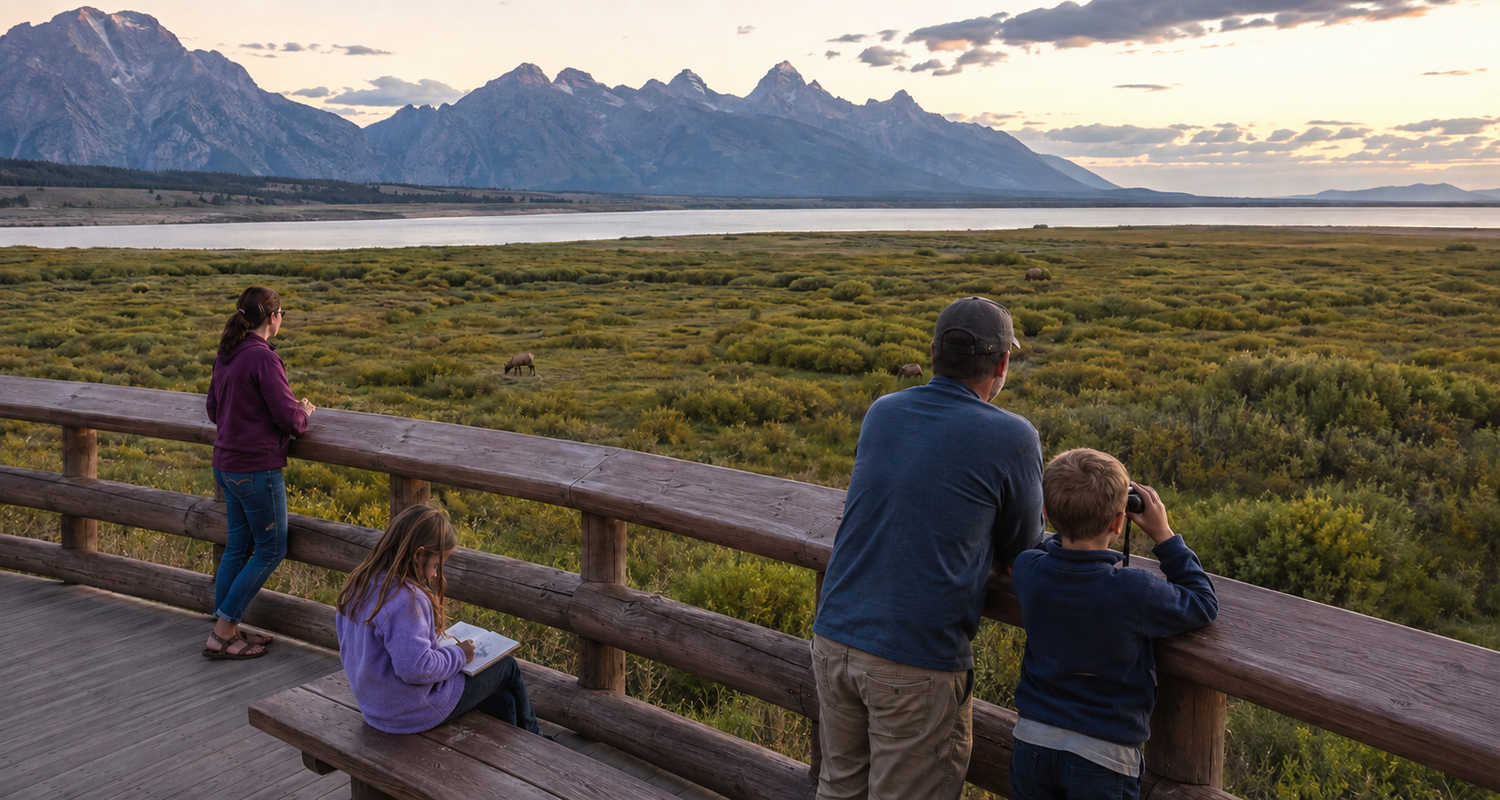
Willow Flats
Marshy ground below Jackson Lake Lodge, known for moose and elk. The overlook means nobody has to walk far.
When Should Families Go Looking?
Early morning and evening, consistently. Large animals move most around dawn and dusk, then settle through the middle of the day.
An early drive beats a midday one, and everyone rests afterwards.
Pick two productive spots and return to them. Patience finds more animals than mileage.
Where the Elk Go in Winter
Come winter, thousands of elk leave the high country. They gather on the National Elk Refuge just outside Jackson, around 5,000 of them.
Roughly a third of that herd summers inside Grand Teton. Horse-drawn sleigh rides run from mid-December to early April.
Worth understanding where the elk spend winter even if you visit in July.
Turning Wildlife Watching Into a Game
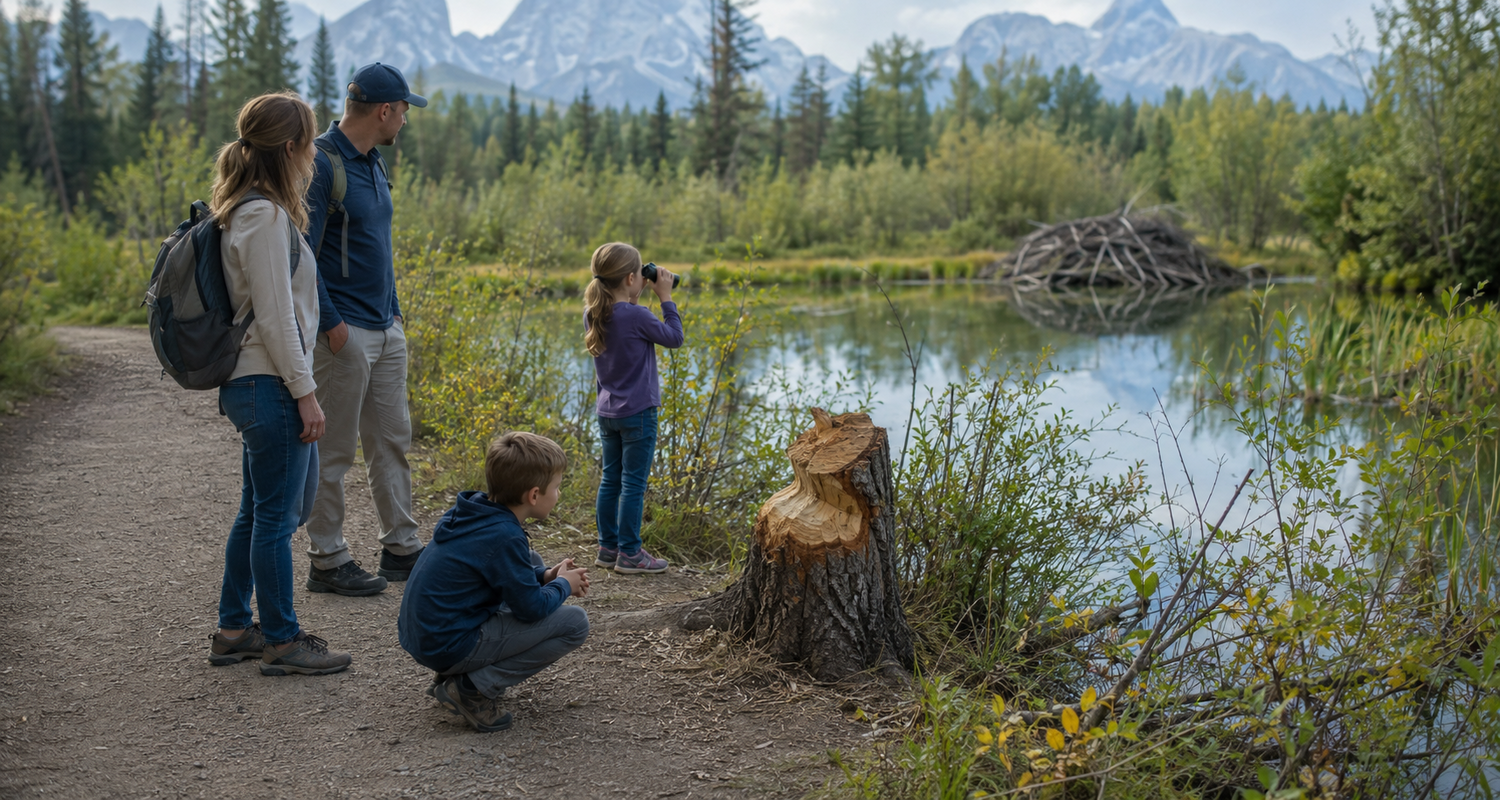
Give children categories rather than a species list. Ask them to find a big mammal, a water animal, a bird and an animal sign.
Signs matter as much as sightings. Tracks, dams, chewed stumps and scat all prove something passed through.
Binoculars change everything for a child. So does guessing the habitat before you arrive.
Our Assateague STEM kit turns that kind of watching into proper wildlife biology.
How Can Families Watch Wildlife Safely?
The distances here are law, not advice. Federal regulations require at least 100 yards from bears and wolves, and 25 yards from every other animal.
That applies inside your car too. A hundred yards is a football field without the end zones, and 25 yards is roughly four car lengths.
Give kids a simpler test. If an animal changes what it's doing because of you, you're too close.
Never come between a mother and her young. Carry bear spray, make noise on trails, and never run from a bear.
Watch from the designated pullouts rather than stopping in the road. A large animal is hit by a car most days across this ecosystem.
Slow down at dawn and dusk. The night speed limit drops to 45 mph.
Our post on teaching kids Leave No Trace covers the rest.
Why Adventure-Guide Resources Help
Habitat knowledge is what separates a good wildlife day from a disappointing one. So does knowing when to give up on a spot.
Wonder Park Family builds that in. Families continuing north often add our three-book starter bundle.
Our Rocky Mountain adventure guide covers similar elk country further south.
Watching Well Beats Ticking Boxes
Grand Teton rewards families who slow down. Bison, moose, elk and eagles are all realistic, and a bear would be a bonus.
The lasting lesson isn't the list. It's teaching kids to watch a wild animal without changing what it does.
Wonder Park Family's screen-free adventure books build that habit. Try the Smoky Mountains family guide or the full eight-book collection.
Frequently Asked Questions
What animals can kids see at Grand Teton National Park?
Bison, moose, elk, pronghorn, mule deer, beavers, bald eagles and coyotes are all realistic. Black and grizzly bears are possible but never guaranteed.
Where is the best place to see wildlife in Grand Teton?
Oxbow Bend for moose and eagles, Antelope Flats for bison and pronghorn. Both can be watched from pullouts, which suits young children.
Where can families see moose in Grand Teton National Park?
Look in willow thickets and wetlands. Oxbow Bend, Willow Flats and the Moose-Wilson Road are the three most reliable areas.
Can kids see bison in Grand Teton National Park?
Usually, yes. Bison graze the open sagebrush flats around Antelope Flats and Mormon Row, often in herds visible from the road.
How likely are families to see a bear in Grand Teton?
Possible but unpredictable. Bears live throughout the park, so carry bear spray and treat any sighting as luck rather than an expectation.
What is the best time of day to see wildlife in Grand Teton?
Early morning and evening. Large animals feed around dawn and dusk, then rest through the warmer middle of the day.
Is Oxbow Bend good for wildlife viewing with kids?
It's the easiest option in the park. Moose, beavers and bald eagles all use the area, and you can watch from the pullout.
Is Grand Teton National Park suitable for young children?
Yes. Much of the wildlife watching happens from pullouts and short walks, so small children aren't required to hike far.
How can families safely watch wildlife in Grand Teton?
Stay 100 yards from bears and wolves and 25 yards from everything else. Use binoculars, watch from pullouts, and never feed animals.
Are guided wildlife tours worth it for families with kids?
They can be. Guides know current animal movements and carry spotting scopes, which helps if you have limited days or restless children.