
How Do You Explain Volcanoes to Kids Before Visiting Hawaiʻi Volcanoes National Park?
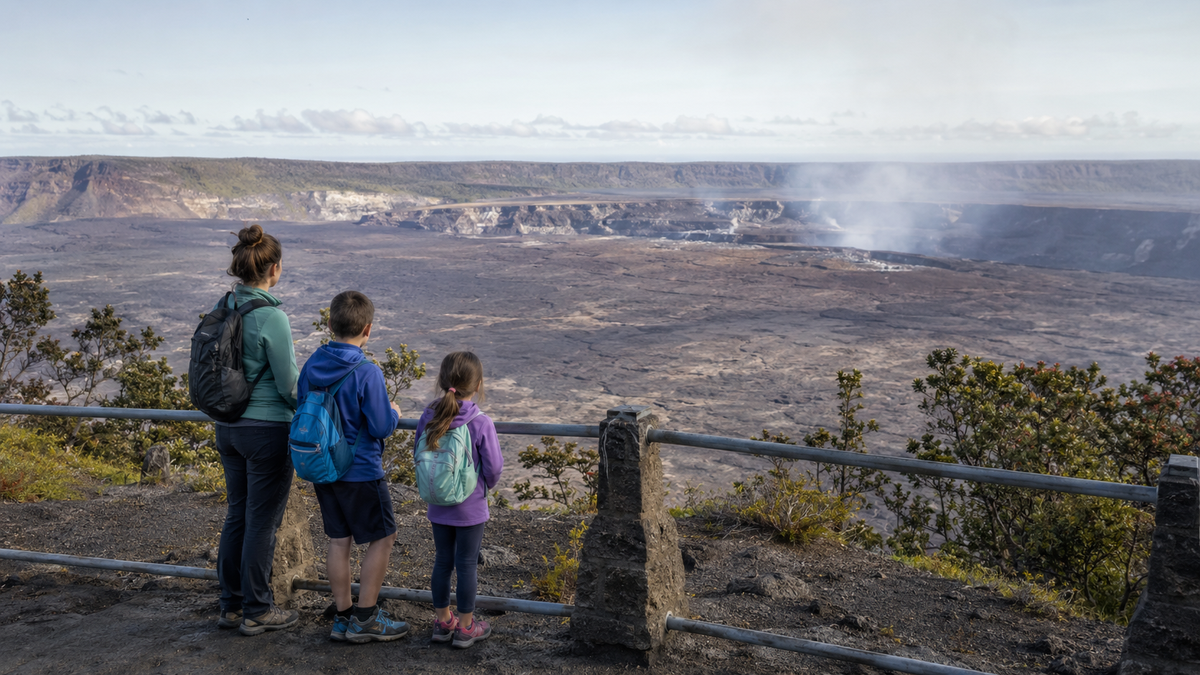
Knowing how to explain volcanoes to kids before visiting Hawaiʻi Volcanoes National Park changes the whole trip. A prepared child asks better questions and stares less blankly at rock.
You don't need a geology degree for this. You need one short script, a few features to point at, and clear safety rules.
This guide gives you all three, in language you can repeat out loud. Start at home, days before you fly.
What Is a Volcano? A Simple Explanation for Kids
Keep the first explanation short. Here's a version you can say word for word.
"A volcano is an opening in Earth where melted rock, gas and sometimes ash can reach the surface. Melted rock underground is called magma. Once it comes out, it's called lava."
That's the whole idea. Magma versus lava is the same rock in two different places.
One comparison helps most kids. Think of gas bubbles rising slowly through something thick, like honey or pancake batter.
Pressure builds until those bubbles find a way out. Tell your child it shows the pressure, not the exact way every eruption works.
How Did Volcanoes Build the Hawaiian Islands?
Most kids assume volcanoes only form where tectonic plates crash together. Hawaiʻi works differently.
The islands sit above a hotspot, a long-lived source of heat and magma deep below. The Pacific Plate creeps slowly over it.
Eruption after eruption, lava cools and stacks into layers. Given enough time, those layers rise above the ocean and become an island.
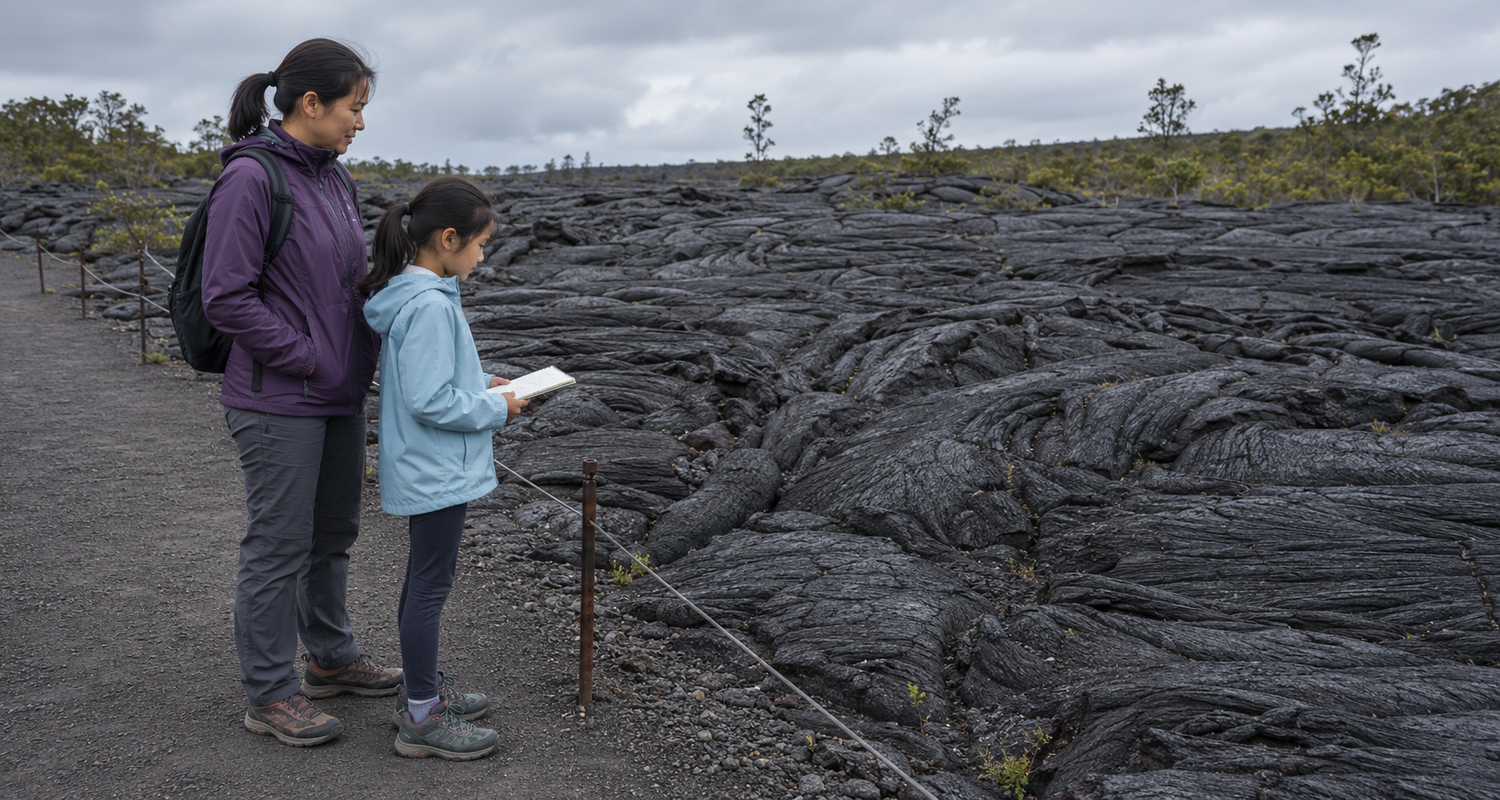
Fluid Hawaiian lava spreads out rather than piling up steeply. That's what creates a shield volcano, broad and gently sloping.
Kīlauea and Mauna Loa are both shield volcanoes, and both sit inside the park. It's worth reading how these volcanoes formed together before you go.
What Can Kids Look for in the Park?
Give children a short list of things to find. Recognition beats explanation once you're standing on the rock.
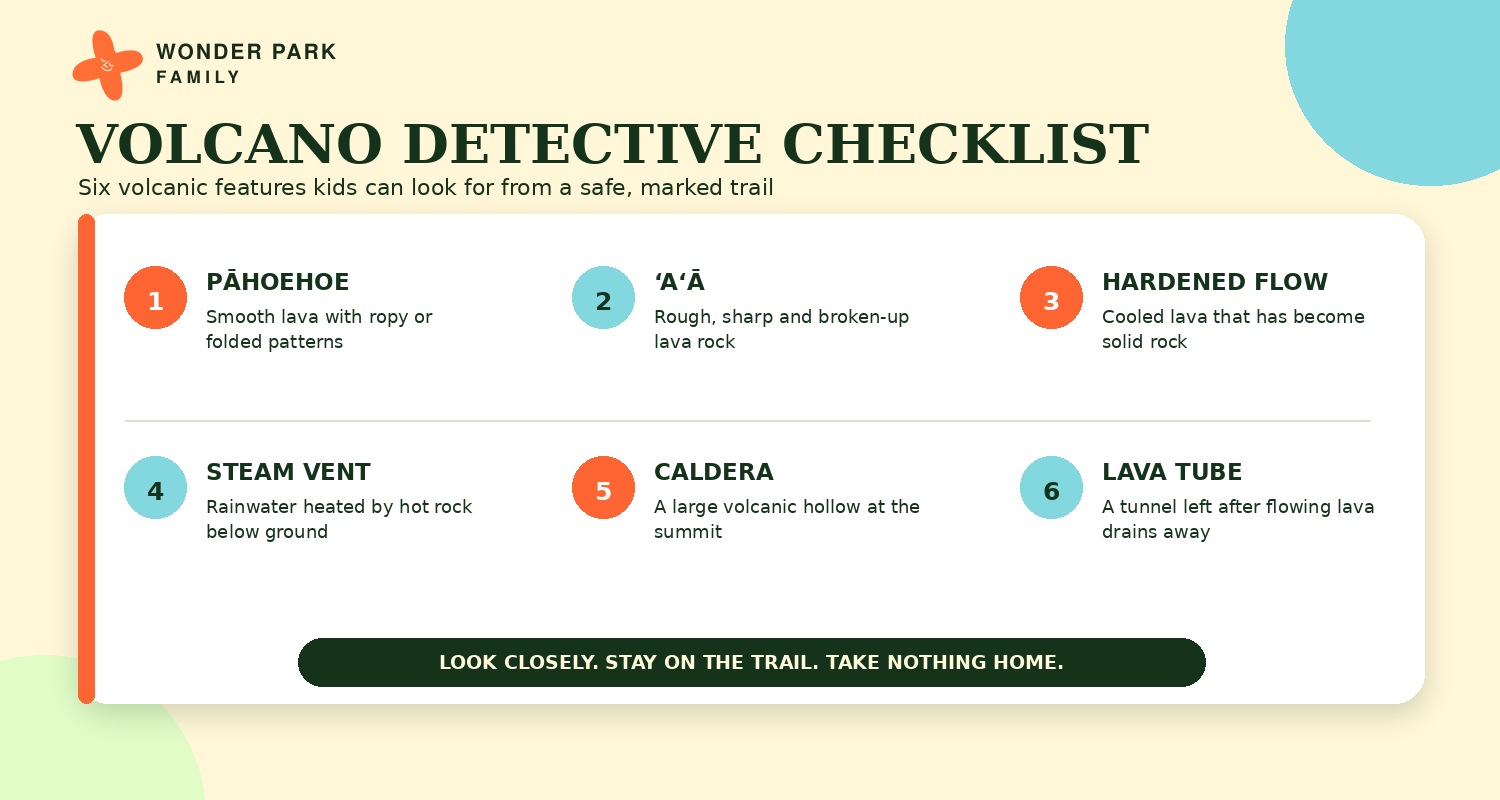
Hardened lava flows, which are rock formed when lava cooled and stopped moving
Pāhoehoe, the smoother lava surface that often looks ropy or folded
ʻAʻā, the rough, sharp, broken-up kind that's hard to walk across
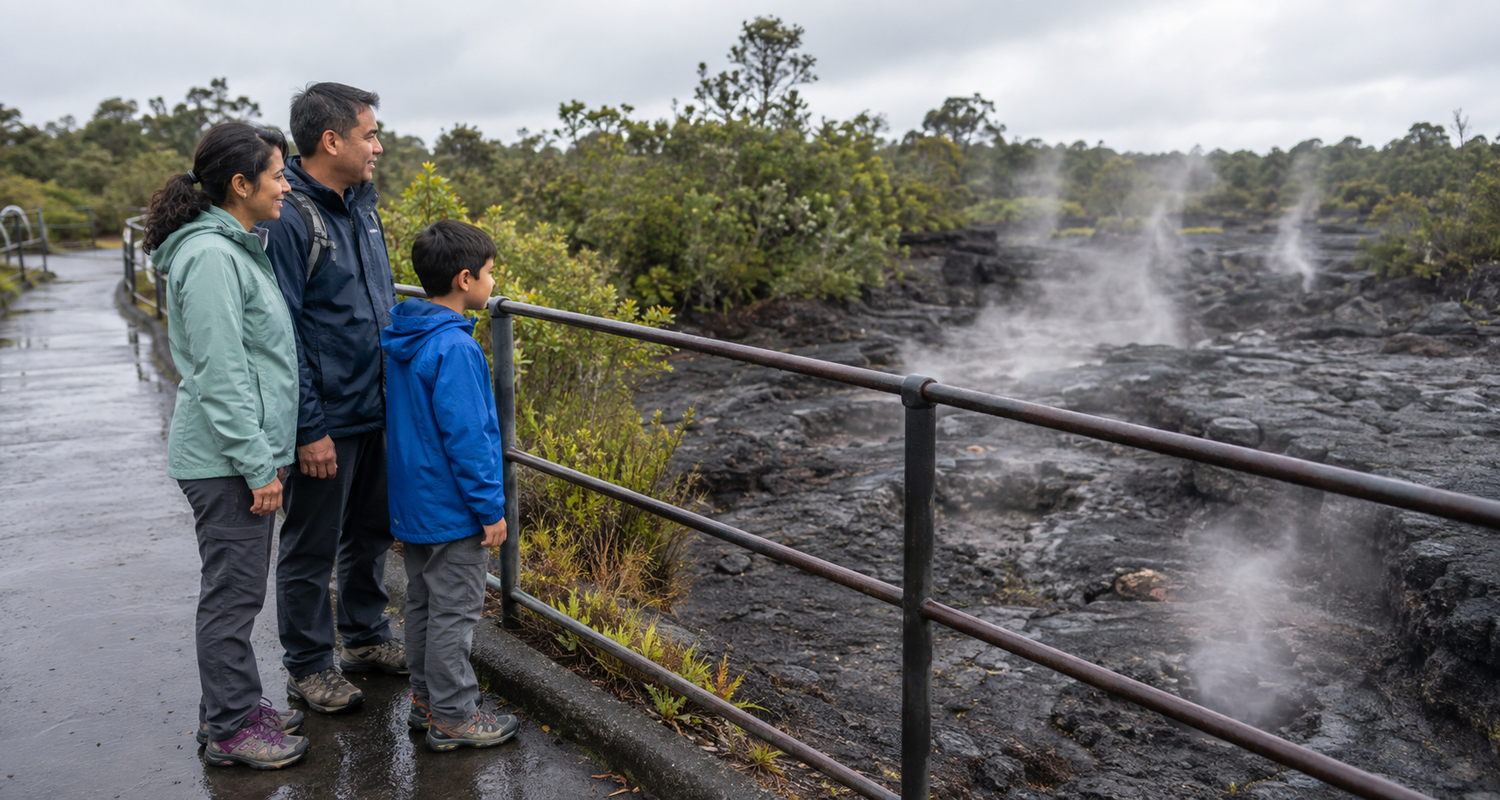
Steam vents, where rainwater sinks down, meets hot rock and rises back as steam
A crater or caldera, meaning a large volcanic hollow at the summit
Lava tubes, the tunnels left behind when the inside of a lava flow drained away
That last one lands well with kids who like caves. Our Mammoth Cave family guide works the same curiosity underground.
Teach one rule alongside the list. Look closely, but don't touch unsafe surfaces or take anything home.
Try This Pre-Trip Volcano Activity
One good activity beats five shallow ones. Try a lava investigator field page.
Give your child a sheet of paper and ask them to draw and label five things.
Magma sitting underground
A vent where it reaches the surface
Lava flowing out in the open
A cooled lava flow turned to solid rock
A steam vent or a lava tube
Then ask them to predict. What colors will the rock be? Will it look smooth or sharp?
Predictions are the useful part. Kids check their own guesses once they arrive, which keeps them looking.
This is the thinking behind Wonder Park Family's full range of guides. Each one matches activities to a specific park and keeps preparation screen-free.
Teach Safety and Respect Before Arriving
Cover these at home, not at the trailhead. A child who's already heard the rules follows them faster.
Stay on marked trails and behind every barrier
Keep close to a grown-up near cracks, cliffs, vents and overlooks
Never step into a closed area, whatever anyone else is doing
Bring water, sturdy shoes and layers
Volcanic gases matter more here than at most parks. Sulfur dioxide and vog affect young children and anyone with breathing difficulties.
Check eruption updates, air quality and closures before you set out. The park publishes current park safety guidance that's worth reading in advance.
Respect is part of safety here too. Kīlauea holds deep cultural meaning for Native Hawaiians, so give cultural practitioners quiet and space.
Our post on Leave No Trace for kids covers the rest of it.
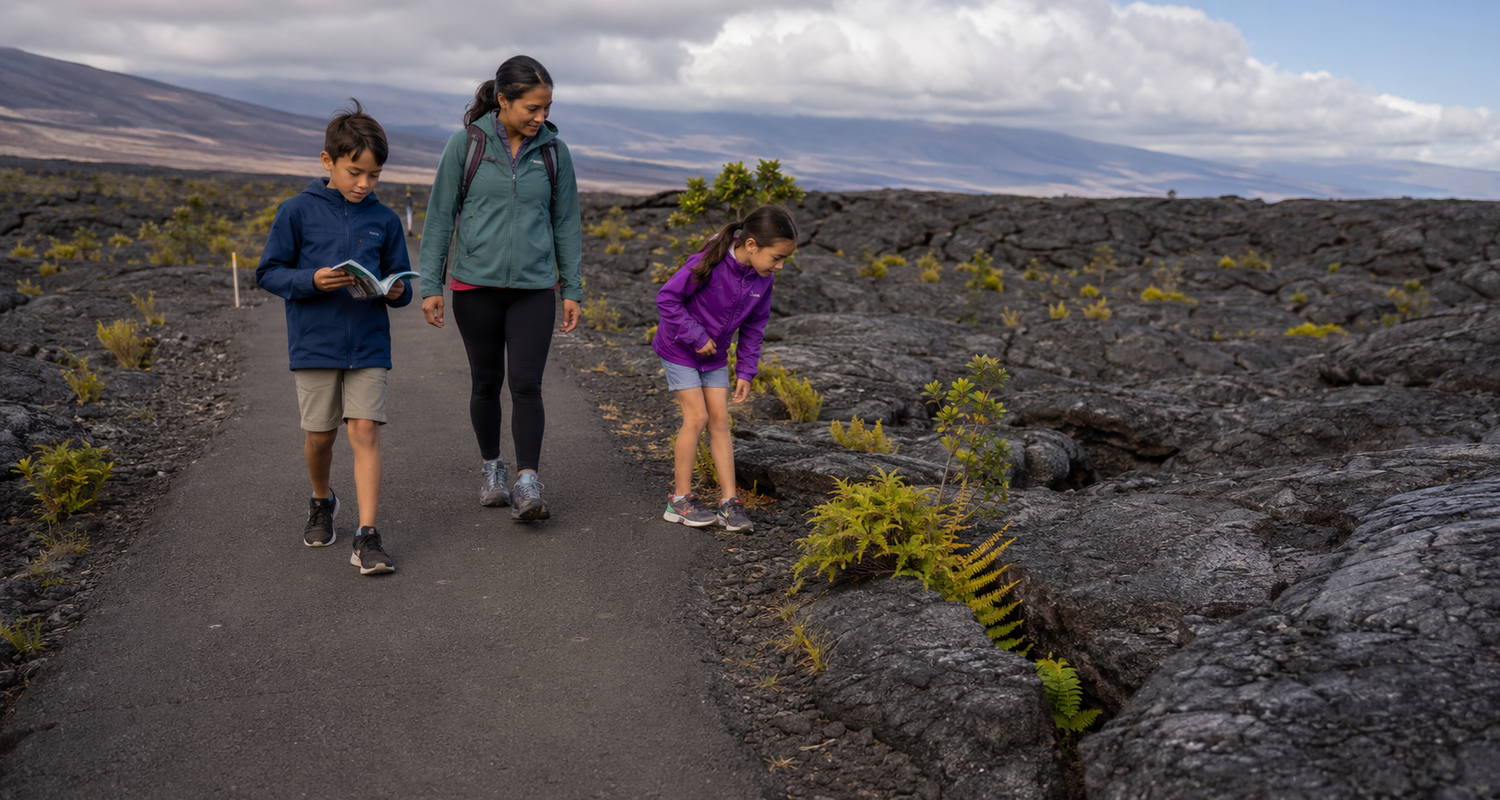
Use an In-Park Volcano Detective Game
Turn observation into a job. Give your child four questions to answer as you walk.
What shows you that lava once moved through here?
Does this rock look smooth and folded, or sharp and broken?
Can you spot plants growing back on old lava?
What can you smell, hear or feel without leaving the trail?
The same approach works elsewhere. It's how we handle wildlife watching with kids in other parks.
Help Kids Arrive Curious and Prepared
Your child doesn't need a geology lesson. They need one clear explanation, a handful of features to find and firm safety rules.
That's really all it takes to explain volcanoes to kids before visiting Hawaiʻi Volcanoes National Park.
Wonder Park Family's screen-free adventure books carry that preparation from home to the trail and back again. You can build your own bundle around the parks you're actually visiting.
Frequently Asked Questions
How do you explain a volcano to a young child?
Say it's an opening in Earth where melted rock, gas and ash can reach the surface. Underground it's magma, above ground it's lava.
What is the difference between magma and lava?
Same melted rock, different location. Magma sits beneath the surface. Once it erupts and flows out into open air, we call it lava.
Why does Hawaiʻi have so many volcanoes?
The islands sit over a hotspot, a source of heat deep beneath the Pacific Plate. Magma rises through it and builds volcanoes repeatedly.
Are Hawaiian volcanoes always gentle?
No. They often produce flowing lava, but they can also erupt explosively. Treat every eruption as unpredictable rather than assuming it's safe to approach.
Will children see flowing lava in the park?
Possibly not. Eruptions start and stop without warning, and viewing areas close for safety. Plan around the landscape rather than a lava sighting.
What are the two volcanoes in Hawaiʻi Volcanoes National Park?
Kīlauea and Mauna Loa. Both are active shield volcanoes, and both have shaped the island through repeated eruptions over hundreds of thousands of years.
What is a shield volcano?
A broad volcano with gentle slopes, built by fluid lava flows spreading out over time. It looks more like a shield than a cone.
How does a lava tube form?
Flowing lava crusts over on the outside while molten rock keeps moving underneath. When that inner flow drains away, it leaves a tunnel.
Are volcanic gases dangerous for children?
Yes. Sulfur dioxide and vog affect young children and anyone with heart or breathing problems. Check the park's air quality alerts before visiting.
How can parents make a volcano visit educational?
Give kids a simple script beforehand, a short list of features to find, and questions to answer on the trail. Curiosity follows preparation.