
What Can Kids Do at Olympic National Park Tide Pools?
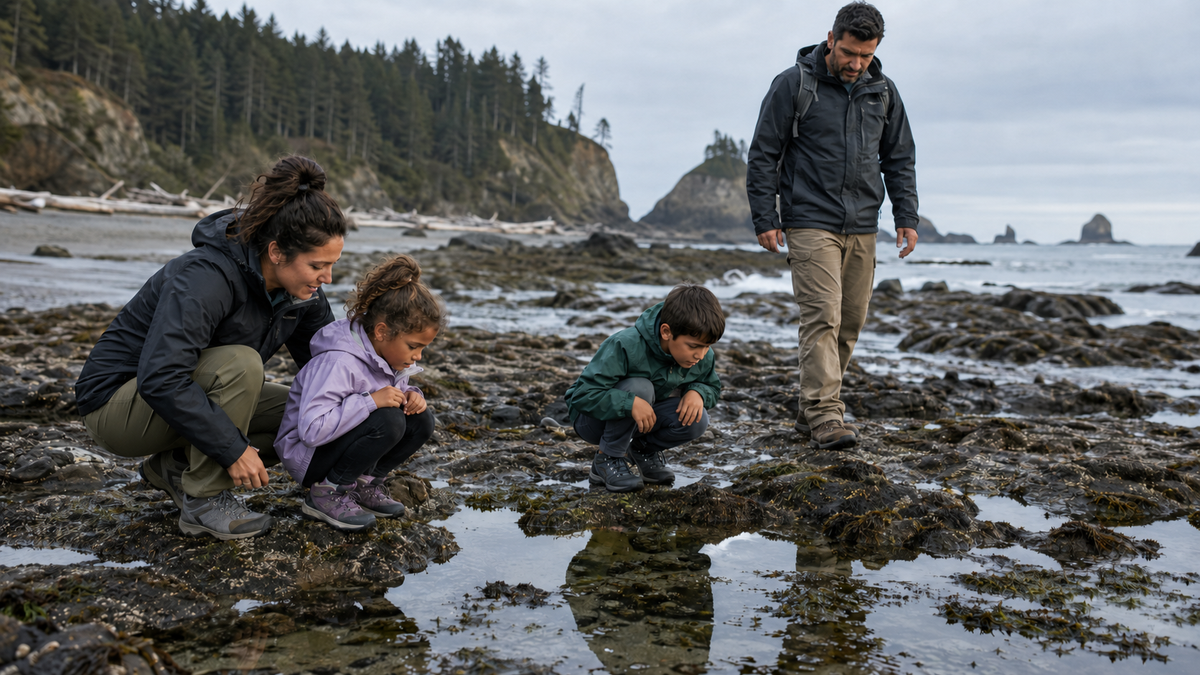
Twice a day the ocean pulls back and hands your children a living classroom. Sea stars, anemones, hermit crabs and snails, all sitting right there on the rock.
Wonder Park Family builds screen-free national park guides that teach kids what to look for before they arrive. A child who recognises an ochre sea star finds ten more.
Here's what children can actually do at Olympic National Park tide pools, and how to time it right.
What Can Kids Do at Olympic National Park Tide Pools?
Plenty, once you frame it as a hunt rather than a beach stop.
Search for marine animals in and around the exposed rock
Complete a scavenger hunt with a prepared list
Compare different pools and the habitats inside them
Draw or photograph what they find
Watch how animals survive between tides
Practise responsible exploring from the very first pool
One thing to set straight early. Tide pooling is observation, not swimming, and nothing goes home in a pocket.
Seven Tide-Pool Activities Kids Can Try
Pick two or three. Trying all seven in one outing exhausts everyone.
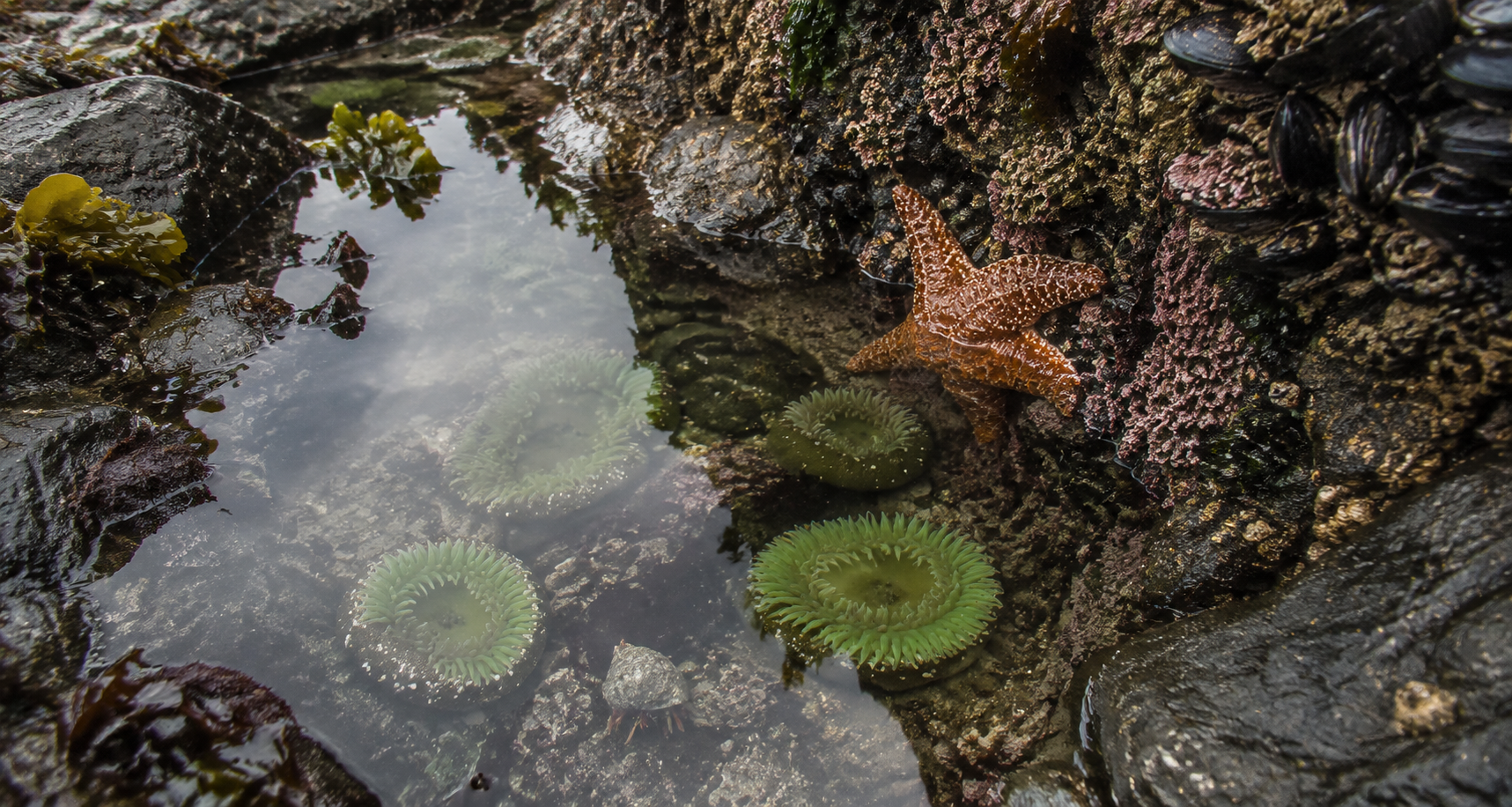
1. Marine-life scavenger hunt. Look for sea stars, anemones, barnacles, mussels, snails, hermit crabs and seaweed.
2. Tide-pool bingo. Use a card mixing colours, textures, animals and coastal features.
3. Junior marine biologist. Ask how each animal clings, hides, feeds or protects itself.
4. Compare two pools. Note depth, sunlight, temperature, movement and what's living in each.
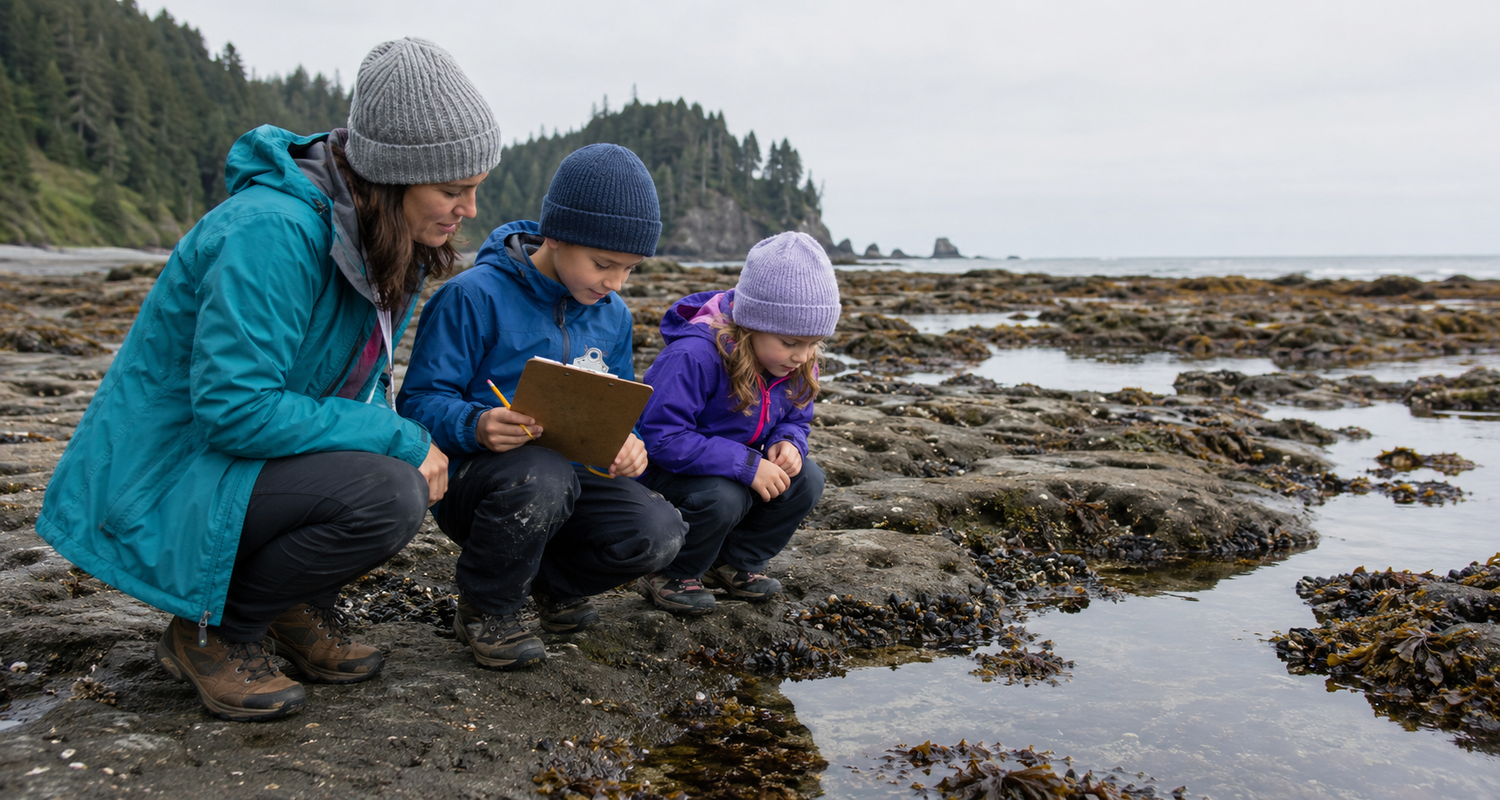
5. Sketch or photograph. Build a record without removing a single thing.
6. Colour and pattern hunt. Orange and purple sea stars, green anemones, patterned shells, pink coralline algae.
7. Post-trip nature journal. Capture favourite finds, questions and drawings afterwards.
Match the activity to the age. Younger children do well with colours, shapes and simple spotting games.
Older kids can handle habitat comparisons, identification and adaptation questions. Our Acadia coastal adventure guide works the same rocky-shore curiosity on the opposite coast.
Where Are the Best Olympic Tide Pools for Families?
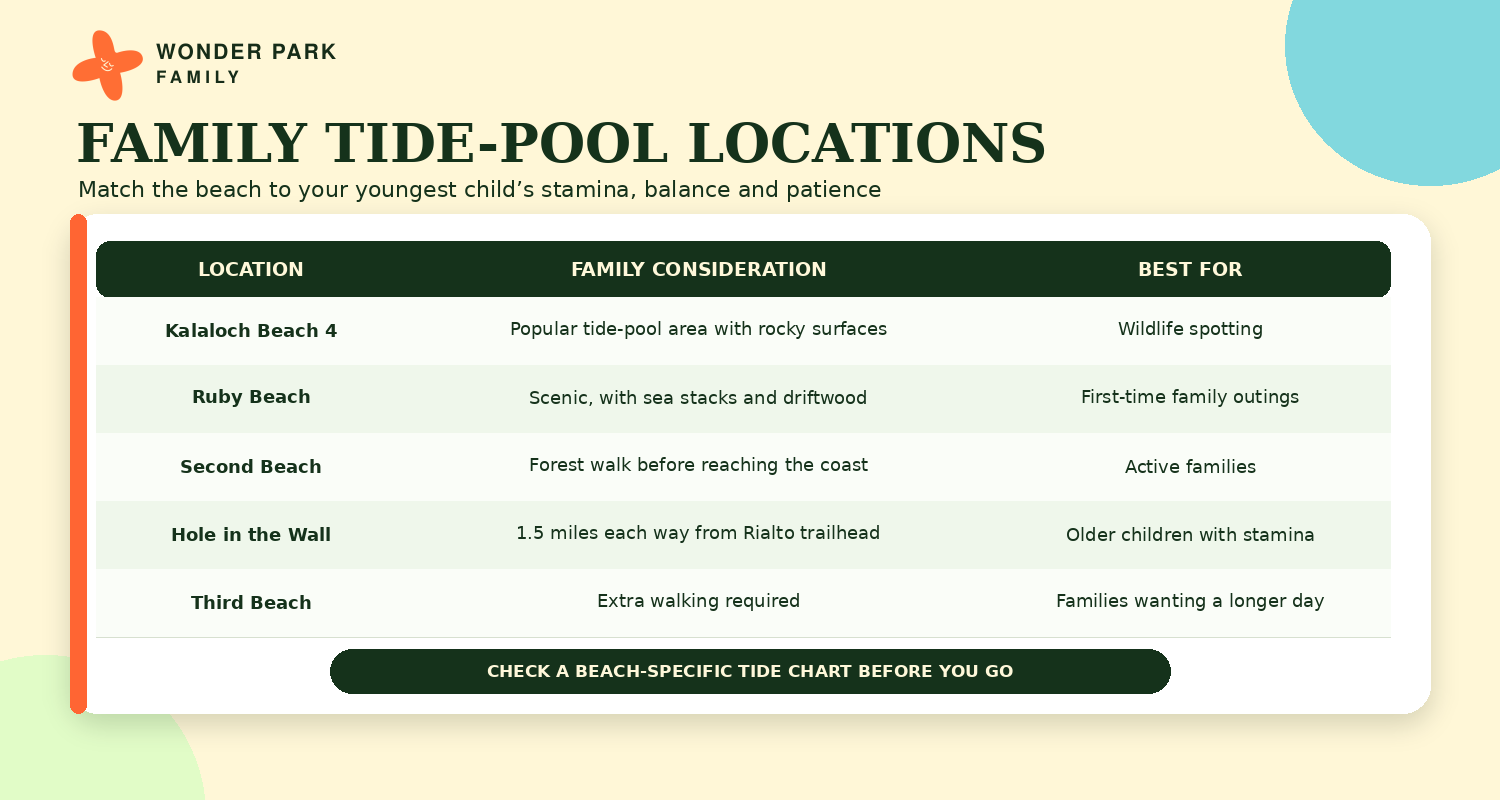
Kalaloch Beach 4 and Hole in the Wall are the park's most popular tide-pool spots. Ruby, Second and Third are excellent too.
No beach is universally best. Match it to your youngest child's legs, balance and patience.
One caution for Hole in the Wall. Falling rock is a genuine hazard directly beneath the arch, so don't linger under it.
How Should Families Plan Around Low Tide?
This is the part families get wrong. Tide pools only appear as the water pulls back, and the timing changes daily.
Aim for tides below one foot, which is what the Park Service recommends
Minus tides are better still, exposing far more of the intertidal zone
Arrive before the lowest point, never as the water starts returning
Add your walking time, especially the hour-long hike to Hole in the Wall
Use an official tide chart for that specific beach and date
Here's the detail most people miss. Olympic sometimes gets only one low tide in a day.
Never assume there'll be a second chance later. Where and when to go is worth reading before you set the alarm.
How Can Kids Explore Tide Pools Safely?
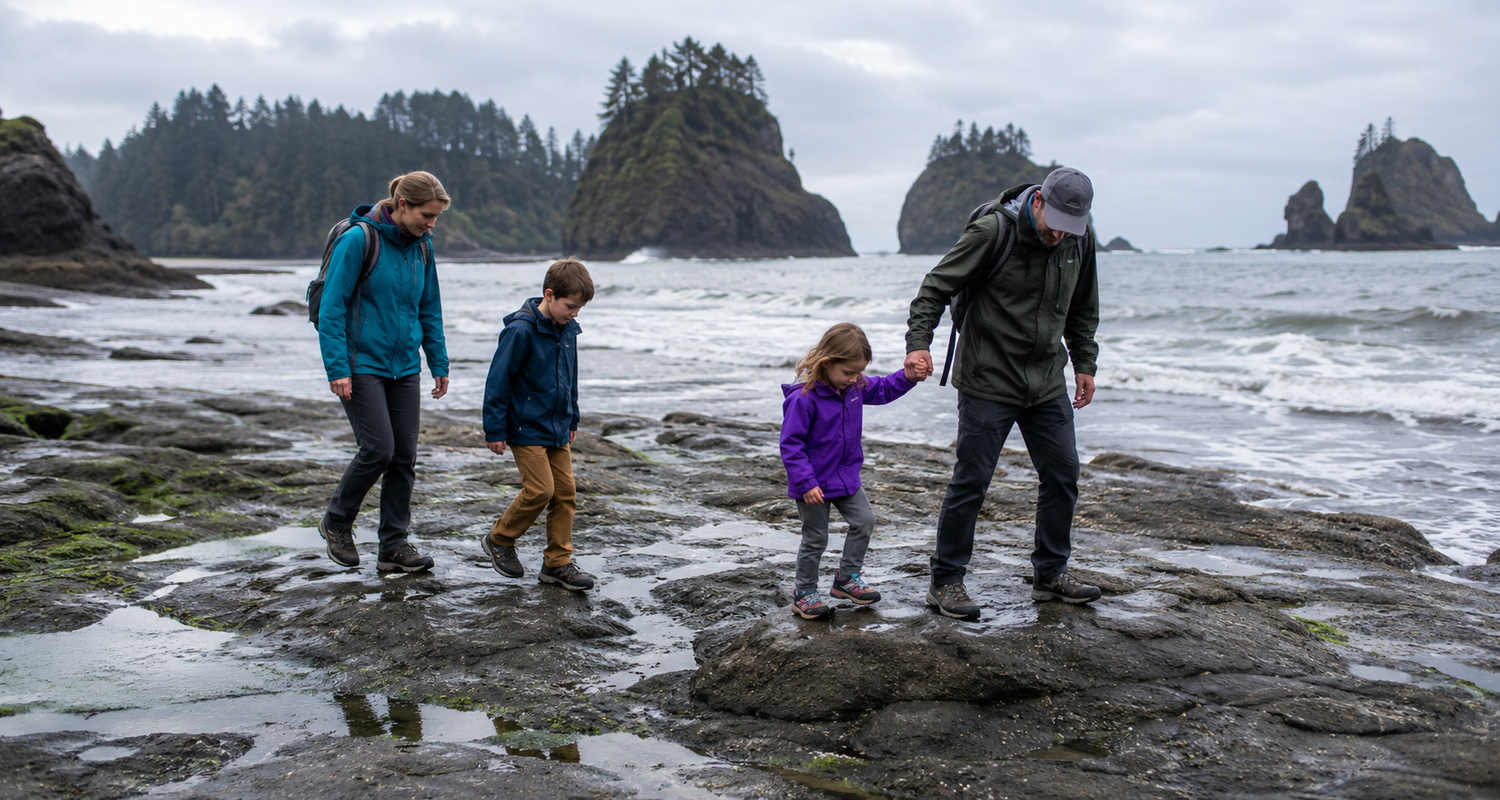
Wet rock covered in algae is genuinely slippery. Set these rules before anyone steps onto it.
Keep children within arm's reach at all times
Watch for the returning tide and sneaker waves
Wear sturdy shoes you don't mind soaking
Step on bare rock where you can, since it grips better and crushes nothing
Test each foothold before shifting your weight
Never jump between rocks, keeping one foot down always
Never turn your back on the ocean
Leave animals where they are, and never pry anything off a rock
Replace any rock you lift, exactly as you found it
Take nothing home, including shells and sand
Gentle touching is allowed on some organisms. Teach kids the touch test explained by the sanctuary, where anything resisting removal gets left alone.
Why Use an Expert Adventure Guide Before Visiting?
Children recognise far more when they've seen it beforehand. A scavenger hunt also gives them purpose without encouraging handling.
Preparation means you're not inventing games on a windy beach. Have a look at our complete guide collection sorted by park.
No printed guide replaces a tide chart or adult supervision, though.
Prepare Young Explorers Before Low Tide
Preparation turns a beach stop into something children remember for years. It also makes the outing safer.
Give them the vocabulary, the safety rules and a reason to look closely. Our Assateague beach activity book does the same for Atlantic shorelines, and wildlife kids can spot covers the rest of the parks.
Frequently Asked Questions
What animals can kids see in Olympic National Park tide pools?
Ochre sea stars, green anemones, hermit crabs, barnacles, mussels, limpets, chitons and snails, plus seaweeds, bull kelp and pink coralline algae on the rocks.
Which Olympic National Park beach is best for tide pooling with kids?
Kalaloch Beach 4 for easy access and rich pools. Ruby Beach suits first visits. Hole in the Wall rewards older children who can manage the hike.
What tide level is best for Olympic National Park tide pools?
Below one foot, according to the Park Service. Minus tides expose the most. A three-foot low tide gives disappointing results.
How early should families arrive before low tide?
At least 30 minutes before the lowest point, plus your walking time. For Hole in the Wall that means adding a full hour of hiking.
Is Ruby Beach good for tide pooling with children?
Yes. It's scenic, easy to reach off Highway 101, and offers intertidal life alongside sea stacks and driftwood that keep younger children interested.
Can children touch animals in tide pools?
Gently, yes, for some organisms. Use the touch test. If an animal resists being moved, leave it alone rather than pulling harder.
What shoes should kids wear for tide pooling?
Sturdy closed-toe shoes that can get wet. Algae-covered rock is extremely slippery, so grip matters more than keeping feet dry.
Are Olympic National Park tide pools safe for toddlers?
With constant hands-on supervision. Slippery rock and unpredictable waves make this a hold-hands activity, and Kalaloch Beach 4 is the gentlest option.
Can families collect shells from the tide pools?
No. Nothing leaves the beach, including shells, rocks and sand. Everything there is part of a working ecosystem.
What should families bring for a tide-pool adventure?
A tide chart, sturdy wet shoes, layers, a trash bag, water, and a scavenger hunt or sketchbook. Leave buckets and collecting jars at home.