
What Animals Can Kids Spot at Rocky Mountain National Park?
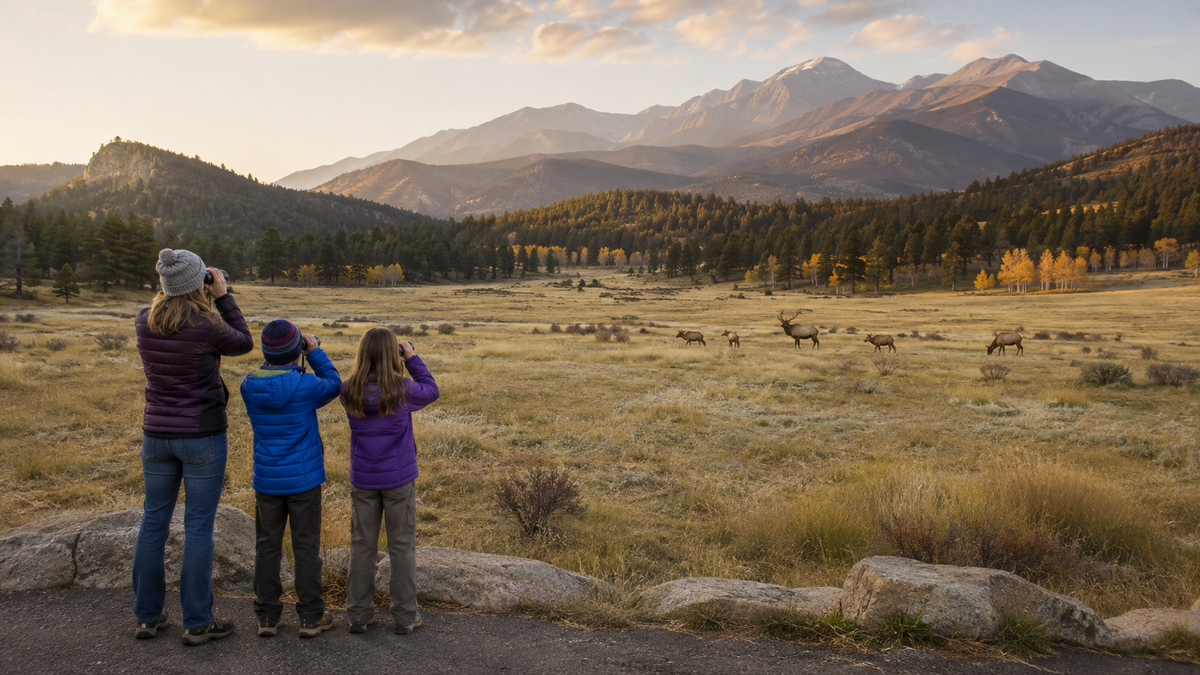
Children visiting Rocky Mountain National Park may see elk, mule deer, bighorn sheep, moose, marmots, pikas, ground squirrels and mountain birds.
Wonder Park Family turns park visits into organised adventures with family park adventure resources built around what kids can realistically find.
Nothing is guaranteed out there. But knowing where to look, when to go and how to watch quietly changes the odds enormously.
Animals Kids May See in Rocky Mountain National Park
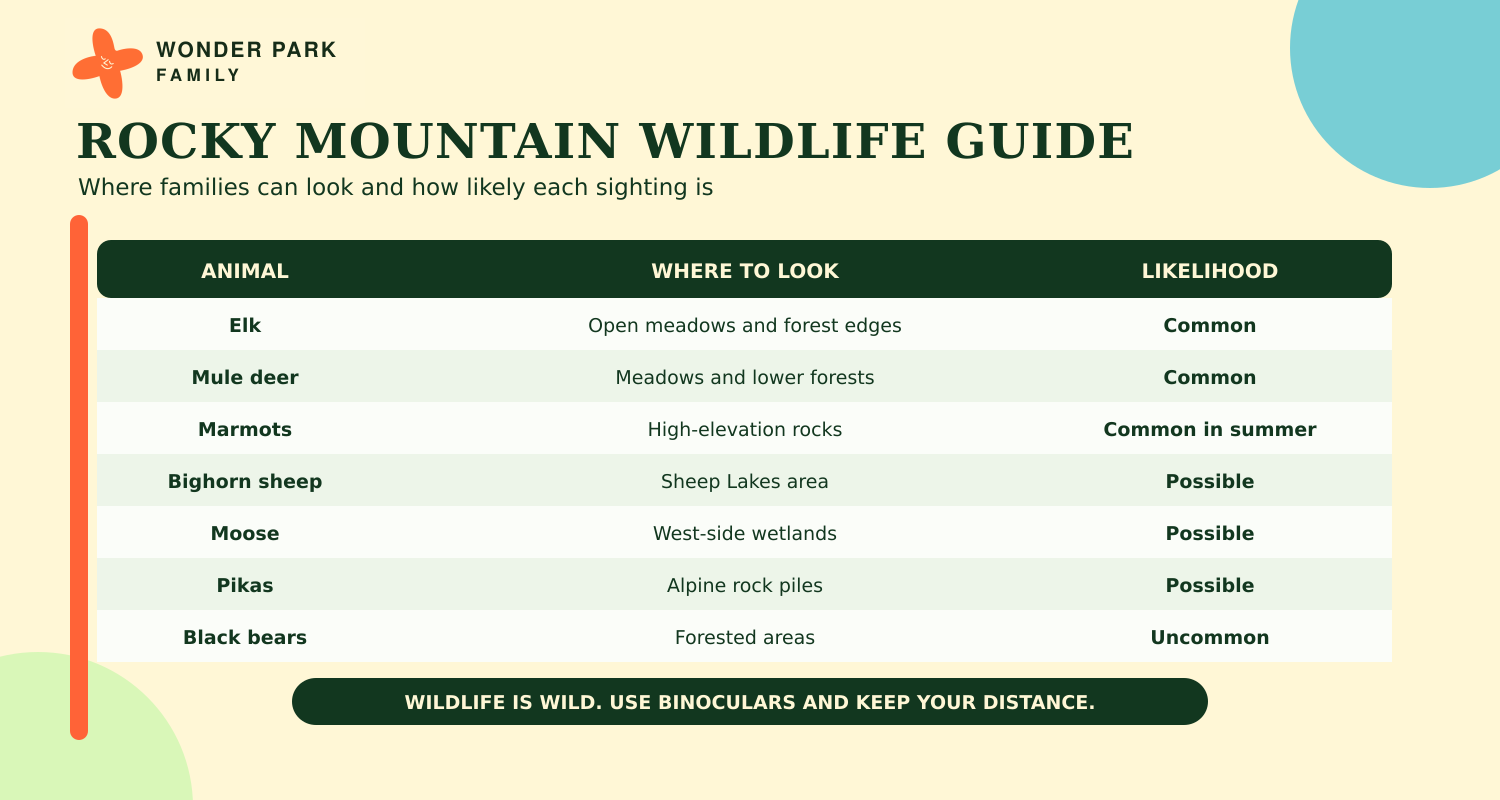
Likelihood shifts with season, weather and where animals happen to be moving. Treat this as a guide, not a promise.
The Best Wildlife for Kids to Watch For
Elk and Mule Deer
These are your most realistic large-animal sightings, and the ones children remember.
Look in open areas like Moraine Park, especially where meadow meets forest. Dawn and dusk are the productive hours.
Elk move high onto the tundra in summer, then drop to lower meadows through autumn, winter and spring.
Bighorn Sheep and Moose
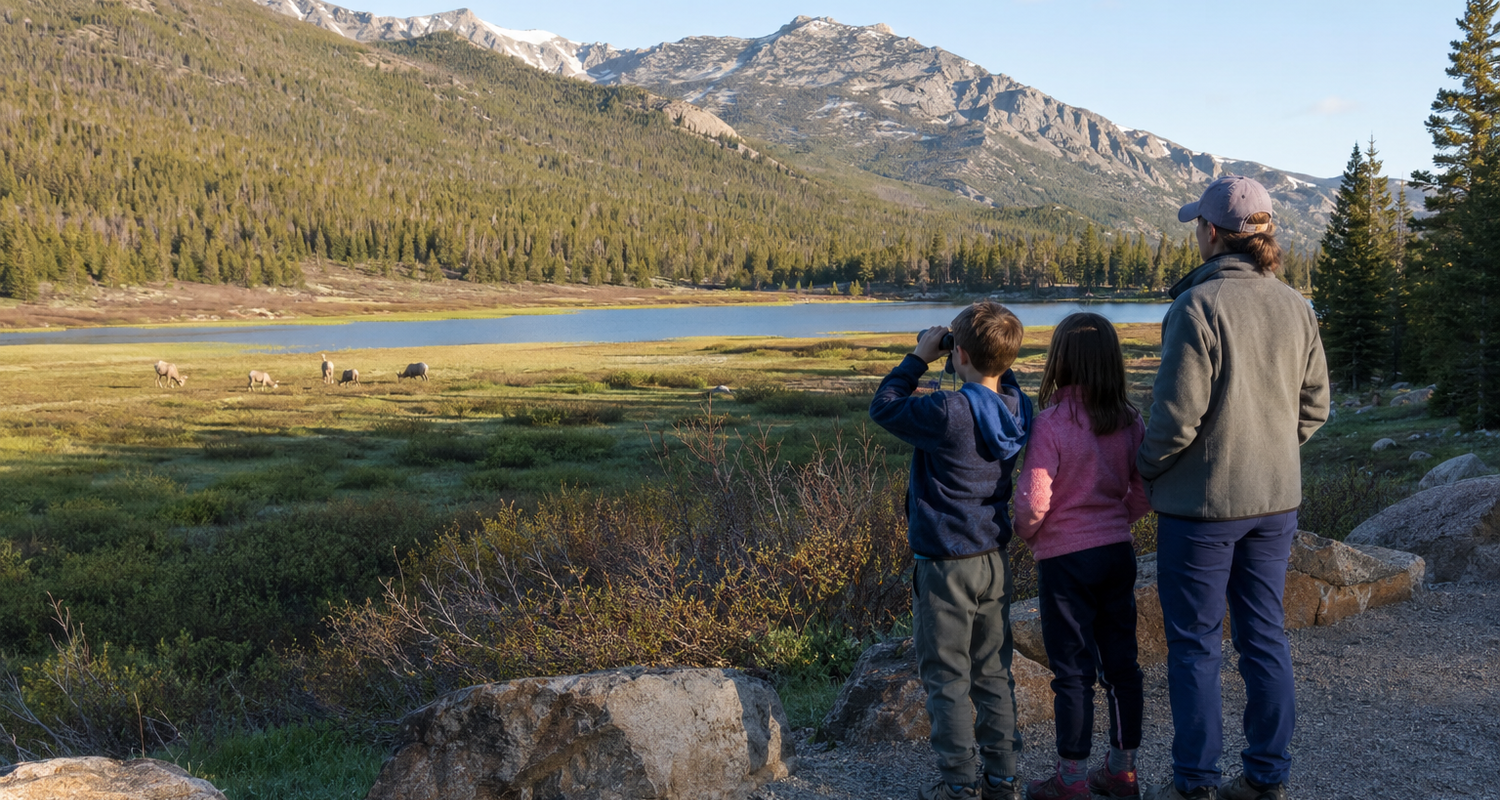
Sheep Lakes in Horseshoe Park is the park's best-known bighorn viewing spot, most reliable from May through mid-August.
For moose, head to the willow-filled wetlands of Kawuneeche Valley on the west side. Neither animal is guaranteed on any given day.
Marmots, Pikas and Ground Squirrels
These are the crowd-pleasers for kids, and far easier to find than the big mammals.
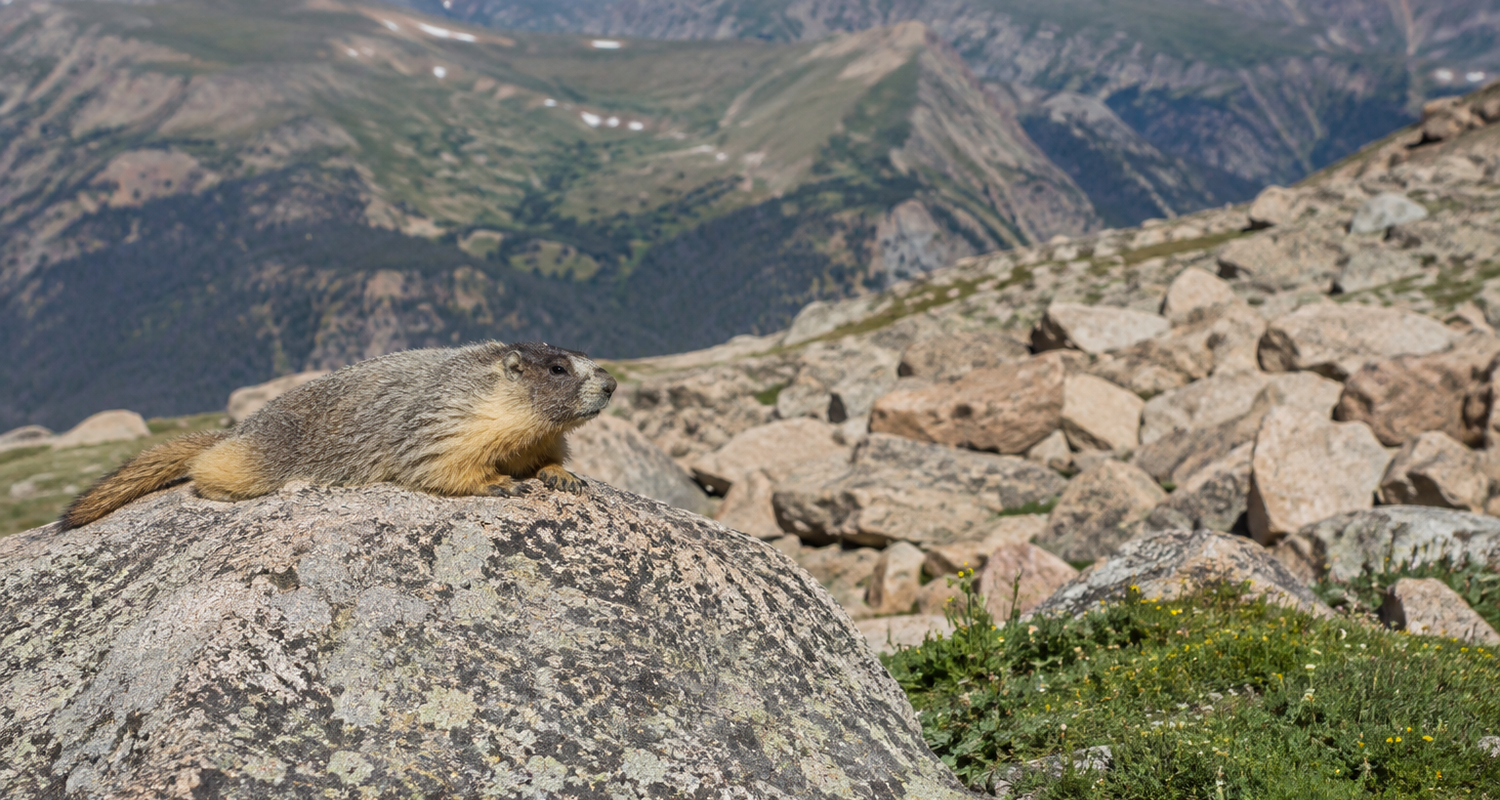
Yellow-bellied marmots sprawl on sunny rocks along Trail Ridge and Old Fall River roads
Pikas live in alpine talus and are usually heard before they're seen
Ground squirrels and chipmunks turn up almost everywhere
Teach children to listen for the pika's sharp bark. It's a small, distinctive sound that carries across rock piles.
Birds of the Mountains
Steller's jays are loud, bold and unmistakable. Woodpeckers, hawks and eagles round out the easier sightings.
White-tailed ptarmigans are the real challenge. Cornell Lab explains why they vanish against rock, turning brown in summer and white in winter.
Bears and Other Elusive Animals
Black bears, foxes, coyotes and mountain lions all live here. Almost nobody sees them.
Don't build a child's expectations around these. Disappointment is the only likely outcome.
Where Families Should Look for Wildlife
Match the habitat to the animal and you'll do far better than driving hopefully.
Moraine Park — elk, mule deer and meadow birds
Sheep Lakes — the park's best bighorn sheep viewing
Trail Ridge Road and Rock Cut — marmots, pikas and alpine birds
Kawuneeche Valley — moose, elk, water birds and small mammals
Forested trails — deer, squirrels, chipmunks, woodpeckers and jays
Use designated pullouts every time. Stopping in a live traffic lane is dangerous and it's exactly how wildlife jams start.
Our Rocky Mountain adventure guide matches these habitats to activities kids can do at each stop.
When Is the Best Time to See Animals?
Timing matters more than luck here.
Early morning and evening are the most productive hours year-round
Summer opens up alpine habitat along Trail Ridge Road
Autumn brings elk activity and bugling to the lower meadows
Late spring to mid-August is the Sheep Lakes window
Winter still has wildlife, though roads and access change considerably
One autumn note for September visitors. During the elk rut, the park closes areas of Horseshoe Park, Moraine Park, Upper Beaver Meadows, Harbison Meadow and Holzwarth Meadow to foot travel off established roads and trails.
Check current road, weather and wildlife notices before you go.
Make Wildlife Spotting Fun for Children
Turn it into a three-part challenge rather than a waiting game.
Look for movement along meadow edges, not in the middle
Listen for pika calls, jay chatter and bugling elk
Notice tracks, feathers, scat, chewed plants and burrows
Award points for spotting habitat and animal signs. Never for getting closer.
That last rule matters. A child who scores points for finding a track stops trying to approach the animal.
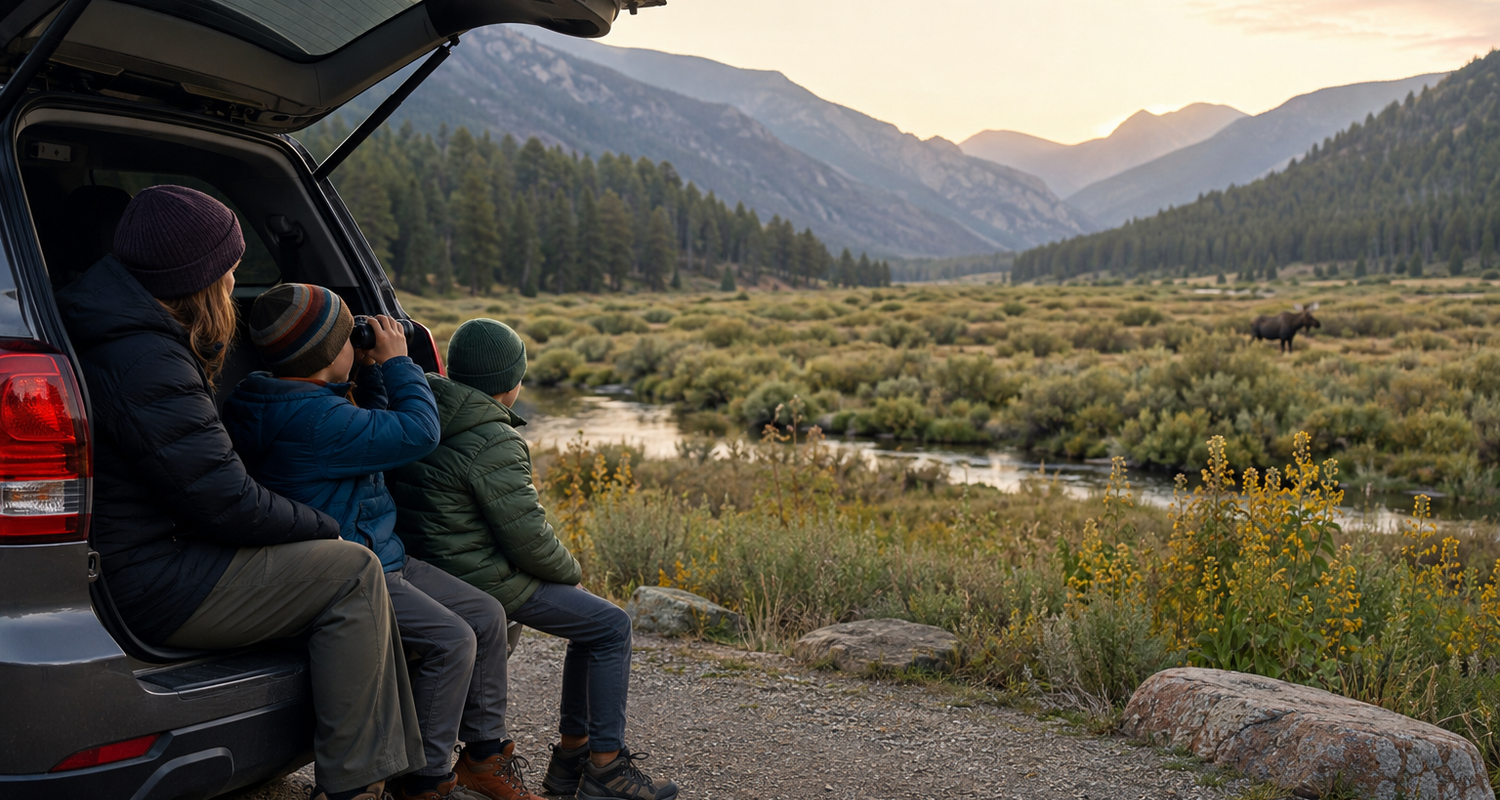
Wildlife Safety Rules Every Family Should Know
This park sets its own distances, and they're specific.
Stay 75 feet back from deer, elk and bighorn sheep, about two bus lengths
Stay 120 feet back from bears, moose and mountain lions, about three bus lengths
Keep children beside an adult at all times
Use binoculars or a zoom lens instead of walking closer
Never feed, call, chase or surround any animal
Never put a child between an adult animal and its young
Back away immediately if an animal reacts to you
Store food properly and follow current park instructions
Pull over only in safe designated areas
Note that moose sit in the 120-foot group alongside bears. They're the largest animal in the park and far less predictable than they look. Read the park's own how far back to stay guidance before your trip.
Why Expert-Created Family Resources Help
A good guide picks realistic targets, matches stops to a child's attention span and turns waiting into a game. It also means less research and more time outside.
No resource guarantees a sighting. Have a look at guides for every park to see how they're structured.
Plan a Wildlife Adventure Kids Will Remember
Elk, deer, marmots and mountain birds give families the most realistic sightings. Build expectations around those and everything else is a bonus.
Our post on Grand Teton wildlife watching covers similar animals further north, and the same patient approach works for tide pooling with kids on the coast. For wildlife of an entirely different kind, there's our Everglades wildlife activity book.
Frequently Asked Questions
What animals are easiest for kids to see in Rocky Mountain National Park?
Elk, mule deer, marmots, ground squirrels and chipmunks. Marmots are especially good for children since they sit still on sunny rocks.
Where is the best place to see elk?
Moraine Park and Horseshoe Park at dawn or dusk. Look along meadow edges where open grass meets forest rather than in open ground.
Where can families look for bighorn sheep?
Sheep Lakes in Horseshoe Park, most commonly from May through mid-August. Sightings drop off considerably outside that window.
Can children see moose in the park?
Sometimes. Kawuneeche Valley on the west side is the best bet. Stay 120 feet back, since moose require the same distance as bears.
Are black bear sightings common?
No. Black bears live in the park but stay in forested areas and avoid people. Treat any sighting as a rare bonus.
What animals live near Trail Ridge Road?
Yellow-bellied marmots, pikas, elk on the summer tundra, and alpine birds including the well-camouflaged white-tailed ptarmigan.
What is the best time of day for wildlife viewing?
Early morning and evening. Animals feed at dawn and dusk, and the roads are far quieter than during the middle of the day.
How far should families stay from wildlife?
Seventy-five feet from deer, elk and bighorn sheep. One hundred and twenty feet from bears, moose and mountain lions. If an animal reacts, you're too close.
Can children feed chipmunks or ground squirrels?
No. Feeding any wildlife is illegal in national parks. It makes animals dependent on people and often ends badly for the animal.
What should kids bring for wildlife spotting?
Binoculars, a checklist or journal, layers for changing mountain weather, and patience. Quiet feet help more than any piece of equipment.