
How Tall Are Giant Sequoia Trees and What Should Kids Know Before Visiting
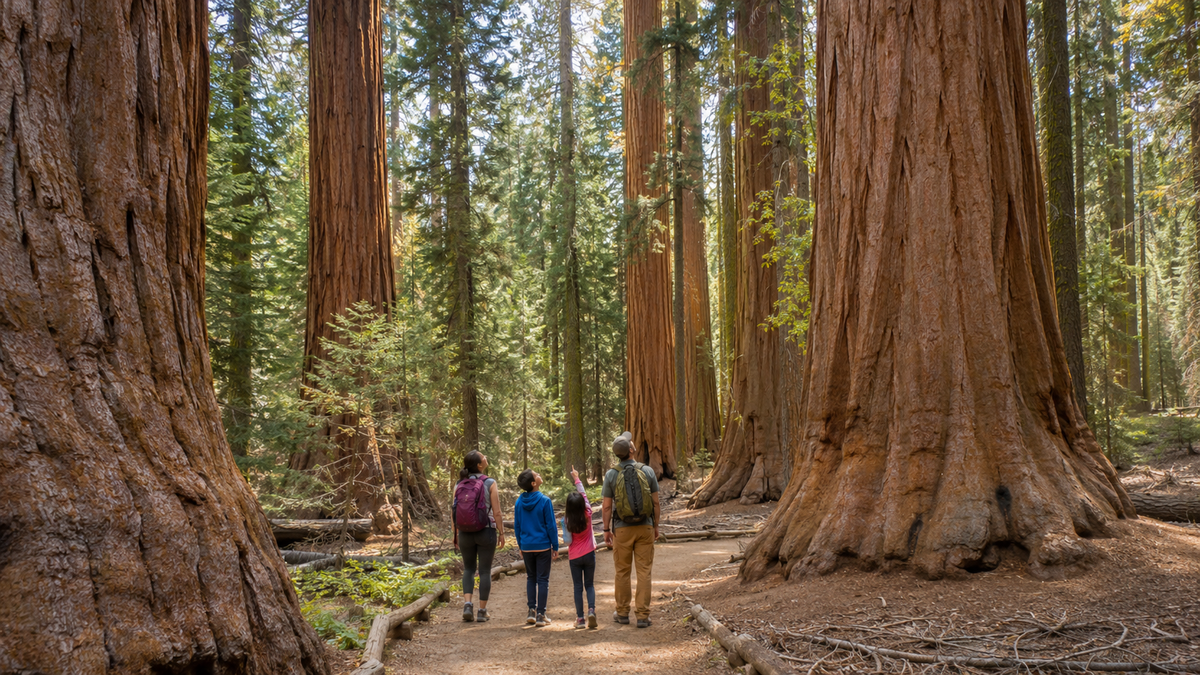
Most mature giant sequoia trees reach roughly 250 to 300 feet, or 76 to 91 metres. A few push past 300 feet.
Wonder Park Family turns facts like that into something children can actually use, through screen-free adventure guides built around what families will see.
Here's how tall these trees really get, why General Sherman is famous, and what kids should know before standing underneath one.
How Tall Are Giant Sequoia Trees?
Giant sequoias typically grow 250 to 300 feet tall. The tallest recorded specimens reach about 310 feet. That number means nothing to a seven-year-old. Try this instead. A big sequoia stands about as tall as a 16-storey building.
Height isn't what makes them special, though. Coast redwoods, Douglas firs and mountain ash all grow taller. What sets giant sequoias apart is bulk. Their trunks rise as enormous columns with barely any taper for hundreds of feet.
That distinction matters when you're explaining them to kids. These are the biggest trees by volume, not the tallest.
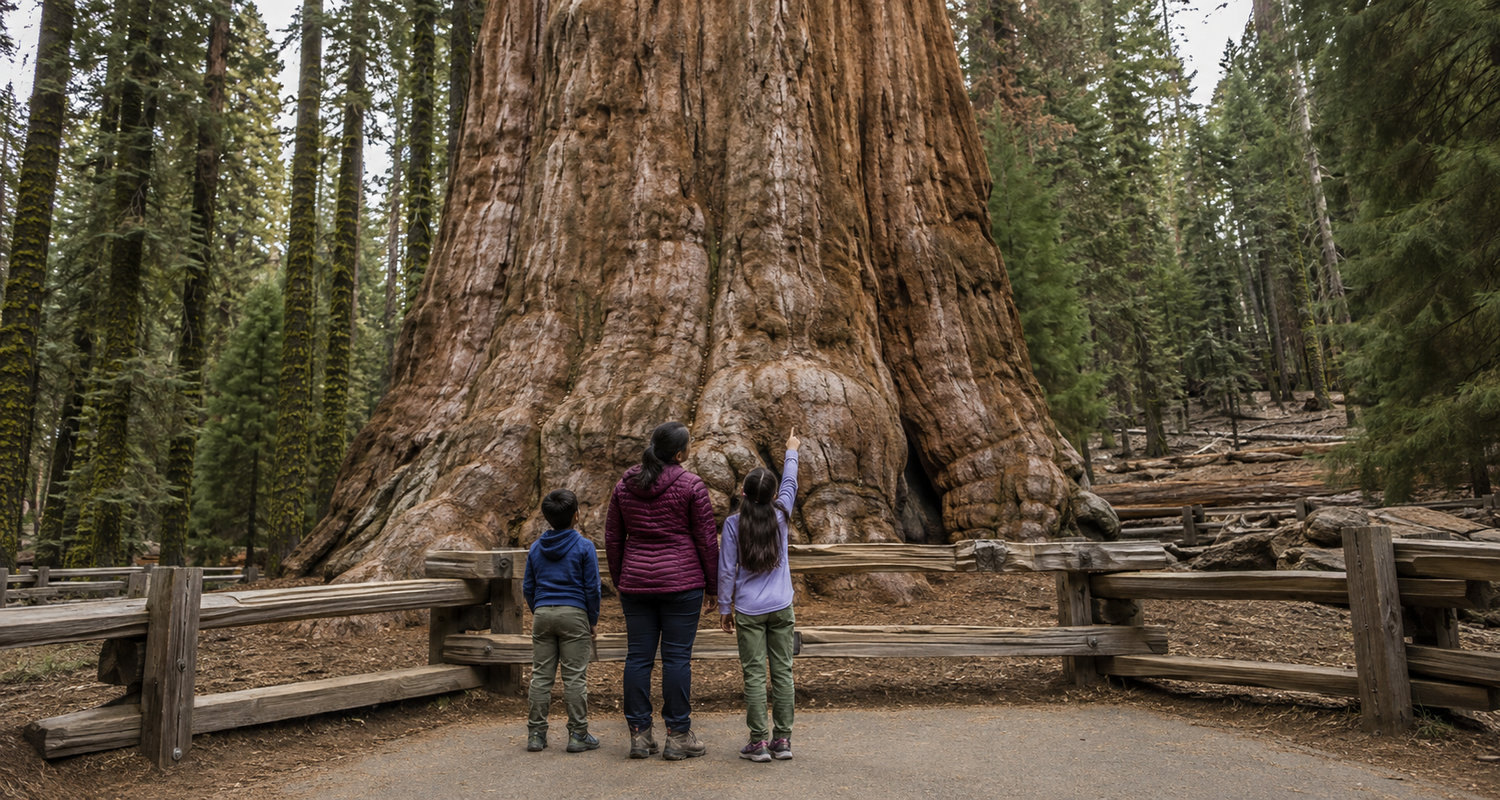
Is General Sherman the Tallest Giant Sequoia?
No. General Sherman is famous for being the largest living single-stem tree on Earth by volume, not for height. It stands 275 feet tall in the Giant Forest of Sequoia National Park, with a trunk holding roughly 52,500 cubic feet of wood.
Its base circumference passes 100 feet. One of its branches is nearly seven feet across, thicker than most whole trees. The tallest tree in the world is a coast redwood in northern California, standing over 380 feet.
Giant Sequoia Facts Kids Will Remember
These are the details that stick with children long after the drive home.
They're ancient. General Sherman is estimated at 2,300 to 2,700 years old, and the species can pass 3,000 years.
The bark is enormous. Up to about two feet thick, spongy, and reddish-brown rather than hard.
Fire doesn't usually kill them. That thick bark insulates the living tissue, and their lowest branches sit high above the flames.
Fire actually helps them. Heat dries the cones and releases seeds onto freshly cleared ground.
The cones are tiny. Only two to three inches long, roughly the size of a chicken egg.
The seeds are smaller still. Something that fits under a fingernail grows into the largest tree on the planet.
The roots are shallow. They spread wide and interlock with neighbouring sequoias instead of digging deep.
The University of California explains how these giants survive fire in more detail if your child wants to go further.
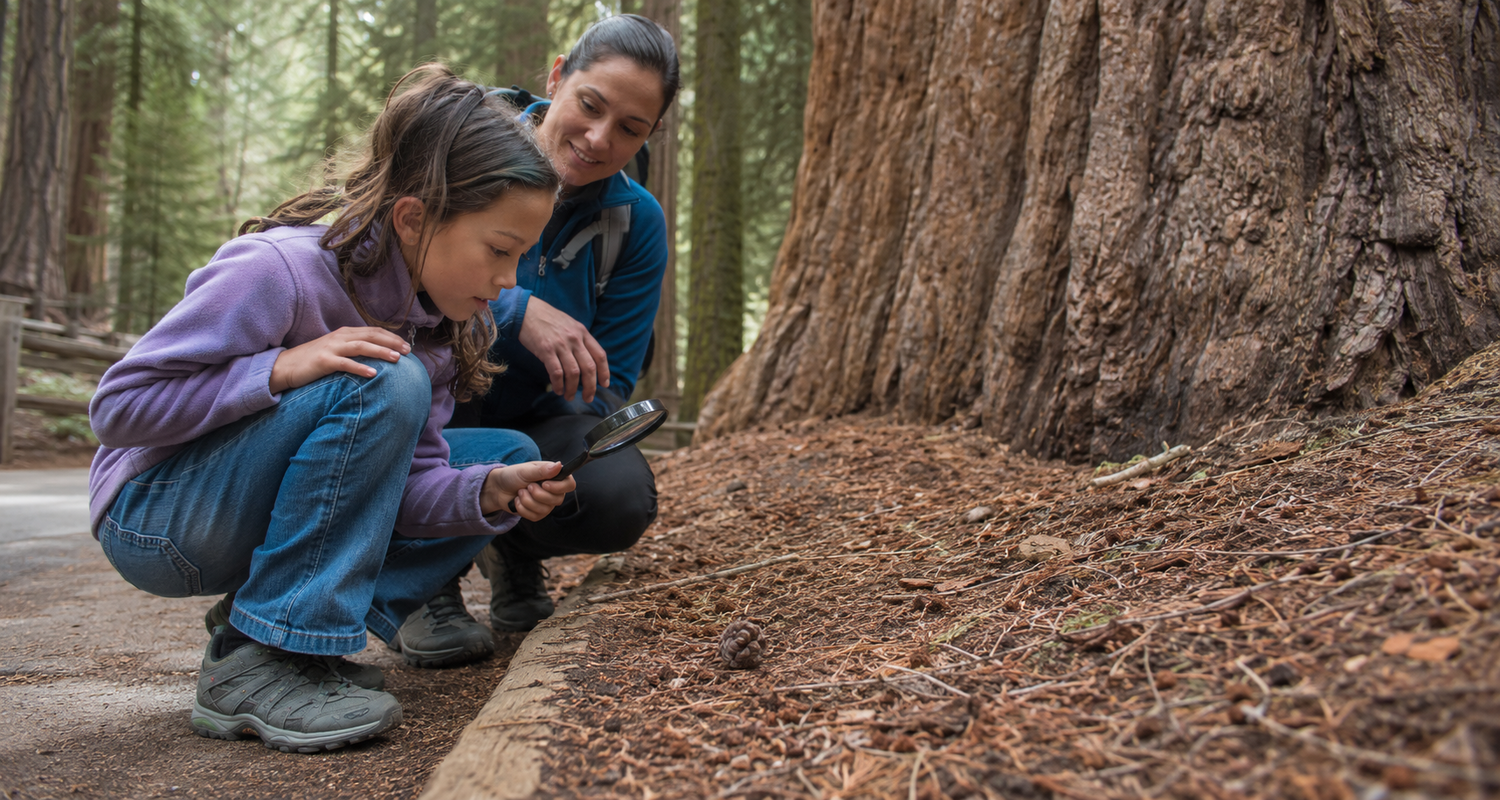
What Should Kids Know Before Visiting Giant Sequoias?
This is the part worth covering at home. A child who understands the rules follows them without being nagged.
Stay on the marked trail, always, even when the ground beside it looks fine
Don't climb on or carve into any tree, living or fallen
Leave cones, bark and branches where you find them
Keep voices reasonable so other visitors and wildlife get some peace
Watch wildlife from a distance without feeding or approaching
Pack out everything you brought in
The trail rule deserves an actual explanation, because kids follow rules they understand.
Sequoia roots sit close to the surface. When visitors walk off-trail, footsteps compact the soil and crush the plants protecting those roots. Do that thousands of times a season and you damage a tree that's been growing since before the Roman Empire. Walking on the path is genuinely how you protect them.
Our post on finding kid-friendly trails helps you pick routes that suit your youngest walker.
Check closures, weather and current conditions before you set out. The park's plan your visit pages carry the current rules and access information.
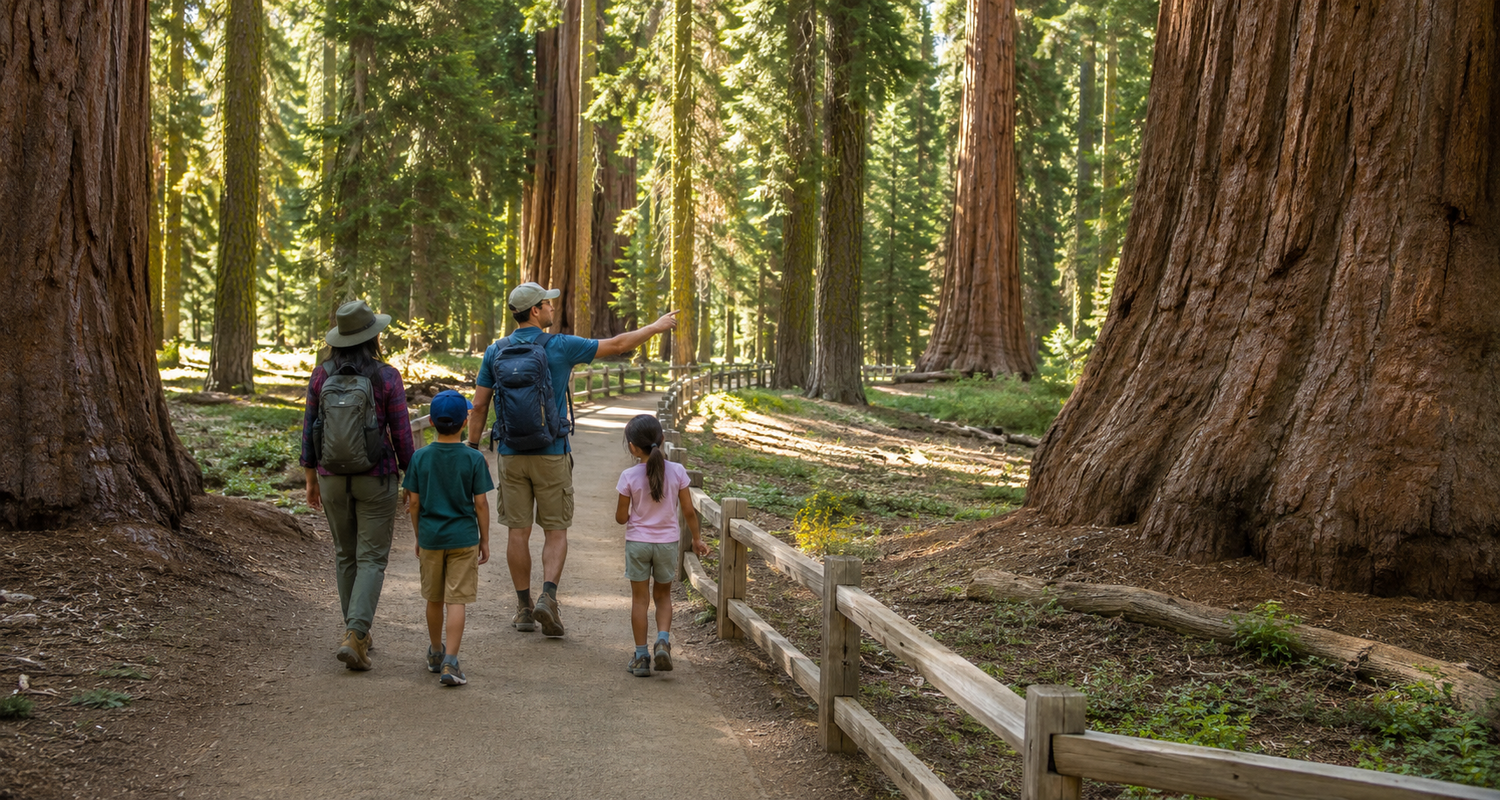
How Expert Adventure Guides Help Families Prepare
A good guide translates natural history into words children follow. It also tells them which features to notice, the bark, the cones, the trunk scars.
That turns a walk past big trees into an actual hunt. Have a look at adventure guides by park to see how they're built.
No guide replaces current park rules or conditions, so check those separately.
Giant Sequoia vs Redwood, What's the Difference?
They're related but distinct, and families mix them up constantly.
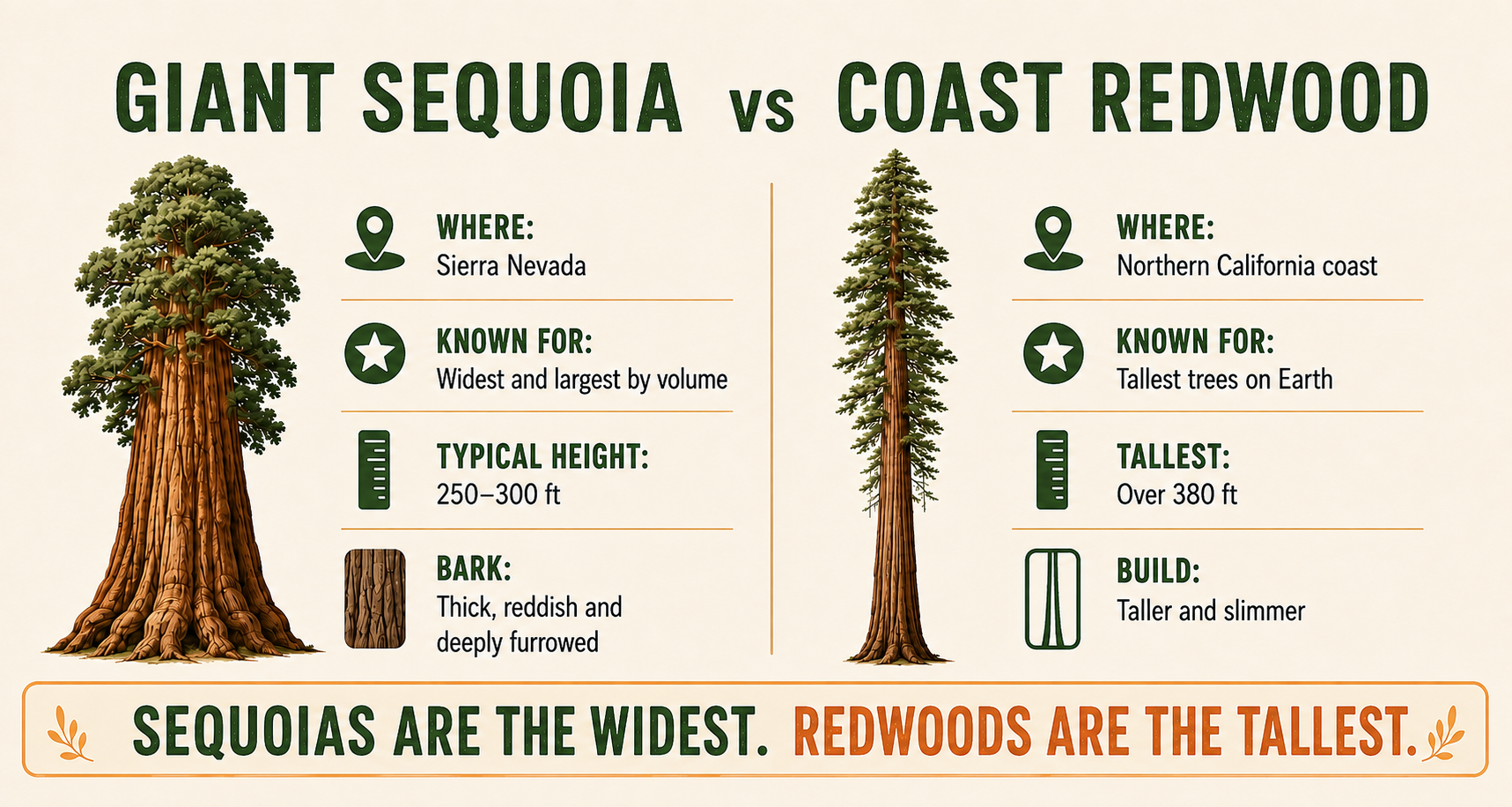
Giant sequoias grow in the Sierra Nevada of California. They're famous for sheer volume, with massive trunks and reddish, deeply furrowed bark.
Coast redwoods grow along the northern California coast. They're the tallest trees on Earth but far narrower.
Simple version for kids. Sequoias are the widest, redwoods are the tallest.
Quick Family Takeaway
Giant sequoias reach roughly 250 to 300 feet, with General Sherman famous for bulk rather than height. Children who arrive knowing why the trails matter treat the grove differently. Preparation is what separates a photo stop from a memory.
Our Shenandoah forest activity book works the same curiosity in eastern woodlands, and you can build your own bundle around your route. The same approach applies to spotting animals kids can spot in the Rockies.
Frequently Asked Questions
How tall do giant sequoia trees grow?
Most mature trees reach 250 to 300 feet, or 76 to 91 metres. The tallest recorded giant sequoias stand around 310 feet.
What is the tallest giant sequoia?
Individual records shift as trees are remeasured, but the tallest known giant sequoias reach roughly 310 feet. General Sherman, at 275 feet, isn't among them.
Is General Sherman the tallest tree in the world?
No. It's the largest by volume. The tallest tree is a coast redwood in northern California, standing more than 380 feet.
How old can giant sequoia trees get?
The species can exceed 3,000 years, with the oldest known specimen around 3,200. General Sherman is estimated at 2,300 to 2,700 years.
Is Sequoia National Park kid-friendly?
Yes. Paved short trails, a shuttle in peak season and a museum make it manageable for young children. Check current conditions before travelling.
Can kids touch giant sequoia trees?
Gently touching bark from the trail is generally fine. Climbing, carving or pulling bark off is not, and it damages the tree.
Why should visitors stay on trails around giant sequoias?
Sequoia roots sit near the surface. Foot traffic compacts the soil and crushes protective ground plants, which harms trees that have survived for millennia.
How deep are giant sequoia roots?
Surprisingly shallow for their size. Rather than growing deep, roots spread wide and interlock with neighbouring trees, which is what keeps them standing.
What's the difference between a giant sequoia and a redwood?
Giant sequoias grow inland in the Sierra Nevada and are the largest by volume. Coast redwoods grow near the coast and are the tallest.
What should families know before visiting giant sequoias?
Stay on marked trails, leave everything where it lies, keep a distance from wildlife, and check park conditions and closures before you travel.