
How Do You Stargaze With Kids at Joshua Tree National Park?
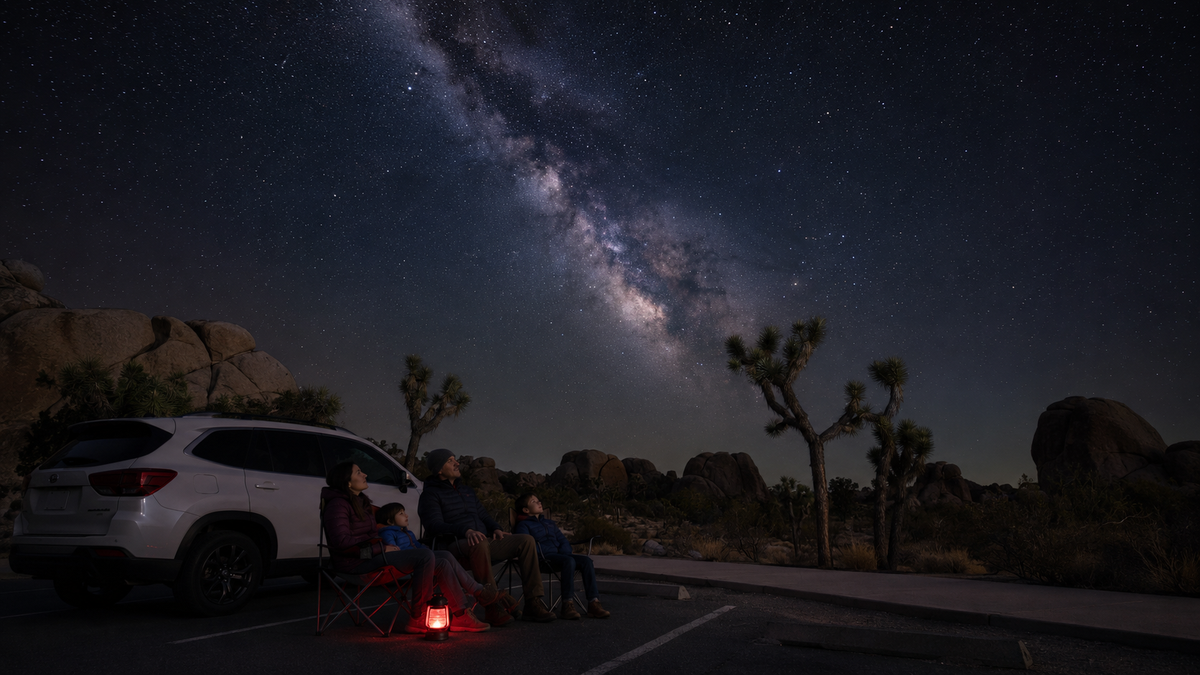
Taking children into a dark desert sounds magical until someone's cold, scared or bored. A little planning fixes all three.
Wonder Park Family builds screen-free park activity books around exactly that kind of preparation. Kids who arrive knowing what to look for stay engaged far longer.
Here's a simple plan covering where to go, when to arrive, what to pack and how to keep everyone happy.
The Simplest Family Stargazing Plan
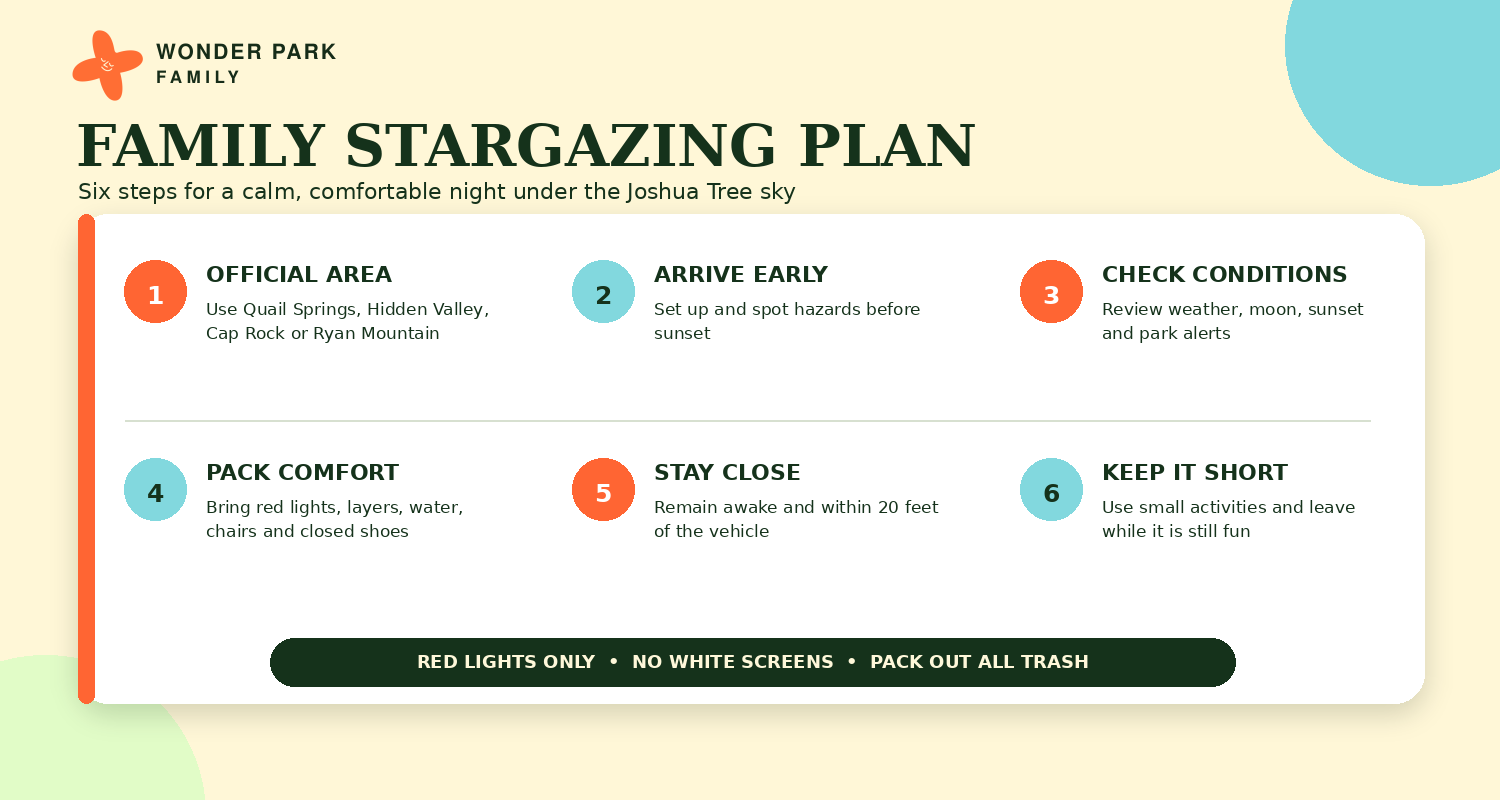
If you read nothing else, follow these six steps.
Pick an official viewing area rather than improvising a roadside stop
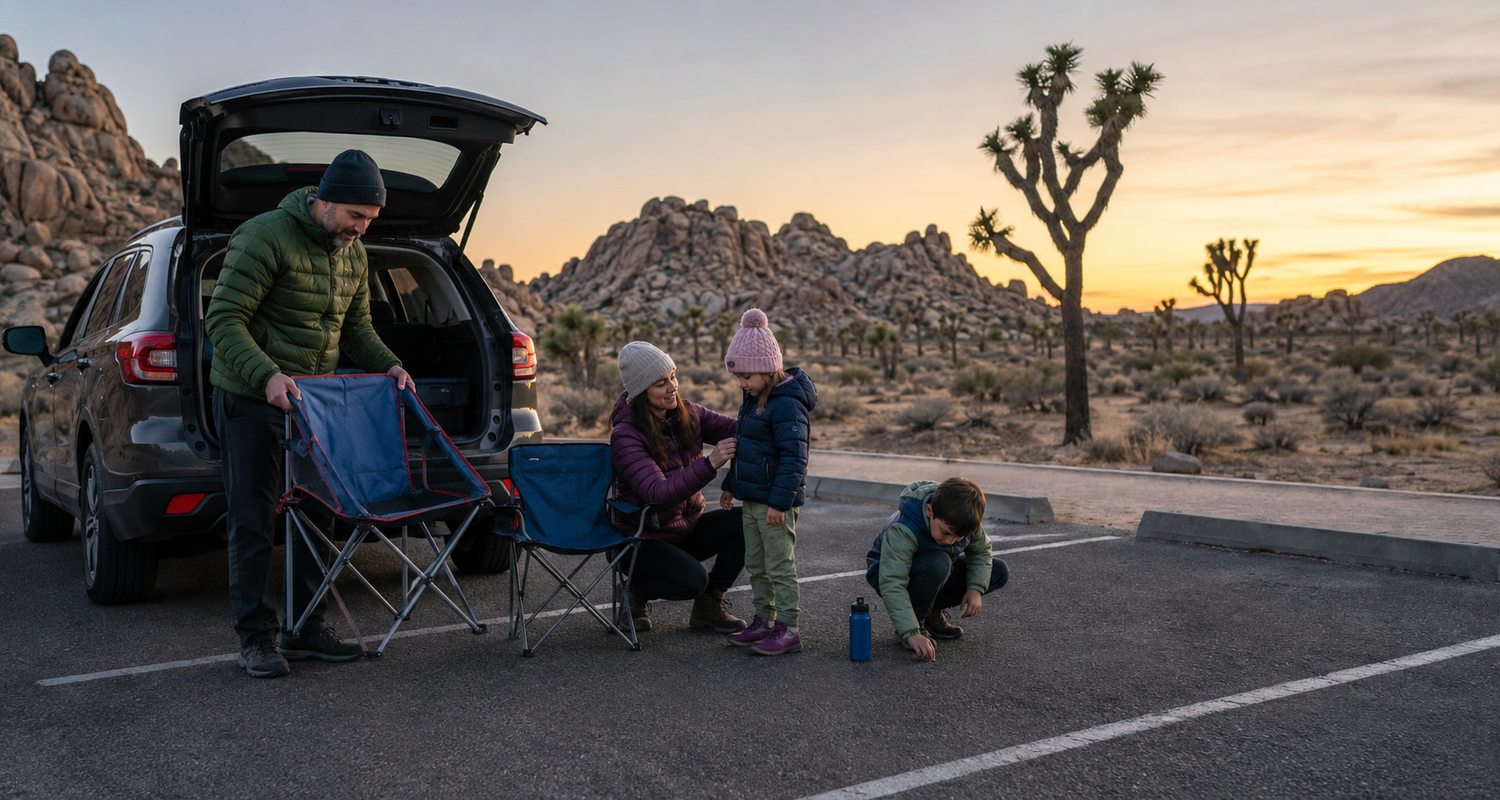
Arrive before sunset so everyone sees the ground in daylight
Check the weather and moon the same afternoon
Pack red lights, layers, water, chairs and closed-toe shoes
Stay close to the vehicle the entire time
Plan short activities instead of one long astronomy lesson
That's the whole approach. Everything below just fills in the detail.
Where Should Families Stargaze in Joshua Tree?
The park keeps four designated stargazing areas, all of them parking lots.
Quail Springs
Hidden Valley
Cap Rock
Ryan Mountain
Paved parking makes these the easiest choice for a first family night. You're never far from the car, the restroom or a quick exit.
Pinto Basin Road has the darkest skies in the park. Any pullout along it works, though it's a longer drive in the dark.
Families already camping can simply stay put. Cottonwood Campground gives you a site and a sky at once.
One thing to be clear on with kids. Stargazing from a parking lot isn't camping, and you'll be driving home afterwards.
Our post on visiting Joshua Tree with young kids covers the daytime side of the trip.
When Should You Go?
Clear skies matter far more than picking the right month.
New moon nights show the faintest stars and the Milky Way
A brighter moon lights up the landscape, which reassures nervous children
Summer brings strong Milky Way viewing along with real heat planning
Winter gets dark early but can drop below freezing
That moon trade-off surprises a lot of parents. A darker sky isn't automatically the better choice with a four-year-old.
Check sunset, moonrise, the forecast and park alerts shortly before you leave. Desert conditions shift quickly, and so do closures.
The same red rock and desert air run through our Zion adventure guide, a few hours east.
What Should You Bring?
Pack this in daylight, not at the trailhead.
Red-light headlamps or flashlights, one per person
Warm layers and blankets, more than you think
Closed-toe shoes for cacti and uneven ground
Water and snacks, since most areas have no running water
Folding chairs to save everyone's neck
An offline map, because cell service is unreliable
Binoculars, optional but useful
A printed activity guide
Backup batteries
A trash bag
No telescope needed. Your eyes do most of the work here.
A Kid-Friendly 45-Minute Stargazing Routine
Short and structured beats long and open-ended. Try this sequence.
Before dark. Eat, use the restroom, spot hazards and set up the chairs.
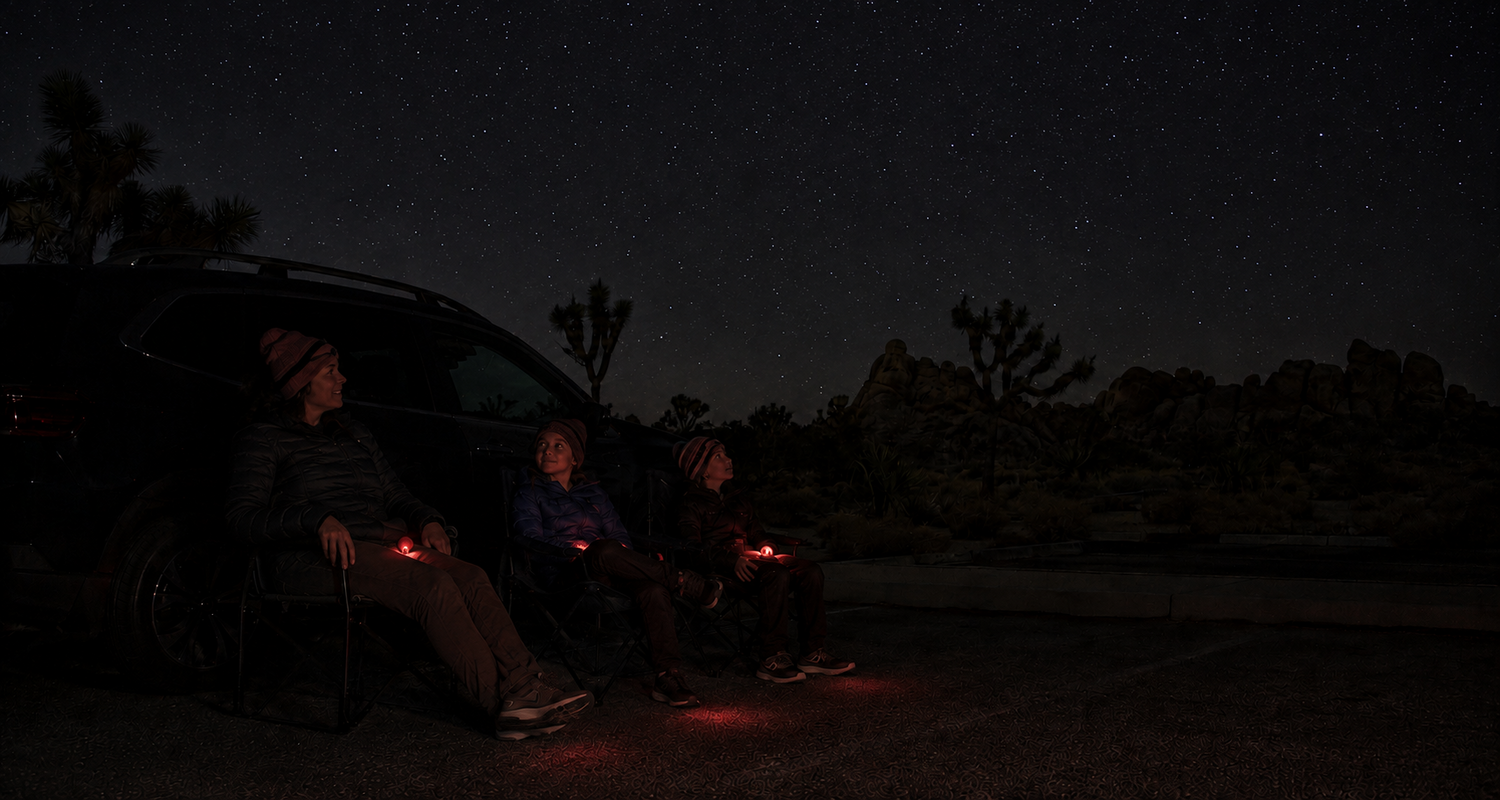
First 20 minutes. Red lights only while eyes adjust. Listen for nocturnal sounds.
Next 15 minutes. Find one bright planet, constellation or asterism together.
Final 10 minutes. Count stars, sketch a sky shape, or share a favourite moment.
Leave while it's still fun. Ending early beats ending in tears.
Eye adjustment takes 20 to 30 minutes, and one white light resets it for everyone. Guard that window carefully.
What Can Children Look For?
Give kids findable targets rather than a full astronomy lesson.
The Milky Way, on a moonless night away from town lights
Orion, easy to spot in winter
The Summer Triangle, three bright stars overhead in warm months
The Big Dipper and North Star
Planets, which shine steadily instead of twinkling
Satellites, moving in a slow straight line
Meteors, quick and unpredictable
Bright versus faint stars, a surprisingly good sorting game
Two prompts work almost every time. Ask them to find three differently coloured stars, or to invent a constellation and tell you its story.
Preparation like this travels between parks. It's the same thinking behind explaining volcanoes to kids before a Hawaiʻi trip.
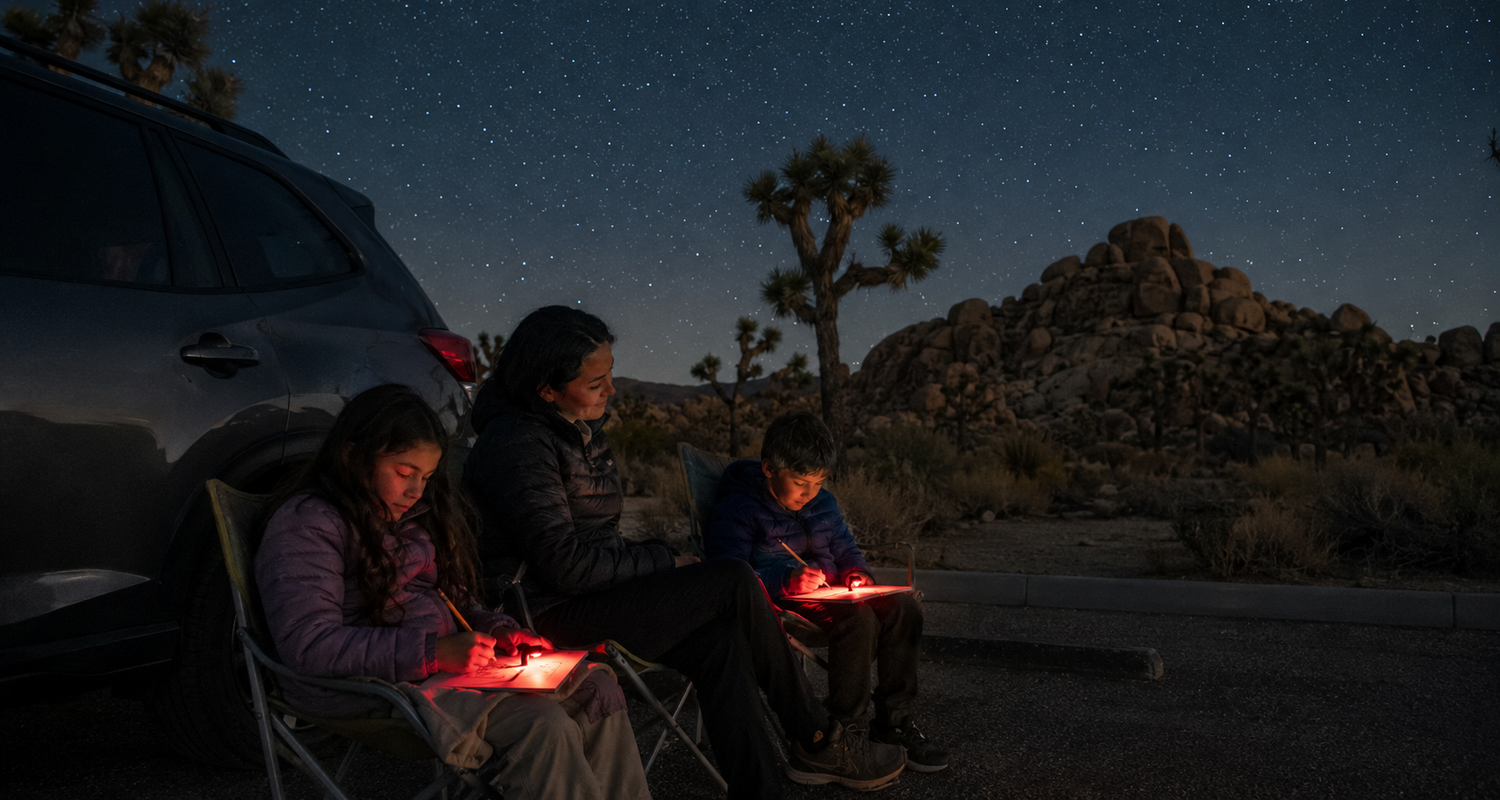
Nighttime Safety and Dark-Sky Etiquette
The rules here are short and they matter.
Stay awake and within 20 feet of your vehicle
Watch for cacti, uneven ground and nocturnal wildlife
Keep children well away from roads
Never use white lights or light-painting
Don't enter day-use-only areas after dusk
Pack out all trash and keep voices low
Other people came for the dark too. One phone screen ruins night vision across a whole parking lot.
Joshua Tree is a certified International Dark Sky Park, and there's good reading on why dark skies matter before you go.
Why Expert Adventure Resources Help
A good family guide puts astronomy into words a seven-year-old follows. It also hands you ready-made activities so you're not inventing games in the cold.
You can browse every adventure guide by the park you're visiting.
Give Kids a Night They'll Remember
Successful family stargazing comes down to comfort, preparation and giving children something to actually do.
Get those right and 45 minutes under a desert sky beats three restless hours. Try the full eight-book collection if more parks are on the list this year.
Frequently Asked Questions
What is the best place to stargaze with kids in Joshua Tree?
Start at one of the four designated lots, Quail Springs, Hidden Valley, Cap Rock or Ryan Mountain. Paved parking keeps families close to the car.
What month is best for Joshua Tree stargazing?
No single month wins. Clear skies and moon phase matter more, though summer offers strong Milky Way viewing if you plan around the heat.
What time should families begin stargazing?
Arrive before sunset. That lets everyone see hazards in daylight, set up chairs, and be settled when the sky starts going dark.
Can children see the Milky Way without a telescope?
Yes, on a clear moonless night away from light pollution. No equipment is needed, though binoculars add detail for older children.
Is Joshua Tree National Park open at night?
Yes, the park is open 24 hours. Some areas are day-use only after dusk, so check current signage and alerts before you go.
Does stargazing in Joshua Tree cost extra?
No. Standard park entrance covers it. Some ranger-led astronomy programs and festival events may require separate registration, so check the park calendar.
Why should families use red flashlights?
White light destroys night vision instantly and takes 20 to 30 minutes to recover. Red light lets you move safely without resetting anyone's eyes.
Is a full moon or new moon better with kids?
It depends on the child. A new moon reveals far more stars, while a brighter moon lights the ground and eases nighttime nerves.
Are ranger-led astronomy programs available?
Sometimes. The park runs night sky programs and an annual festival, though schedules vary by season. Check the park calendar shortly before your visit.
How long should a stargazing session last for young children?
Around 30 to 45 minutes suits most young kids. Ending while everyone's still enjoying it makes the next trip much easier.